Durga Puja is one of the most significant Hindu festivals dedicated to Maa Durga, the divine feminine form associated with strength, protection, courage, and the triumph of good over evil.
Celebrated with devotion, elaborate decorations, prayers, cultural programmes, and community gatherings, Durga Puja is much more than a religious festival. For millions of devotees, it is a time for faith, family, renewal, gratitude, and spiritual reflection.
But why do we celebrate Durga Puja? What is the story behind Maa Durga’s victory, and what does the festival represent?
Let’s explore the traditional story and significance of Durga Puja.
Note: Religious traditions can vary across regions, texts, and communities. The story and practices described here reflect widely followed Hindu traditions.
What Is Durga Puja?
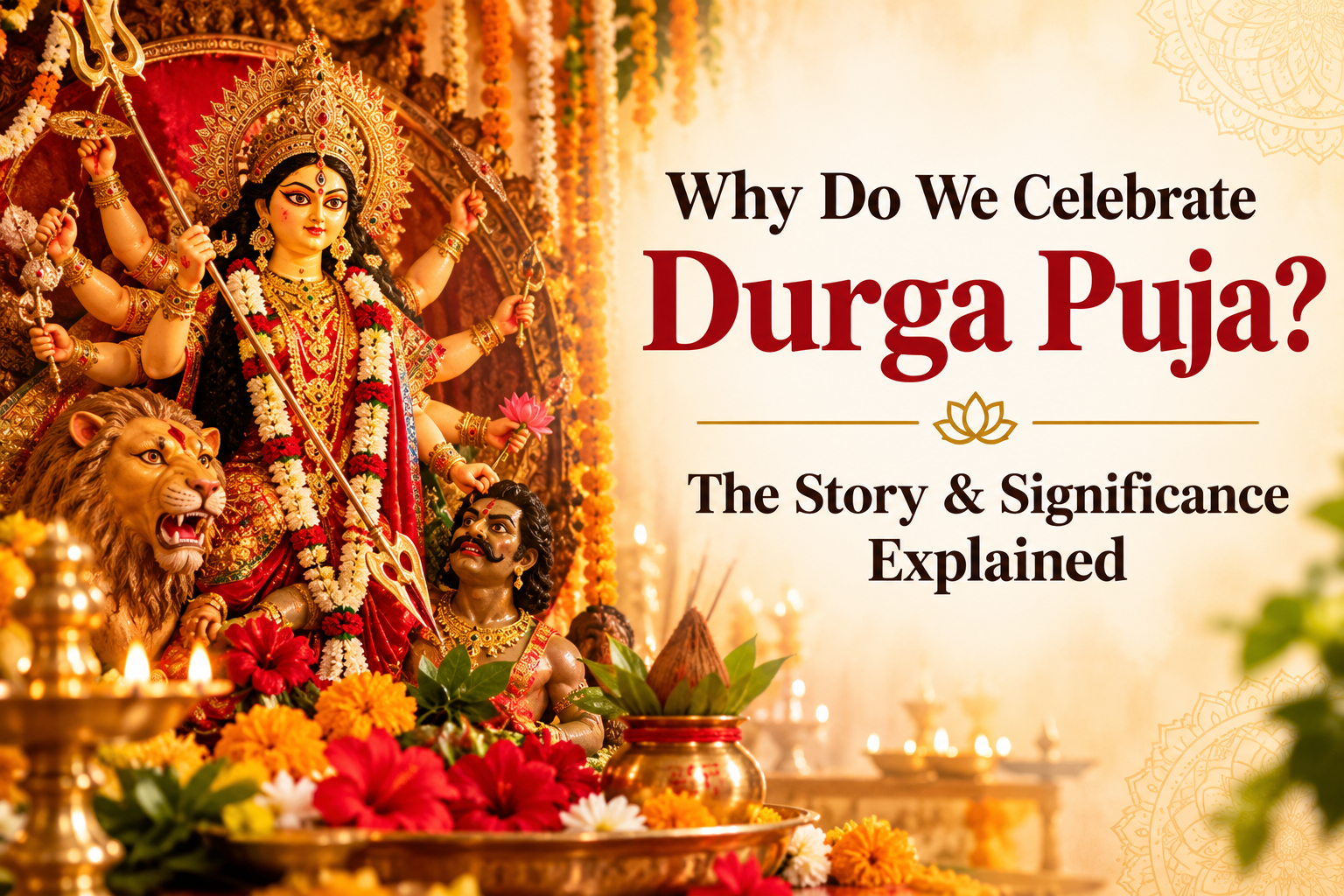
Durga Puja is a festival celebrating Maa Durga, particularly her victory over the buffalo demon Mahishasura.
The festival is especially prominent in eastern India, including West Bengal, Odisha, Assam, and Tripura, while celebrations also take place in many other parts of India and around the world.
The central themes of Durga Puja include:
- Victory of good over evil
- Divine feminine power
- Courage and protection
- Devotion and faith
- Renewal and hope
- Community and togetherness
The festival is generally celebrated over several days, with the final day associated with Vijaya Dashami.
The Story of Maa Durga and Mahishasura
The most famous story associated with Durga Puja comes from the Devi Mahatmya, a section of the Markandeya Purana.
According to the traditional account, Mahishasura performed intense penance and received a boon that made him extremely difficult to defeat. Empowered by this boon, he became a formidable force and challenged the gods.
The gods were unable to defeat him.
According to the tradition, the divine powers of the gods came together and manifested as Maa Durga, a powerful form of the Divine Mother.
She was depicted with multiple arms, carrying divine weapons given by different deities.
Maa Durga then confronted Mahishasura in a fierce battle. After the battle, she defeated Mahishasura, symbolising the victory of dharma over adharma and good over evil. This victory is central to the spiritual meaning of Durga Puja.
Who Is Maa Durga?
The name Durga is traditionally interpreted in connection with protection and the overcoming of difficulties.
Maa Durga represents the Divine Mother and is associated with qualities such as:
- Strength
- Courage
- Protection
- Compassion
- Wisdom
- Determination
- Shakti, or divine power
Her image often shows her riding a lion or tiger and holding various weapons, representing the divine forces used to overcome evil.
Why Does Maa Durga Have Multiple Arms?
The multiple arms of Maa Durga are symbolic. They represent her ability to perform many divine actions simultaneously and her possession of different forms of strength and power.
The weapons shown in her hands are traditionally associated with different deities and represent qualities such as:
- Courage
- Wisdom
- Discipline
- Protection
- Determination
- Justice
The symbolism reminds devotees that overcoming challenges may require different forms of strength.
What Does Mahishasura Represent?
Mahishasura is traditionally understood as a symbol of adharma and destructive forces. The battle between Durga and Mahishasura can therefore be understood on both an external and internal level.
Symbolically, the story can encourage people to overcome qualities such as:
- Ego
- Anger
- Greed
- Arrogance
- Hatred
- Negative tendencies
In this interpretation, Durga Puja is not only about celebrating a mythological victory—it is also an opportunity for self-reflection and inner transformation.
Why Is Durga Puja Celebrated in Ashwin?
Durga Puja is traditionally celebrated during the Hindu month of Ashwin, generally falling around September or October in the Gregorian calendar.
The exact dates change each year according to the lunar calendar. The festival is particularly associated with the period of Shukla Paksha, culminating around Dashami.
What Is Mahalaya?
Mahalaya traditionally marks the beginning of the Devi Paksha period and is strongly associated with the invocation of Maa Durga.
In Bengal and other regions, Mahalaya has a special cultural significance and marks the anticipation of Durga Puja.
Devotees may listen to traditional recitations and devotional programmes associated with the Goddess.
The Significance of the Five Main Days
In many Durga Puja traditions, the major celebrations are associated with:
- Shashthi
The sixth day marks the formal beginning of major Durga Puja festivities in many traditions.
- Saptami
Special rituals and prayers are performed, continuing the worship of Maa Durga.
- Ashtami
Durga Ashtami is one of the most significant days of the festival. Devotees offer prayers and participate in rituals dedicated to the Goddess.
- Navami
Navami continues the worship and devotional celebrations before the concluding day.
- Dashami
Vijaya Dashami marks the conclusion of Durga Puja.
The immersion of the Durga idol in water is traditionally associated with the Goddess returning to her divine abode.
Why Is Durga Puja Important Spiritually?
Durga Puja provides an opportunity for devotees to reconnect with spiritual values.
- Strength in Difficult Times
Maa Durga represents courage and strength in the face of challenges.
- Faith and Devotion
The festival encourages prayer, gratitude, and devotion.
- Victory of Dharma
The victory over Mahishasura symbolises the triumph of righteousness over destructive forces.
- Inner Transformation
The story encourages devotees to reflect on and overcome negative qualities within themselves.
- Hope and Renewal
The festival represents a time of renewal, celebration, and spiritual optimism.
Durga Puja and Community
One of the most beautiful aspects of Durga Puja is its community spirit.
People come together for:
- Puja ceremonies
- Cultural performances
- Music
- Traditional food
- Artistic decorations
- Community gatherings
- Family celebrations
In many places, Durga Puja becomes a shared cultural experience that brings people from different backgrounds together.
Durga Puja in Odisha
Durga Puja holds an important place in Odisha’s cultural and religious traditions.
Across cities and towns, devotees celebrate with:
- Maa Durga idols
- Puja pandals
- Decorative lighting
- Traditional rituals
- Cultural programmes
- Community gatherings
Different regions and communities may follow their own local customs and styles of celebration.
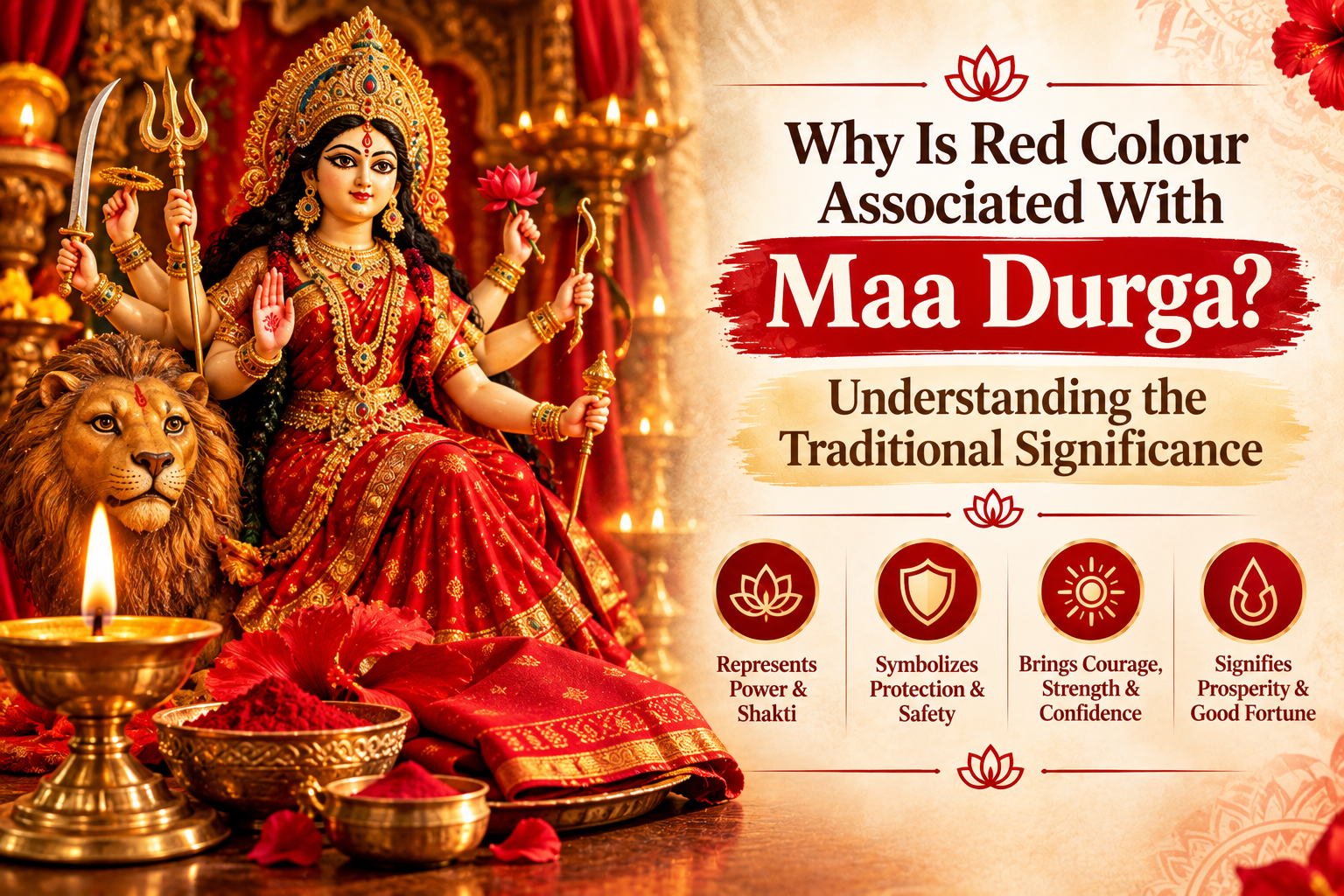
Why Is Red Associated With Maa Durga?
Red is strongly associated with Maa Durga and many forms of Shakti worship.
Traditionally, red can symbolise:
- Strength
- Energy
- Courage
- Power
- Passion
- Divine feminine energy
This is why red flowers, clothing, decorations, and other offerings are commonly seen during Devi worship.
Durga Puja and the Nine Forms of Durga
Durga is worshipped in different forms across Hindu traditions.
During Navratri, devotees commonly worship the nine forms known as Navadurga:
- Shailaputri
- Brahmacharini
- Chandraghanta
- Kushmanda
- Skandamata
- Katyayani
- Kalaratri
- Mahagauri
- Siddhidatri
Each form carries distinct stories, symbolism, and devotional significance.
What Can We Learn From Durga Puja?
The story of Maa Durga offers several symbolic lessons.
- Courage
Challenges require determination and courage.
- Balance
Strength can be accompanied by compassion and wisdom.
- Self-Discipline
Overcoming negative tendencies requires awareness and discipline.
- Faith
Devotion can provide a meaningful framework for facing difficult periods.
- Good Over Evil
The victory of Durga over Mahishasura represents the enduring ideal of dharma overcoming adharma.
Conclusion:
Durga Puja is a celebration of Maa Durga, Shakti, devotion, and the triumph of dharma over adharma. The story of Maa Durga defeating Mahishasura carries a powerful symbolic message: challenges can be faced with courage, wisdom, determination, and faith.
Beyond rituals and celebrations, Durga Puja offers an opportunity to pause, reflect, come together with loved ones, and renew our commitment to positive values.
May Maa Durga bless every home with strength, peace, courage, and hope. Jai Maa Durga!