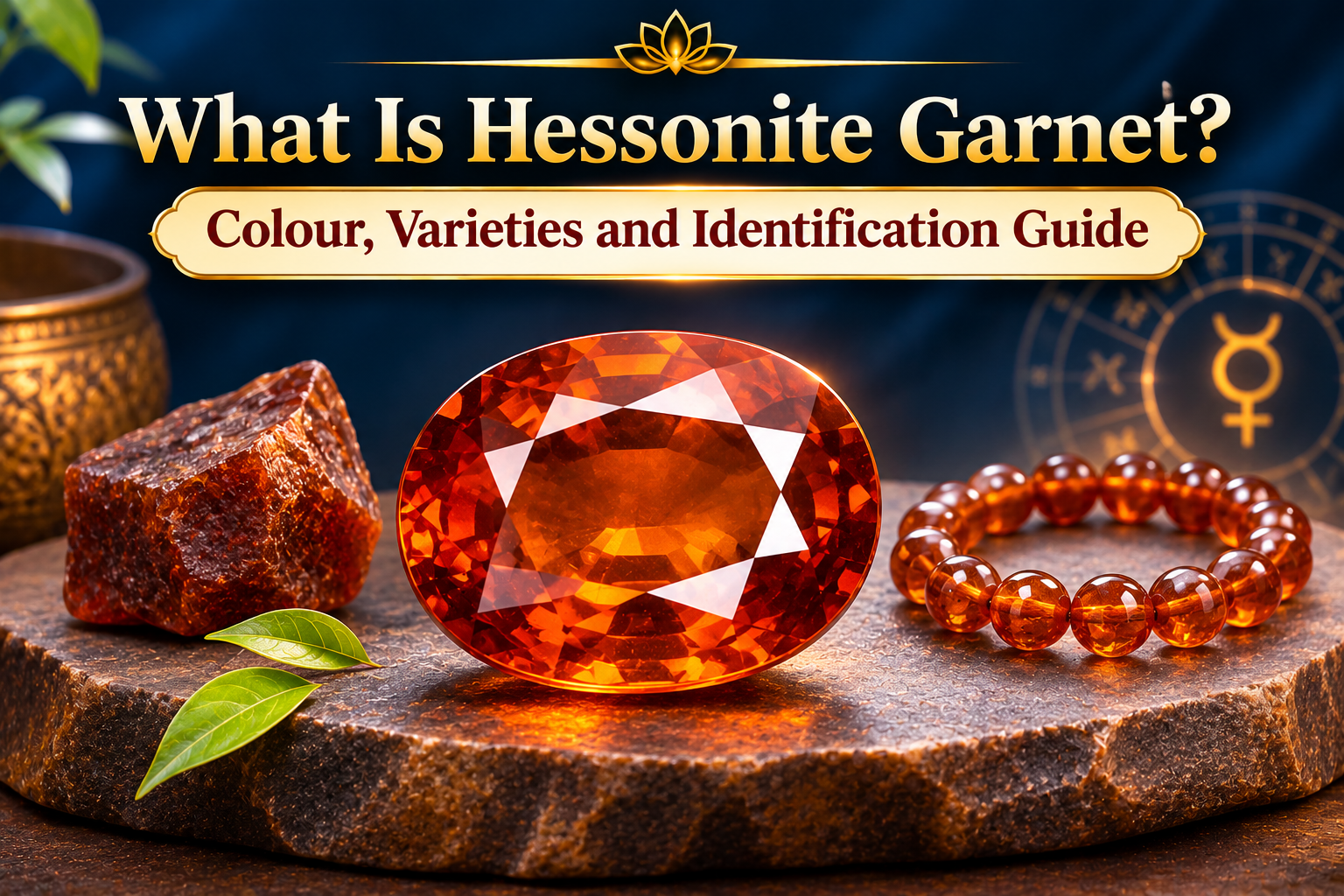
Hessonite Garnet, popularly known as Gomed or Gomedh Stone, is a beautiful orange-coloured gemstone belonging to the grossular variety of the garnet mineral group. Recognised for its warm honey, cinnamon and reddish-orange shades, this gemstone has attracted attention among gemstone collectors, jewellery lovers and followers of Vedic astrology.
In traditional Indian astrology, Hessonite Garnet is associated with Rahu, one of the lunar nodes. It is often considered by astrologers when recommending gemstones for Rahu-related astrological purposes.
But what makes Hessonite different from other garnets? How many colour variations does it have, and how can you identify a genuine Gomed stone?
Let’s explore its properties, varieties, identification features and traditional significance.
What Is Hessonite Garnet?
Hessonite is a variety of Grossular Garnet, a calcium aluminium silicate mineral. It is commonly called Cinnamon Stone because of its distinctive warm orange and brownish-orange colours.
Its chemical formula is:
Ca₃Al₂(SiO₄)₃
The characteristic colour of Hessonite is mainly influenced by trace elements, particularly iron. Depending on its composition, the gemstone can display shades ranging from golden yellow-orange to deep reddish-brown.
Hessonite is also known as:
- Gomed
- Gomedh Stone
- Gomedak
- Cinnamon Stone
- Hessonite Garnet
It is commonly cut into oval, round and cushion shapes for gemstone jewellery.
What Are the Different Colours of Hessonite Garnet?
One of the most attractive features of Hessonite is its natural colour variation. Depending on its chemical composition and trace elements, it can display several warm shades.
- Honey Yellow Hessonite
Honey-yellow Hessonite features a golden-yellow to yellow-orange appearance. Its warm colour gives it an attractive look, particularly in faceted gemstone jewellery. - Golden Orange Hessonite
Golden-orange Hessonite is admired for its rich, bright orange tone. It is one of the visually appealing colour variations of this gemstone. - Cinnamon Hessonite
Cinnamon Hessonite displays a warm brownish-orange colour resembling cinnamon. This distinctive appearance is the reason behind its popular name, Cinnamon Stone. - Reddish-Orange Hessonite
Reddish-orange Hessonite combines orange and red tones, creating a deeper and richer appearance. - Brownish-Orange Hessonite
Brownish-orange Hessonite has a deeper earthy appearance. Some specimens may show internal inclusions that create a slightly cloudy or textured visual effect.
Important: These are colour variations of Hessonite, not separate mineral varieties. Colour alone cannot establish gemstone authenticity or astrological suitability.
What Makes Hessonite Garnet Unique?
Hessonite has certain internal characteristics that make it particularly interesting among garnet gemstones.
The Whisky-in-Water Effect
One of the best-known identifying features of Hessonite is the Whisky-in-Water Effect, also called the heat-wave or roiled appearance.
It refers to an internal visual texture that can resemble swirling liquid, disturbed water or waves inside the gemstone.
This appearance is associated with internal inclusions and growth irregularities. It can be observed in many Hessonite specimens, although not every genuine stone displays it.
This distinctive feature makes Hessonite different from many other transparent orange gemstones.
How to Identify a Genuine Hessonite Garnet?
Identifying a genuine Hessonite requires attention to its physical appearance and gemological characteristics. However, visual inspection alone cannot confirm authenticity.
Here are some important identification points:
- Observe the Natural Colour
Genuine Hessonite commonly displays honey-yellow, golden-orange, cinnamon, reddish-orange or brownish-orange shades.
Extremely uniform colour or an unusually bright appearance should not automatically be considered proof of authenticity.
- Look for Internal Inclusions
Hessonite frequently contains natural internal inclusions. Some specimens display the characteristic Whisky-in-Water Effect.
However, inclusions vary from stone to stone, and their presence alone does not prove that a gemstone is genuine.
- Check the Refractive Index
Hessonite generally has a refractive index of approximately 1.730–1.757.
A gemologist can use a refractometer to measure this property as part of the identification process.
- Understand Its Hardness
Hessonite has a Mohs hardness of approximately 6.5–7. It is reasonably suitable for jewellery but can be scratched by harder materials.
Avoid testing its authenticity by scratching it, as this can damage the gemstone.
- Verify Through a Gemstone Laboratory
For valuable purchases, request an independent gemological report. A professional laboratory can help establish the gemstone’s identity and assess detectable treatments.
A seller’s certificate or visual appearance alone should not replace reliable gemological testing.
Traditional Astrological Significance of Hessonite (Gomed)
In Vedic astrology, Hessonite Garnet is traditionally associated with Rahu, one of the nine Navagrahas.
Rahu is considered a shadow planet in Indian astrology and is associated in traditional interpretations with ambition, material desires, unconventional thinking and sudden developments.
According to traditional astrological beliefs, Gomed is sometimes recommended to address an unfavourable Rahu placement in a birth chart.
Traditionally Associated Benefits of Gomed
- Mental Clarity: Traditionally associated with clearer thinking and concentration.
- Confidence: Symbolically connected with self-belief and determination.
- Focus: Considered by some traditions to support concentration and discipline.
- Career Ambitions: Traditionally associated with ambition and professional progress.
- Protection: Some spiritual traditions associate Gomed with protection from negative influences.
These are traditional astrological and spiritual beliefs, not scientifically established effects or guaranteed outcomes.
Who Should Wear Hessonite Garnet?
In Vedic astrology, Hessonite is generally recommended after examining Rahu’s position and influence in an individual’s birth chart.
It is not advisable to choose Gomed solely based on zodiac sign, colour preference or general online recommendations.
Before wearing it for astrological purposes, consult a knowledgeable astrologer who can assess your horoscope and recommend an appropriate gemstone, if suitable.
How to Wear Hessonite Garnet Traditionally
According to common Vedic astrological practices, the following guidelines are often followed:
- Metal: Silver is commonly preferred in traditional recommendations.
- Finger: Traditionally worn on the middle finger, depending on the astrologer’s guidance.
- Day: Saturday is commonly associated with Rahu-related gemstone rituals.
- Weight: The recommended carat weight varies according to individual astrological advice.
- Purification: Traditional rituals may include mantra chanting and symbolic purification before wearing.
These customs vary across astrological traditions. Follow the specific guidance received from your astrologer.
How to Clean and Care for Hessonite Garnet?
Hessonite requires reasonable care to maintain its shine and appearance.
- Clean gently with lukewarm water and mild soap.
- Use a soft brush to remove dirt.
- Avoid harsh chemicals and abrasive cleaning products.
- Do not expose the gemstone to sudden temperature changes.
- Store it separately from harder gemstones to prevent scratches.
- Avoid ultrasonic or steam cleaning unless a qualified jeweller confirms that the particular stone and its setting can safely withstand it.
Proper care can help preserve the gemstone’s appearance for a long time.
How to Choose the Right Hessonite Garnet?
Before purchasing a Gomed stone, consider the following factors:
- Natural Identity: Confirm that the gemstone is genuinely Hessonite Grossular Garnet.
- Colour: Look for an attractive, naturally occurring colour.
- Clarity: Examine internal inclusions and overall transparency.
- Cut: Choose a well-proportioned cut that displays the gemstone’s colour and brilliance.
- Weight: Select the weight based on your jewellery requirements or professional astrological recommendation.
- Certification: Ask for an independent gemological report, particularly for higher-value purchases.
- Treatment Disclosure: Check whether the gemstone has undergone any detectable enhancement.
A good gemstone purchase should prioritise verified identity and transparent product information rather than appearance alone.
Conclusion:
Hessonite Garnet, popularly known as Gomed or Gomedh Stone, is a distinctive variety of Grossular Garnet admired for its beautiful honey-yellow, golden-orange, cinnamon and reddish-brown shades.
Its characteristic Whisky-in-Water Effect, unique internal inclusions and traditional association with Rahu make it an interesting gemstone for collectors, jewellery enthusiasts and followers of Vedic astrology.
Whether you are exploring Hessonite for its natural beauty or traditional astrological significance, understanding its colour, varieties, gemological properties and identification methods can help you make a more informed choice.