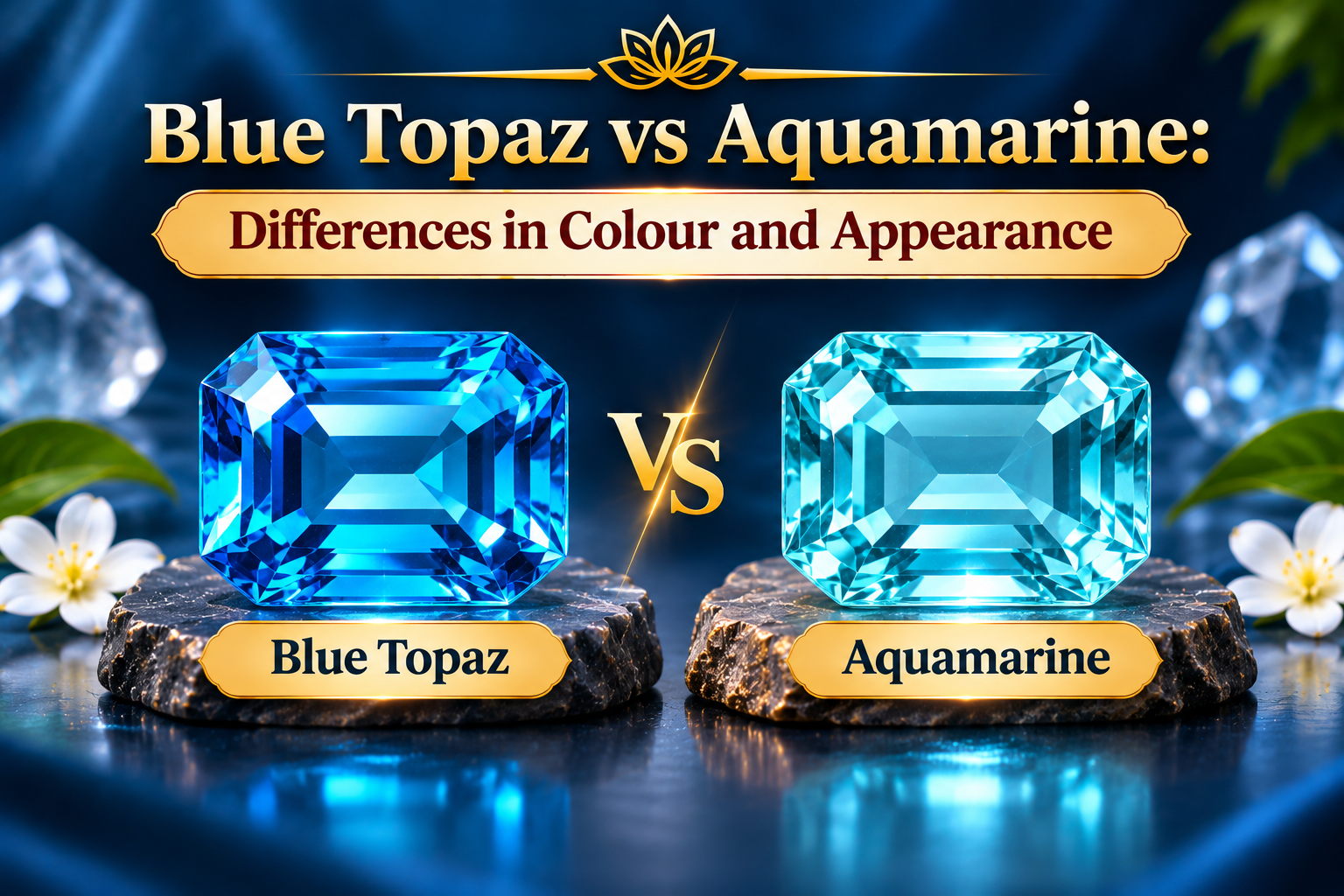
Blue gemstones have always attracted attention for their refreshing colours, elegant appearance, and timeless beauty. Among the popular blue gemstones, Blue Topaz and Aquamarine are two fascinating choices admired by gemstone collectors, jewellery lovers, and crystal enthusiasts.
At first glance, these gemstones may look similar because both are available in beautiful shades of blue. However, they differ in mineral composition, colour variations, transparency, brilliance, and traditional significance.
While Blue Topaz is admired for its vibrant blue shades and sparkling appearance, Aquamarine is loved for its delicate sea-blue and blue-green tones.
So, how can you distinguish between Blue Topaz and Aquamarine? Let’s explore their key differences.
What Is Blue Topaz?
Blue Topaz is a blue variety of the mineral Topaz, a naturally occurring aluminium silicate mineral containing fluorine and hydroxyl.
It is popular in jewellery because of its attractive blue shades, excellent transparency, and brilliant lustre.
Blue Topaz is available in different colour variations, ranging from light sky blue to deeper and more saturated blue.
Key Characteristics of Blue Topaz:
- Mineral Family: Topaz.
- Chemical Composition: Al₂SiO₄(F,OH)₂.
- Hardness: 8 on the Mohs scale.
- Colour: Light blue, sky blue, Swiss blue, and London blue.
- Transparency: Transparent to translucent.
- Lustre: Vitreous.
- Popular Uses: Rings, pendants, earrings, and gemstone jewellery.
What Is Aquamarine?
Aquamarine is a beautiful blue to blue-green variety of Beryl, the same mineral family that includes Emerald.
Its name comes from the Latin words associated with seawater, reflecting its refreshing ocean-like colour.
Aquamarine is especially admired for its delicate blue shades, excellent transparency, and elegant appearance.
Its colour is mainly caused by traces of iron within the mineral structure.
Key Characteristics of Aquamarine:
- Mineral Family: Beryl.
- Chemical Composition: Be₃Al₂Si₆O₁₈.
- Hardness: 7.5–8 on the Mohs scale.
- Colour: Pale blue, sky blue, and blue-green.
- Transparency: Transparent to translucent.
- Lustre: Vitreous.
- Popular Uses: Fine jewellery, rings, pendants, and gemstone collections.
Blue Topaz vs Aquamarine: Key Differences
- Difference in Colour
Colour is one of the easiest ways to compare Blue Topaz and Aquamarine.
Blue Topaz:
Blue Topaz is available in several distinctive shades:
- Sky Blue: Light and refreshing blue.
- Swiss Blue: Bright and vibrant blue.
- London Blue: Deep, dark, and intense blue.
Many Blue Topaz gemstones available in the jewellery market have been treated to achieve or enhance their blue colour.
Aquamarine:
Aquamarine generally displays softer and more natural-looking blue tones.
Its common colour variations include:
- Pale Blue: Delicate and subtle blue.
- Sky Blue: Clear and refreshing blue.
- Blue-Green: A beautiful combination of blue and green.
- Deep Blue: More saturated blue varieties.
Aquamarine is especially appreciated for its ocean-inspired appearance.
- Difference in Appearance and Brilliance
Both gemstones have a vitreous lustre and can display excellent transparency.
However, their visual appearance may differ depending on the cut, clarity, and quality of the individual gemstone.
Blue Topaz: Often displays bright brilliance and attractive flashes of light. Its different blue shades make it popular for statement jewellery.
Aquamarine: Generally offers a softer and more subtle appearance, with a refreshing colour reminiscent of clear seawater.
- Difference in Hardness and Durability
Both gemstones are suitable for jewellery, but they have slightly different physical characteristics.
- Blue Topaz: 8 on the Mohs hardness scale.
- Aquamarine: 7.5–8 on the Mohs hardness scale.
Blue Topaz is slightly harder in general, while Aquamarine also offers good durability for regular jewellery use.
However, Topaz has perfect basal cleavage, which means it can split if struck in the right direction. Aquamarine can also chip or fracture under strong impact.
Proper care is important for both gemstones.
- Difference in Mineral Composition
One of the biggest differences between Blue Topaz and Aquamarine is their chemical composition.
Blue Topaz belongs to the Topaz mineral family and consists of aluminium silicate containing fluorine and hydroxyl.
Aquamarine belongs to the Beryl mineral family and consists of beryllium aluminium silicate.
Although they may look similar, their internal crystal structures and chemical properties are different.
- Difference in Price and Value
The price of Blue Topaz and Aquamarine depends on several factors, including colour, clarity, carat weight, cut, origin, and treatments.
Blue Topaz: Generally more affordable and widely available in different blue shades. Its vibrant treated colours make it a popular choice for affordable gemstone jewellery.
Aquamarine: Fine-quality Aquamarine, particularly stones with attractive saturated blue colour and excellent clarity, can command higher prices.
The value of either gemstone should be assessed according to its actual quality and verified identity.
Traditional Significance of Blue Topaz
Blue Topaz is popularly associated with several symbolic qualities in modern gemstone traditions.
- Communication: Traditionally linked with clear expression.
- Clarity: Symbolises clear thinking and understanding.
- Confidence: Associated with self-expression and confidence.
- Creativity: Represents inspiration and creative thinking.
- Peace: Symbolises calmness and tranquillity.
These associations are based on traditional gemstone beliefs rather than scientifically proven effects.
Traditional Significance of Aquamarine
Aquamarine has a long history of symbolic association with the sea, sailors, and tranquillity.
Its traditional associations include:
- Peace and Calmness: Symbolises serenity and tranquillity.
- Communication: Traditionally associated with honest expression.
- Courage: Historically connected with protection for sailors.
- Harmony: Represents balance and understanding.
- Clarity: Symbolises clear thinking and emotional awareness.
These are cultural and symbolic associations, not guaranteed healing benefits.
Blue Topaz vs Aquamarine: Which One Should You Choose?
Both gemstones have their own beauty, making the choice largely dependent on your personal preferences.
Choose Blue Topaz if:
- You prefer vibrant and brighter blue shades.
- You like Swiss Blue or London Blue colours.
- You want an attractive gemstone at a generally affordable price.
- You prefer jewellery with noticeable sparkle.
Choose Aquamarine if:
- You prefer soft, ocean-inspired blue shades.
- You appreciate blue-green colour variations.
- You like elegant and understated gemstones.
- You are interested in the traditional symbolism associated with the sea.
How to Identify Genuine Blue Topaz and Aquamarine?
Before purchasing either gemstone, it is important to check its authenticity and quality.
For Blue Topaz:
- Examine its colour distribution and transparency.
- Ask whether the gemstone has undergone irradiation or heat treatment.
- Check its mineral identity through a reliable gemological laboratory.
- Purchase from a trusted gemstone seller.
For Aquamarine:
- Look for its characteristic pale-blue to blue-green colour.
- Examine the gemstone for natural inclusions and clarity.
- Ask about any heat treatments.
- Request a reliable gemological report when appropriate.
Since both gemstones can look similar, professional gemological testing is recommended when their identity is uncertain.
Conclusion: Blue Topaz or Aquamarine?
Blue Topaz and Aquamarine are two beautiful blue gemstones with different mineral compositions, colour characteristics, and traditional significance.
Blue Topaz stands out for its vibrant colour options, bright brilliance, and generally accessible pricing. Aquamarine is admired for its delicate ocean-like shades, elegant transparency, and historical symbolism.
Whether you prefer the striking beauty of Blue Topaz or the refreshing appearance of Aquamarine, understanding their differences can help you make a more informed gemstone choice.