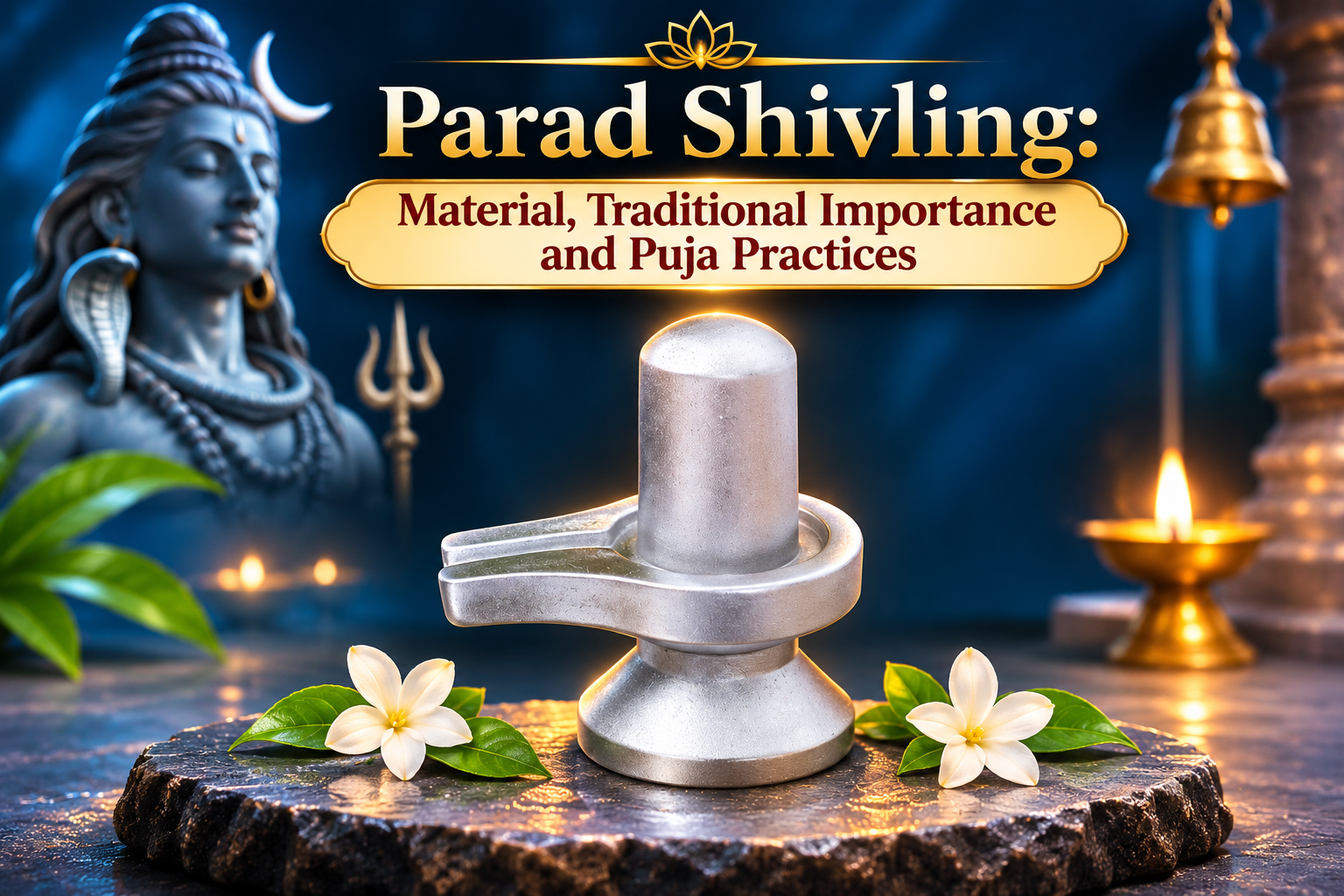
In Hindu spirituality, Lord Shiva is worshipped in many forms, and the Shivling holds a special place in Shaivism. Among the different types of Shivlings, the Parad Shivling is traditionally regarded as a sacred object associated with Lord Shiva, spiritual devotion, purity and auspiciousness.
The word Parad refers to mercury, a material that has held an important place in traditional Indian alchemical and spiritual literature. A Parad Shivling is traditionally prepared using mercury, often through specialised processes described in traditional texts. It is commonly kept in homes, temples and places of worship for daily Shiva puja.
In this article, let us explore what a Parad Shivling is, its traditional material, religious significance and the common practices followed during its worship.
What Is a Parad Shivling?
A Parad Shivling is a Shiva Lingam traditionally made from processed mercury. In Hindu religious traditions, mercury is considered a special material and is associated with Lord Shiva.
Unlike ordinary stone Shivlings, Parad Shivlings are valued for their distinctive material and traditional spiritual significance. They are often used for Shiva worship, meditation and devotional practices.
The Shivling itself symbolises the divine presence of Lord Shiva and is also traditionally understood as a representation of the cosmic principle of creation.
What Material Is Used to Make a Parad Shivling?
The primary material associated with a Parad Shivling is Parad, or mercury. Traditional texts on Indian alchemy describe specialised purification and processing methods for mercury.
Some important points about its material include:
- Mercury (Parad): Traditionally regarded as a significant substance in Indian alchemical and spiritual practices.
- Traditional Processing: Classical traditions describe purification and solidification methods used to prepare mercury-based sacred objects.
- Distinctive Appearance: Parad Shivlings are generally metallic in appearance, although their colour and finish may vary.
- Different Compositions: Not every product marketed as a Parad Shivling necessarily has the same composition or purity.
Is Every Parad Shivling Made of Pure Mercury?
No. Products sold under the name Parad Shivling may vary in composition, manufacturing methods and material quality. Some may contain alloys or other substances.
Buyers should ask for reliable material information and independent testing where available. A visual inspection alone cannot establish mercury purity or composition.
Safety note: Mercury is toxic, and exposure to mercury or its vapour can be harmful. Do not heat, melt, grind or chemically process a Parad Shivling. Avoid handling damaged or leaking objects, and keep mercury-containing items away from children and pets. If the material is uncertain, seek advice from a qualified laboratory or appropriate hazardous-material professional.
Traditional Importance of Parad Shivling
Parad Shivling has a respected place in certain Hindu spiritual and alchemical traditions. Its significance is primarily religious and symbolic.
- Symbol of Lord Shiva
The Shivling represents Lord Shiva, the supreme consciousness and divine principle in Shaivite traditions. Worshipping a Parad Shivling is considered by devotees a way of expressing reverence and devotion to Mahadev. - Association with Purity
In traditional spiritual literature, specially processed Parad is associated with purification and sacredness. This association contributes to its importance in certain forms of Shiva worship. - Symbol of Spiritual Growth
Devotees may worship a Parad Shivling as part of their spiritual routine, meditation and prayers for inner peace, discipline and devotion. - Associated with Auspiciousness
Some traditions consider keeping and worshipping a Parad Shivling at home or in a place of worship auspicious. These beliefs are part of religious practice rather than scientifically established effects. - Connection with Shaivite Traditions
Parad Shivling is particularly discussed in certain traditional texts and practices connected with Lord Shiva and Indian alchemy. It reflects the historical relationship between spiritual symbolism and traditional material knowledge.
Benefits Traditionally Associated with Parad Shivling
In devotional traditions, worship of Parad Shivling is associated with several spiritual intentions:
- Devotion to Lord Shiva: Represents faith, prayer and surrender to Mahadev.
- Inner Peace: Worship is used by devotees as a way to cultivate calmness and mindfulness.
- Spiritual Discipline: Regular puja encourages consistency and devotion.
- Auspicious Worship Space: It is traditionally kept as a sacred focal point for Shiva puja.
- Meditation and Reflection: The Shivling can serve as a devotional focus during meditation and prayer.
These are traditional religious associations, not scientifically proven health, financial or supernatural benefits.
How to Worship a Parad Shivling at Home
Parad Shivling puja can be performed with simple devotional practices. The exact rituals may differ according to family traditions, regional customs and guidance from a priest.
Step 1: Choose a Clean Place
Keep the Shivling in a clean and stable place, preferably in your designated puja area. Follow your family’s customary placement and worship practices.
Step 2: Clean the Worship Area
Clean the surrounding area and arrange the required puja items. Avoid using harsh chemicals or abrasive materials on the Shivling.
Step 3: Offer Water
Devotees traditionally offer clean water while chanting the name of Lord Shiva. If the Shivling contains mercury or its composition is uncertain, avoid pouring liquids directly over it. Instead, offer water symbolically in a separate vessel.
Step 4: Offer Flowers and Bilva Leaves
Bilva leaves and flowers are traditionally offered to Lord Shiva as expressions of devotion. Place offerings near the Shivling rather than using any method that could damage its surface.
Step 5: Chant Shiva Mantras
You may chant a simple mantra such as:
ॐ नमः शिवाय
Om Namah Shivaya
Chanting with sincerity and concentration is an important part of many Shiva worship traditions.
Step 6: Perform Aarti
Conclude the puja with aarti and prayers. You may offer fruits or other customary bhog according to your family’s tradition.
Which Day Is Auspicious for Parad Shivling Puja?
Devotees commonly worship Lord Shiva on the following occasions:
- Monday (Somvar): Traditionally dedicated to Lord Shiva.
- Pradosh Vrat: Observed on the Trayodashi tithi in honour of Lord Shiva.
- Maha Shivratri: One of the most significant festivals dedicated to Mahadev.
- Shravan Month: Considered especially sacred for Shiva worship in many Hindu traditions.
You may also offer daily prayers according to your personal faith and family customs.
Important Precautions While Keeping a Parad Shivling
Because mercury is toxic, material safety should be considered alongside religious practices.
- Confirm the composition of the Shivling before purchasing.
- Ask the seller for credible documentation or independent material testing.
- Do not heat, melt, grind, cut or chemically treat the object.
- Do not use it if it is cracked, damaged or leaking.
- Keep it away from children, pets, food preparation areas and places where it could be disturbed.
- Avoid direct contact with unknown mercury-containing material.
- Do not dispose of a mercury-containing object in household waste or drains. Seek guidance from local hazardous-waste authorities for safe handling and disposal.
If you are unsure whether an item contains mercury, treat it cautiously until its composition has been verified.
Who Can Worship a Parad Shivling?
In general, devotees who follow Lord Shiva’s worship traditions may include a Shivling in their prayer practices. Specific rules about installation, placement and rituals can differ between traditions.
If you are purchasing a Parad Shivling, prioritise verified material information and safe handling. For ritual guidance, you may consult a knowledgeable priest or follow your family’s customary practices.
Conclusion:
The Parad Shivling is a distinctive form of Shivling associated with Lord Shiva, traditional Indian alchemy and certain Shaivite worship practices. Its significance lies in its religious symbolism and the devotion with which it is worshipped.
Whether you choose a Parad Shivling or a traditional stone Shivling, sincere prayer, faith and respect for Lord Shiva remain central to the worship experience. Always remember that genuine material information and safe handling are especially important when an object is claimed to contain mercury.