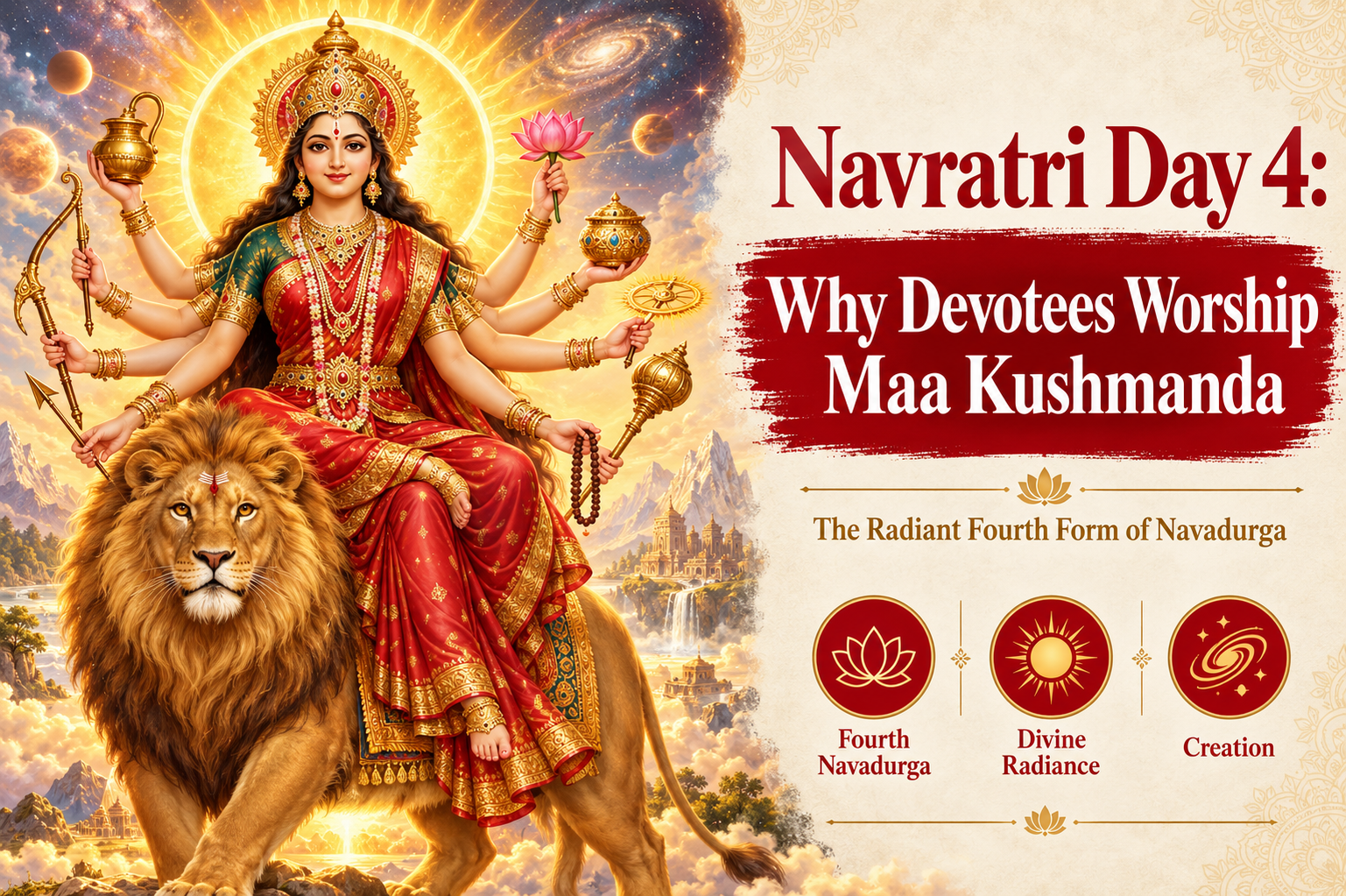
Navratri Day 4 is dedicated to Maa Kushmanda, the fourth form of Navadurga. Devotees worship Maa Kushmanda with devotion and prayers, traditionally seeking her blessings for strength, positivity, vitality, prosperity, and spiritual well-being.
Her name and story carry deep symbolism, making her an important form of Maa Durga during the nine days of Navratri.
Who Is Maa Kushmanda?
Maa Kushmanda is revered as the fourth form of Navadurga and is worshipped on the fourth day of Navratri.
The name “Kushmanda” is traditionally explained through Sanskrit terms associated with Ku, Ushma, and Anda, often interpreted symbolically as the cosmic energy or warmth associated with creation.
According to traditional beliefs, Maa Kushmanda is associated with the creation and nurturing of the cosmic universe through her divine energy. She is therefore often regarded as a powerful representation of creative Shakti, vitality, light, and abundance.
Why Is Maa Kushmanda Worshipped on Day 4?
Navratri celebrates different manifestations of Maa Durga over nine days. On the fourth day, devotees turn their prayers toward Maa Kushmanda.
Her worship is traditionally associated with:
- Divine energy and vitality
- Creativity and positive energy
- Prosperity and abundance
- Strength and inner courage
- Spiritual growth and devotion
- Harmony and well-being
These associations are part of Hindu religious and devotional traditions rather than scientifically established effects.
The Symbolism of Maa Kushmanda
Maa Kushmanda is commonly depicted with eight arms, which is why she is also known as Ashtabhuja Devi in many traditions.
Her iconography may include objects such as:
- Kamandalu
- Bow and arrow
- Lotus
- Jar containing nectar
- Discus
- Mace
- Chakra or other divine weapons
She is traditionally depicted riding a lion, symbolizing strength and courage. The number and arrangement of objects can vary across regional traditions and artistic representations.
What Does “Kushmanda” Symbolize?
The name of Maa Kushmanda has a profound spiritual meaning.
She is traditionally connected with cosmic creation, light, energy, and nourishment. Her imagery reminds devotees that divine feminine energy can represent both creative power and protective strength.
For devotees, worshipping Maa Kushmanda can become an opportunity to reflect on:
Creation → Energy → Strength → Growth → Spiritual Awareness
Maa Kushmanda and the Sun
Maa Kushmanda is often associated symbolically with light and solar energy. Her connection with radiance represents the idea of dispelling darkness and awakening inner strength and awareness.
This makes Day 4 of Navratri a meaningful time for devotees to focus on positivity, discipline, devotion, and inner transformation.
What Do Devotees Offer Maa Kushmanda?
Offerings can vary according to family traditions, regional customs, and temples.
Malpua is commonly associated with Maa Kushmanda during Navratri worship.
Devotees may also offer:
- Fruits
- Flowers
- Sweets
- Coconut
- Naivedya prepared according to their tradition
It is always best to follow the customs of your family, temple, or spiritual tradition.
Maa Kushmanda Mantra
Devotees may chant the following mantra while worshipping Maa Kushmanda:
ॐ देवी कूष्माण्डायै नमः। Om Devi Kushmandayai Namah.
The mantra may be recited during prayer or meditation with a calm and devotional mindset.
How to Worship Maa Kushmanda on Navratri Day 4?
A simple devotional routine can include:
- Clean the Puja Space
Clean the place of worship and create a peaceful environment. - Light a Diya
Light a diya as part of your traditional prayer ritual. - Offer Flowers and Naivedya
Offer flowers, fruits, sweets, or other offerings according to your family tradition. - Chant the Mantra
Recite “Om Devi Kushmandayai Namah” with devotion. - Read or Listen to Devi Stotra
Devotees may read Durga-related prayers, stotras, or sacred texts according to their tradition. - Meditate and Pray
Spend a few moments in quiet prayer, reflecting on strength, positivity, gratitude, and spiritual growth.
What Can Devotees Learn From Maa Kushmanda?
The story and symbolism of Maa Kushmanda offer several spiritual reflections.
Embrace Inner Light
Her association with light reminds devotees to cultivate positivity and awareness.
Encourage Creation and Growth
She represents creative divine energy, inspiring devotees to use their abilities constructively.
Develop Inner Strength
Her powerful form reminds us to face challenges with courage and determination.
Stay Connected With Devotion
Navratri is also a time for self-reflection, prayer, gratitude, and spiritual discipline.
Maa Kushmanda and Navratri
The nine forms of Maa Durga represent different expressions of Shakti, the divine feminine power. The first three forms—Maa Shailputri, Maa Brahmacharini, and Maa Chandraghanta—are followed by Maa Kushmanda on Day 4.
Her presence in the Navadurga sequence can be viewed as a continuation of the spiritual journey toward energy, awareness, courage, and transformation.
Conclusion:
Navratri Day 4 invites devotees to worship Maa Kushmanda, a revered form of Navadurga associated with divine creative energy, light, strength, and abundance.
Her worship is not only about rituals but also about reflecting on the qualities she represents—positivity, courage, creativity, devotion, and inner strength.
As Navratri continues, devotees can use each day as an opportunity for prayer, self-reflection, gratitude, and spiritual growth.
Jai Maa Kushmanda!