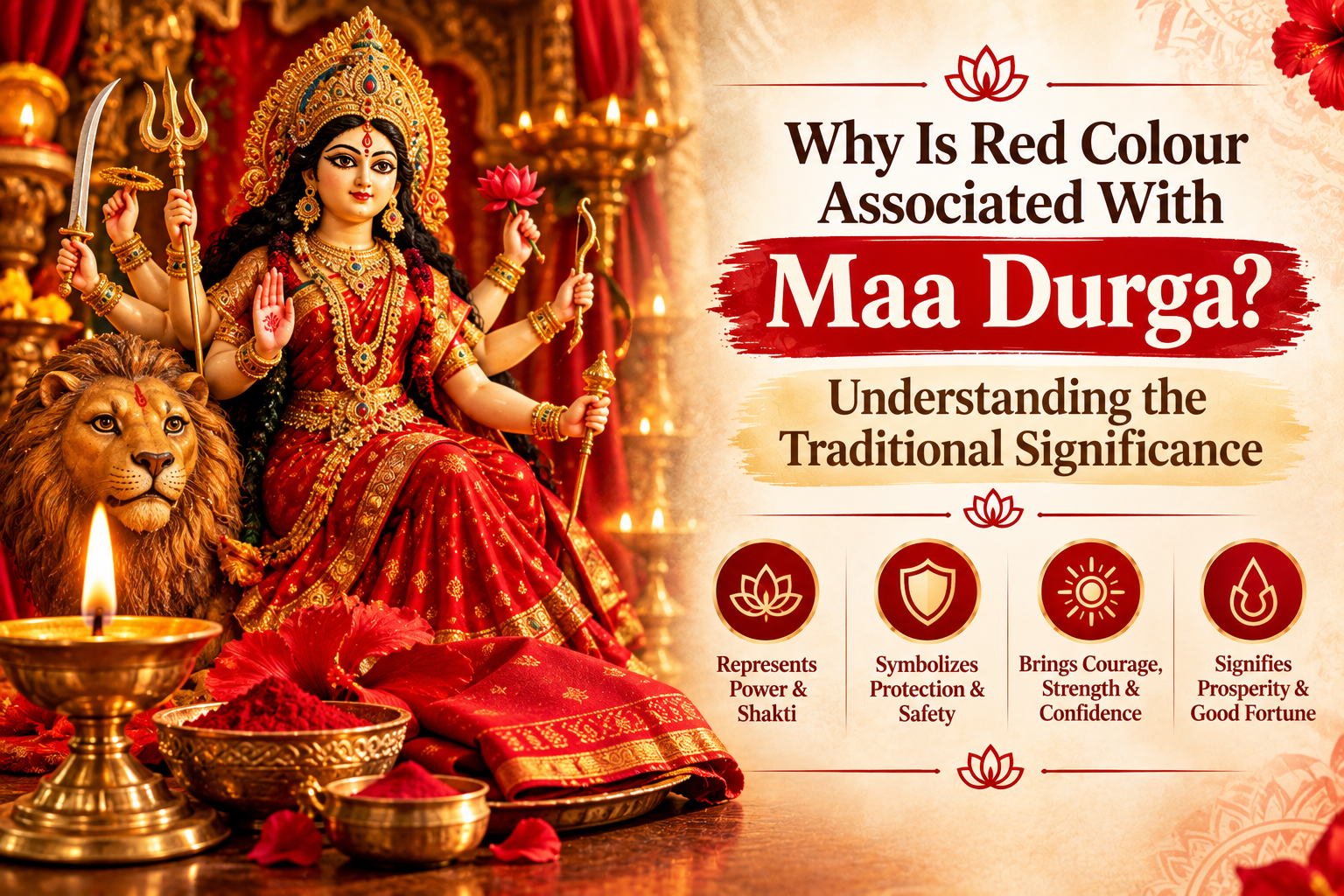
Red is one of the most recognizable colours associated with Maa Durga. During Durga Puja and Navratri, devotees often see red sarees, flowers, sindoor, decorations, and other red offerings used in worship.
But why is red considered significant in Maa Durga worship?
The association comes from a combination of traditional Hindu symbolism, Shakti worship, and the imagery of divine feminine power. While customs can differ across regions and traditions, red is widely connected with strength, energy, devotion, auspiciousness, and the dynamic power of Shakti.
What Does Red Symbolize in Hindu Tradition?
In many Hindu traditions, red has several symbolic meanings, including:
Strength and courage
Energy and vitality
Passion and determination
Devotion and spiritual intensity
Auspiciousness and prosperity
The dynamic power of Shakti
These meanings help explain why red naturally became an important colour in the worship of powerful forms of the Divine Feminine, including Maa Durga.
Why Is Red Associated With Maa Durga?
Maa Durga is traditionally understood as a powerful manifestation of Shakti—the divine feminine power.
Red is often used to represent the active and dynamic aspect of this divine energy. Durga is not only associated with compassion and motherhood but also with courage, protection, strength, and the destruction of adharma.
Therefore, red symbolically complements many of the qualities traditionally associated with Maa Durga.
- Red Represents Shakti
The word Shakti refers to divine power or energy. In Shakta traditions, the Divine Feminine is understood as the active power through which cosmic forces operate. Red can symbolize this active, powerful, and transformative energy.
- Red Represents Courage and Strength
Maa Durga is famously depicted riding a lion or tiger and carrying various weapons. Her imagery represents courage and the ability to confront destructive forces. Red, in traditional symbolism, reflects qualities such as strength, bravery, determination, and action.
- Red Is Considered Auspicious
Red is widely regarded as an auspicious colour in many Hindu ceremonies.
It is commonly seen in:
Sarees and traditional clothing
Wedding rituals
Puja decorations
Kumkum and sindoor
Flowers offered to deities
Festival decorations
Its association with auspiciousness makes it especially prominent during celebrations dedicated to the Goddess.
- Red Is Connected With Devotion
Red can also represent intensity of feeling and wholehearted devotion.
During Navratri and Durga Puja, devotees may use red clothing and offerings as a visual expression of their faith, reverence, and dedication to Maa Durga.
Why Do Devotees Offer Red Flowers to Maa Durga?
Red flowers are commonly offered to Maa Durga in many traditions. Flowers such as hibiscus (Jaba) are particularly associated with Goddess worship in several regions.
The red colour of the flower is traditionally viewed as symbolizing:
Divine energy
Courage
Devotion
Strength
Shakti
However, the specific flowers used and their significance can vary according to regional customs and individual traditions.
Why Is Maa Durga Often Shown Wearing Red?
Traditional images and idols of Maa Durga frequently feature red garments or red elements.
This visual representation reinforces the symbolic connection between the Goddess and:
Shakti → Strength → Courage → Protection → Divine Feminine Energy
Red therefore becomes more than just a decorative colour. It acts as a visual reminder of the qualities devotees associate with Maa Durga.
Red and the Concept of Shakti
Maa Durga is one of the most prominent manifestations of Shakti, the divine feminine principle.
Shakti traditions emphasize that divine feminine power is both nurturing and powerful. The Goddess can represent motherhood and compassion while simultaneously embodying courage and the ability to overcome destructive forces. Red symbolically captures this dynamic aspect of Shakti.
Is Red the Only Colour Associated With Maa Durga?
No. Although red is especially prominent, Maa Durga and other forms of the Divine Feminine can be associated with different colours depending on the deity, festival day, regional practice, and religious tradition.
During Navratri, different days are often associated with different colours in popular devotional customs. These colour traditions can vary between regions and calendars. Therefore, red should be understood as a widely recognized traditional association, rather than an exclusive colour of Maa Durga.
Red During Durga Puja and Navratri
Red becomes particularly visible during Durga Puja and Navratri. Devotees may wear red clothing, decorate puja spaces with red flowers, offer red-coloured items, or use red fabrics around the altar.
These practices create a festive devotional atmosphere while symbolically expressing the qualities traditionally connected with Shakti.
What Can We Learn From the Symbolism of Red?
The traditional association of red with Maa Durga can be understood as a reminder of several qualities:
Strength — face challenges with courage.
Energy — take meaningful action.
Devotion — remain sincere in spiritual practice.
Determination — continue despite obstacles.
Auspiciousness — celebrate divine blessings with gratitude.
In this sense, the colour becomes a symbolic part of devotion rather than simply a visual tradition.
Conclusion
The connection between red and Maa Durga comes from a rich tradition of Hindu symbolism. Red represents qualities such as Shakti, strength, courage, devotion, energy, and auspiciousness—all themes strongly connected with traditional representations of Maa Durga.
During Durga Puja and Navratri, red therefore becomes a meaningful visual expression of devotion and celebration. Ultimately, the deeper significance lies not only in the colour itself but in the faith, devotion, courage, and positive values that devotees associate with Maa Durga.