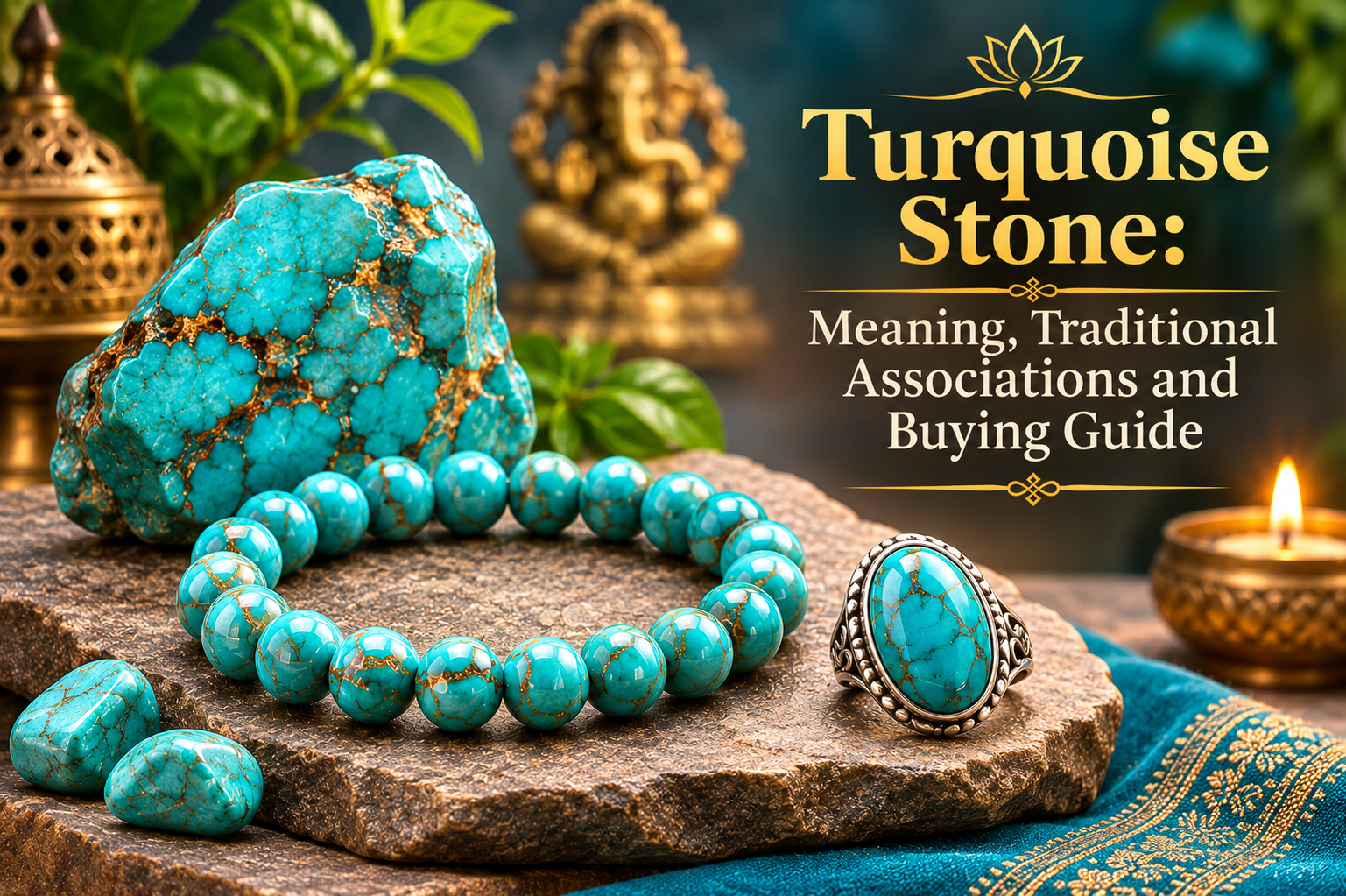
Turquoise is a beautiful blue-to-green gemstone admired for its distinctive colour, natural patterns and long history in jewellery and decorative art. From ancient ornaments to contemporary gemstone bracelets and pendants, this stone has remained popular across different cultures.
Traditionally associated with protection, wisdom, good fortune and positive energy, Turquoise holds an important place in various cultural and spiritual traditions. Its attractive appearance and symbolic meaning make it a popular choice among gemstone enthusiasts.
If you are considering buying Turquoise, understanding its traditional significance, varieties, quality factors and care requirements can help you make an informed choice.
What Is Turquoise Stone?
Turquoise is a naturally occurring, opaque gemstone composed primarily of hydrated copper and aluminium phosphate. Its colour ranges from sky blue and turquoise blue to greenish-blue, depending largely on its chemical composition and the presence of other elements.
The stone is often recognised by its distinctive matrix patterns, which appear as dark or brownish veins across its surface. Some Turquoise varieties have a relatively uniform colour, while others display striking natural patterns.
It is commonly used in:
- Gemstone rings and pendants
- Bracelets and beads
- Necklaces and traditional jewellery
- Decorative gemstone carvings
- Spiritual and meditation accessories
- Turquoise Stone Meaning and Symbolism
Turquoise has been valued for centuries and carries different meanings across cultures. Its traditional associations include:
- Protection and Safety
In several ancient traditions, Turquoise was worn as an ornamental stone believed to offer protection and safeguard the wearer from negative influences. This is a cultural belief rather than a scientifically established effect. - Wisdom and Communication
The stone is sometimes associated with wisdom, honest expression and clear communication. Its calming blue shades are also popular in modern crystal traditions. - Good Fortune and Prosperity
Turquoise has traditionally been regarded as an auspicious gemstone in some cultures. It is often chosen as a meaningful gift to express good wishes and positive intentions. - Peace and Emotional Balance
In contemporary crystal practices, Turquoise is associated with tranquillity, emotional balance and inner harmony. These associations are spiritual interpretations, not proven medical benefits.
Traditional Astrological Associations of Turquoise
Turquoise is sometimes connected with Jupiter (Guru) in certain contemporary gemstone and astrological traditions. However, its planetary association is not universally established across all Vedic astrology schools.
It is also associated with the throat chakra in modern crystal practices, where it symbolises communication, self-expression and confidence.
Important: Turquoise should not automatically be considered a substitute for Yellow Sapphire or another prescribed astrological gemstone. Gemstone recommendations depend on the specific astrological tradition and an individual’s birth chart.
Different Colours and Varieties of Turquoise
Turquoise is available in different shades and patterns.
- Sky Blue Turquoise: A bright blue variety admired for its fresh, vibrant appearance.
- Robin’s Egg Blue Turquoise: A soft blue shade that is popular in jewellery.
- Greenish Turquoise: A blue-green variety with a more earthy appearance.
- Matrix Turquoise: Features visible dark or brownish veins and natural patterns.
- Uniform Blue Turquoise: Has a relatively consistent colour and a clean appearance.
Natural colour, matrix patterns and treatment can vary considerably from one piece to another.
Benefits Traditionally Associated with Turquoise
In traditional beliefs and modern crystal practices, Turquoise is associated with several symbolic qualities:
- Protection: Traditionally regarded as a protective stone in some cultures.
- Communication: Associated with clear expression and honest conversations.
- Confidence: Symbolically connected with self-expression and courage.
- Peace: Traditionally linked with calmness and harmony.
- Good Fortune: Often chosen as a meaningful symbol of positive wishes.
- Friendship: Popular as a gift representing loyalty, care and goodwill.
These are traditional and spiritual associations, not scientifically proven outcomes.
How to Identify Quality Turquoise
Before purchasing Turquoise, consider the following quality factors.
- Colour
Colour is one of the most important visual characteristics. Blue and blue-green shades are popular, but personal preference also matters. - Matrix Pattern
Natural Turquoise may display veins or web-like patterns. The pattern can influence its appearance and market value, although not every natural stone has a visible matrix. - Surface and Texture
Look for a well-finished surface without excessive cracks, chips or visible damage. Natural Turquoise can be porous, so some surface variation is normal. - Treatments
Turquoise is frequently treated to improve its colour, durability or appearance. Common treatments include stabilisation, waxing and dyeing. Ask the seller to disclose any known treatment. - Origin and Documentation
Origin can influence market interest, but it should not be assumed from colour or appearance alone. For valuable purchases, request a reliable gemological report that identifies the material and discloses detectable treatments.
How to Choose the Right Turquoise Jewellery
Turquoise is available in several jewellery styles. Choose according to your preference, lifestyle and intended use.
- Turquoise Bracelet
A Turquoise bracelet is a versatile accessory that can be worn with casual and traditional outfits. It is also a popular choice for people interested in crystal-inspired jewellery. - Turquoise Pendant
A pendant highlights the stone’s distinctive colour and can be paired with everyday or festive clothing. - Turquoise Ring
Turquoise rings are available in different settings, including silver and other metals. Choose a secure setting that protects the stone from impact. - Turquoise Mala or Beads
Turquoise beads can be used in necklaces and other traditional accessories. Check the quality of the beads, drilling and stringing before purchasing.
How to Care for Turquoise Stone
Turquoise requires gentle handling because it is relatively soft and porous compared with many other gemstones.
Follow these care tips:
- Keep Turquoise away from perfumes, cosmetics and household chemicals.
- Avoid prolonged exposure to water and moisture.
- Do not use ultrasonic or steam cleaners.
- Clean gently with a soft, dry cloth.
- Store separately from harder gemstones to prevent scratches.
- Avoid prolonged direct sunlight and excessive heat.
- Remove Turquoise jewellery before swimming, bathing or exercising.
- Proper care helps maintain its appearance and condition over time.
Final Thoughts: Is Turquoise the Right Gemstone for You?
Turquoise is admired for its beautiful blue-green shades, distinctive natural patterns and rich cultural history. Whether you choose it for jewellery, its traditional symbolism or its decorative appeal, understanding its quality and treatment is essential before buying.
Always purchase from a reliable gemstone seller, ask about treatments and request suitable documentation for valuable stones. An informed choice helps you appreciate the gemstone’s natural beauty and traditional significance with confidence.