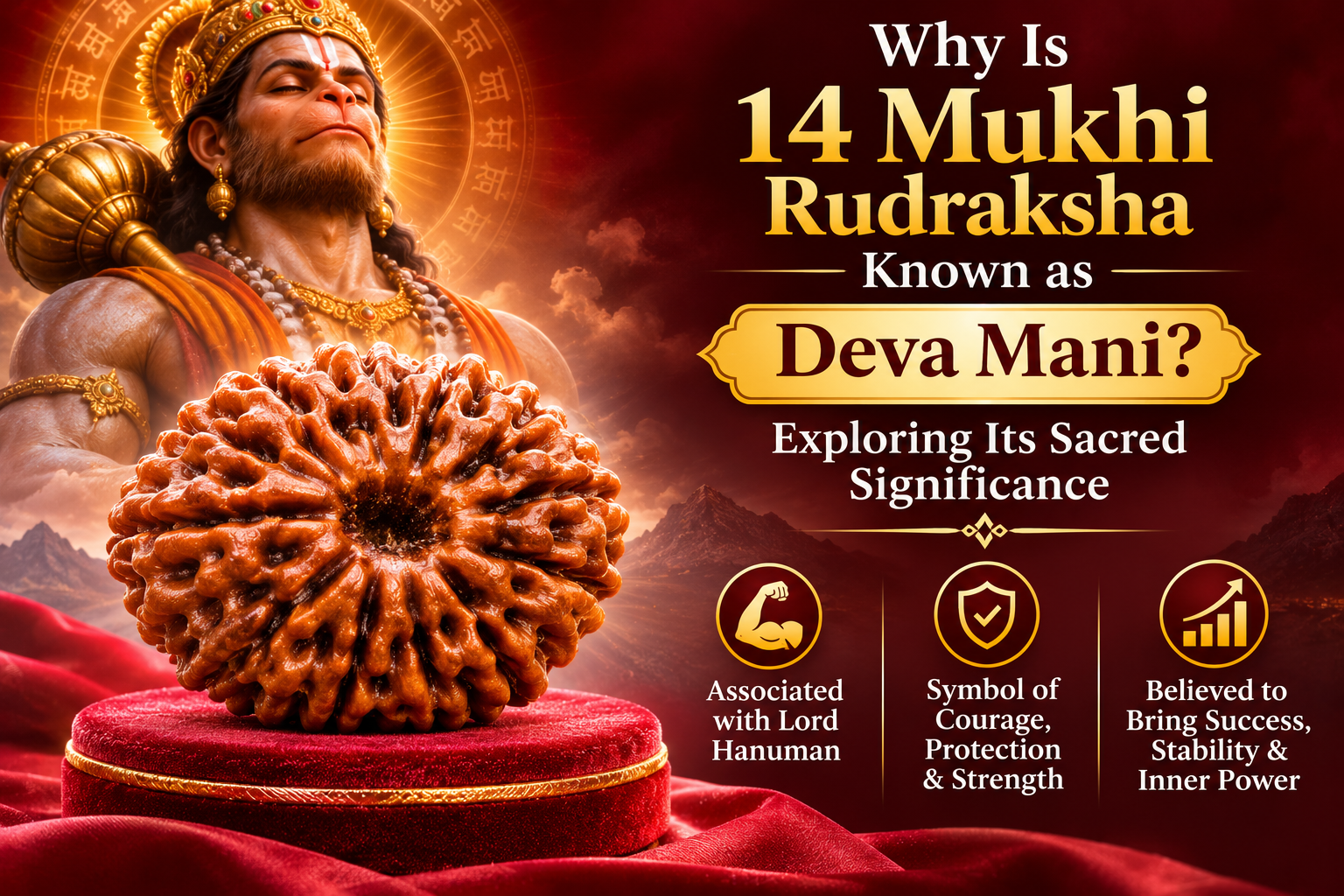
Among the many sacred Rudraksha beads mentioned in Hindu spiritual traditions, the 14 Mukhi Rudraksha holds a particularly revered position. Commonly known as Deva Mani (Dev Mani) or the Divine Gem, this rare Rudraksha is traditionally associated with Lord Shiva, Lord Hanuman, wisdom, intuition, courage, and spiritual awareness.
Known for its fourteen natural mukhi lines, this sacred bead is admired by devotees, spiritual seekers, and Rudraksha enthusiasts. Its association with Lord Shiva’s third eye makes it especially significant in traditions that connect it with inner vision, awareness, and the ability to make thoughtful decisions.
But why is the 14 Mukhi Rudraksha called Deva Mani? What makes it so special? And what is its traditional spiritual and astrological significance?
Let’s explore the meaning, mythology, traditional associations, and importance of this sacred Rudraksha.
What Is 14 Mukhi Rudraksha?
The 14 Mukhi Rudraksha, also known as Chaturdasha Mukhi Rudraksha, is a naturally occurring Rudraksha bead identified by fourteen distinct natural lines or faces (Mukhis) running from one end to the other.
In Hindu spiritual traditions, Rudraksha beads are considered sacred and are associated with Lord Shiva. Different Mukhi Rudraksha beads carry different traditional meanings and spiritual associations.
The 14 Mukhi Rudraksha is particularly respected because of its association with divine wisdom, intuition, courage, and higher consciousness.
It is also considered one of the rare and highly valued varieties among the traditional 1 to 14 Mukhi Rudraksha range.
Why Is 14 Mukhi Rudraksha Known as Deva Mani?
The name Deva Mani carries a beautiful spiritual meaning.
- Deva: Refers to divine beings or celestial energies.
- Mani: Means jewel, gem, or precious treasure.
Together, Deva Mani means the Divine Jewel or Jewel of the Gods.
The 14 Mukhi Rudraksha receives this revered name because of its special place in traditional Rudraksha beliefs and its association with Lord Shiva’s divine vision.
It is traditionally regarded as a symbol of divine wisdom, spiritual strength, and higher awareness.
Unlike ordinary decorative beads, the Deva Mani is valued for its sacred symbolism and its association with inner transformation.
Sacred Connection Between 14 Mukhi Rudraksha and Lord Shiva
According to traditional beliefs, the 14 Mukhi Rudraksha is associated with Lord Shiva’s third eye, which represents divine perception, wisdom, and the ability to see beyond ordinary appearances.
Lord Shiva’s third eye is an important symbol in Hindu mythology. It represents:
- Higher consciousness and spiritual awareness.
- Wisdom beyond ordinary perception.
- Destruction of ignorance.
- Inner vision and clarity.
- Transformation and divine power.
Because of this association, the 14 Mukhi Rudraksha is traditionally considered a symbol of awakened awareness and spiritual understanding.
It reminds devotees to look beyond immediate circumstances and develop wisdom before making important decisions.
Spiritual Significance of 14 Mukhi Rudraksha
The 14 Mukhi Rudraksha is traditionally valued for its connection with several spiritual qualities.
- Symbol of Divine Wisdom
It is associated with Lord Shiva’s divine knowledge and represents the importance of wisdom, awareness, and understanding. - Represents Intuition and Inner Vision
Its connection with the third eye makes it a traditional symbol of intuition, insight, and deeper awareness. - Symbol of Courage and Strength
The bead is also associated with Lord Hanuman in many popular Rudraksha traditions, representing fearlessness, devotion, determination, and inner strength. - Encourages Thoughtful Decision-Making
The 14 Mukhi Rudraksha is traditionally associated with sound judgement and the ability to approach difficult situations with greater awareness. - Represents Spiritual Growth
For spiritual seekers, it symbolises the journey towards self-awareness, discipline, and higher consciousness.
Astrological Significance of 14 Mukhi Rudraksha
In many modern Vedic astrology and Rudraksha traditions, the 14 Mukhi Rudraksha is associated with Shani Dev (Saturn).
Saturn represents discipline, responsibility, patience, karma, hard work, and life lessons in Vedic astrology.
The bead is traditionally considered by some practitioners for people seeking spiritual support during challenging Saturn periods.
Its astrological associations include:
- Discipline and patience.
- Courage during challenging circumstances.
- Stability and determination.
- Responsible decision-making.
- Spiritual strength and awareness.
The planetary association and recommendations can vary between different astrological traditions. Therefore, individuals interested in wearing it for astrological purposes should seek guidance from a knowledgeable astrologer.
Traditional Benefits of 14 Mukhi Rudraksha
The Deva Mani Rudraksha is traditionally associated with the following symbolic benefits:
- Encourages Confidence and Courage
Traditionally associated with Lord Hanuman, the bead represents bravery, determination, and the strength to face challenges. - Symbolises Better Decision-Making
Its connection with Lord Shiva’s third eye makes it a symbol of wisdom, awareness, and thoughtful judgement. - Represents Protection
In spiritual traditions, the 14 Mukhi Rudraksha is regarded as an auspicious protective symbol. - Supports Spiritual Awareness
It is associated with the Ajna Chakra or Third Eye Chakra, which symbolises intuition, perception, and inner awareness. - Represents Strength During Difficult Times
Its association with Shani Dev connects it with patience, discipline, perseverance, and responsibility. - Encourages Personal Transformation
The bead symbolises overcoming ignorance, developing self-awareness, and moving towards a more disciplined and purposeful life.
These benefits describe traditional spiritual and astrological beliefs and should not be understood as scientifically proven effects or guaranteed outcomes.
Why Is 14 Mukhi Rudraksha Considered Rare and Precious?
The 14 Mukhi Rudraksha is considered rare because naturally occurring beads with fourteen clearly defined faces are less commonly available than many lower-mukhi varieties.
Its rarity, sacred associations, and demand among Rudraksha collectors contribute to its high value.
A genuine 14 Mukhi Rudraksha should have:
- Fourteen natural mukhi lines.
- Natural surface characteristics.
- Clearly defined faces running from one end to the other.
- No artificially carved or altered mukhi lines.
Because of its rarity and value, buyers should pay special attention to authenticity and proper laboratory verification.
How to Identify an Original 14 Mukhi Rudraksha?
When purchasing a rare Rudraksha such as Deva Mani, authenticity should be a priority.
Here are some important points to consider:
- Natural Mukhi Lines: Check that all fourteen lines are naturally formed and extend from one end to the other.
- Natural Surface: Examine the bead for natural texture and characteristics.
- Laboratory Verification: Purchase from a trusted seller who can provide an appropriate laboratory report.
- Avoid Artificial Alterations: Be cautious of beads with suspiciously carved or artificially modified lines.
- Check Seller Credibility: Choose a reliable Rudraksha supplier with transparent product information.
A professional examination, including appropriate imaging where necessary, can help verify the bead’s natural structure and mukhi count.
How to Wear 14 Mukhi Rudraksha?
The 14 Mukhi Rudraksha is traditionally worn with devotion and respect.
You can follow these general practices:
- Clean the Rudraksha gently using a soft, dry cloth.
- Offer prayers to Lord Shiva before wearing it.
- Chant a traditional Rudraksha mantra according to your spiritual practice.
- Wear it in a suitable thread or silver setting, depending on your preference.
- Maintain cleanliness and handle the bead respectfully.
Traditional Mantra:
Om Namah Shivaya
Devotees may also follow a specific mantra or wearing ritual recommended by their spiritual guide.
Who Should Wear 14 Mukhi Rudraksha?
The 14 Mukhi Rudraksha may be explored by:
- Spiritual seekers interested in higher awareness.
- Individuals who value the teachings and symbolism of Lord Shiva.
- Devotees of Lord Hanuman.
- People interested in traditional Rudraksha practices.
- Individuals seeking a symbolic reminder of courage and determination.
- Rudraksha collectors and enthusiasts.
If you intend to wear it for a specific astrological purpose, consult an experienced astrologer for personalised guidance.
14 Mukhi Rudraksha – A Meaningful Spiritual Gift
Because of its rare nature and sacred associations, the 14 Mukhi Rudraksha can also be a meaningful gift for someone who values spirituality and traditional Hindu beliefs.
It can be considered for:
- Religious occasions.
- Spiritual celebrations.
- Special family events.
- Gifts for devotees of Lord Shiva and Lord Hanuman.
- Rudraksha collectors and spiritual practitioners.
Its traditional name, Deva Mani, makes it especially meaningful as a symbol of divine wisdom, courage, and spiritual awareness.
Conclusion
The 14 Mukhi Rudraksha, popularly known as Deva Mani, holds a special position in traditional Rudraksha beliefs. Its name represents the Divine Jewel, while its association with Lord Shiva’s third eye symbolises wisdom, intuition, awareness, and spiritual growth.
Traditionally connected with Lord Shiva, Lord Hanuman, and Shani Dev in different spiritual and astrological practices, this sacred bead represents courage, discipline, protection, and thoughtful decision-making.
Whether you appreciate it for its spiritual symbolism, traditional significance, or rarity, the 14 Mukhi Rudraksha remains one of the most fascinating varieties in the world of sacred Rudraksha.