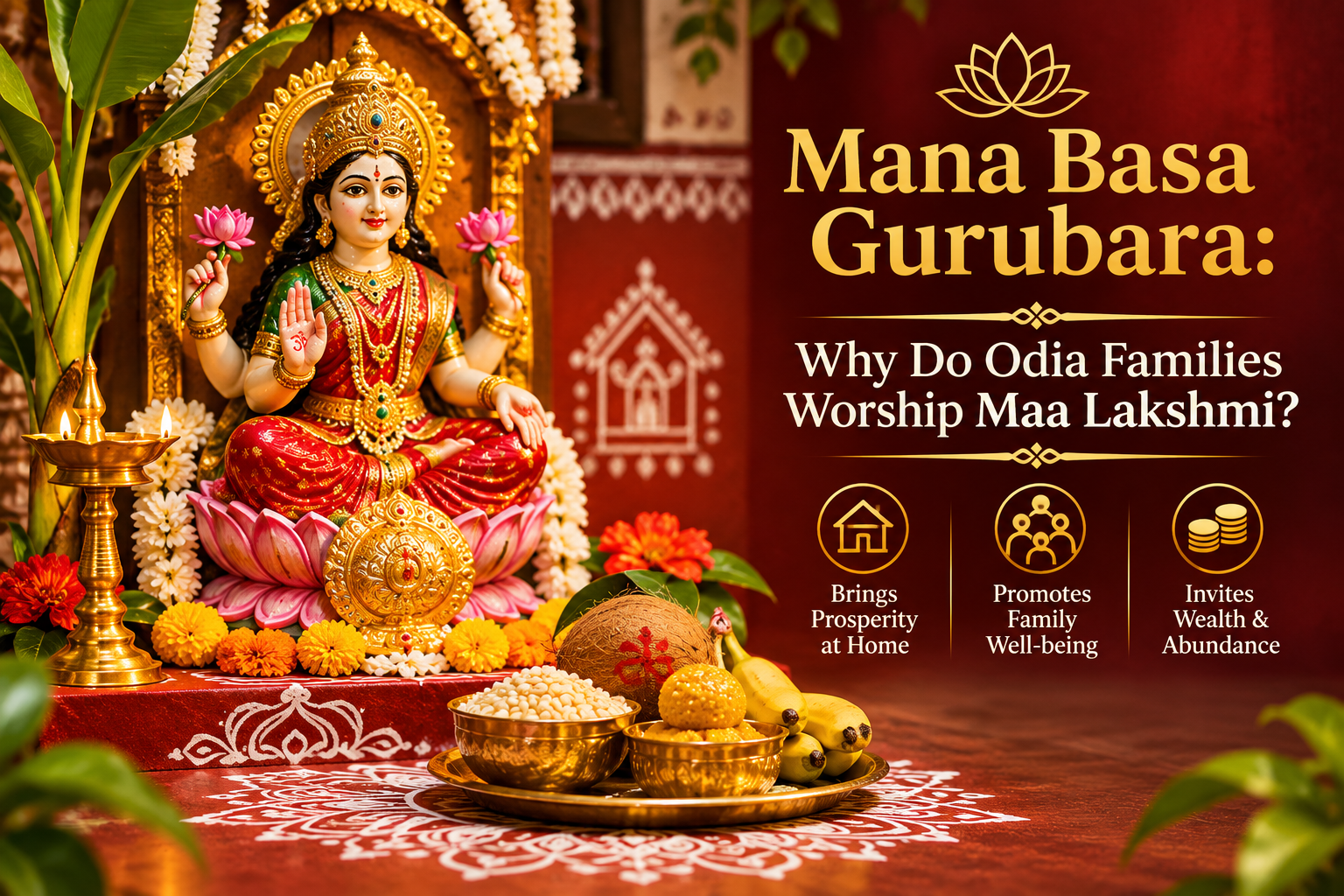
Odisha is known for its rich cultural heritage, devotional traditions and beautiful festivals. Among the many celebrations that hold a special place in Odia households, Mana Basa Gurubara is one of the most beloved traditions dedicated to Goddess Lakshmi.
Observed during the holy month of Margashira (Margasira), Mana Basa Gurubara brings families together through devotion, cleanliness, beautiful Jhoti Chita designs and traditional offerings. Every Thursday, homes are decorated, the Lakshmi Mana is worshipped and devotees pray to Maa Lakshmi for happiness, peace and prosperity.
But why is this tradition so important in Odisha? What is the significance of the Lakshmi Mana, and why do Odia families celebrate every Thursday of Margashira?
Let’s explore the cultural and spiritual meaning of this beautiful Odia festival.
What Is Mana Basa Gurubara?
Mana Basa Gurubara, also known as Margasira Gurubara, is a traditional Odia festival dedicated to Maa Lakshmi.
The word “Mana” refers to a traditional measuring vessel, commonly made of bamboo, while “Basa” means to sit or reside. During this observance, devotees symbolically invite Goddess Lakshmi to reside in their homes through the worship of the Lakshmi Mana.
The festival is traditionally observed on Thursdays during the month of Margashira. Women play an important role in preparing the home, decorating the entrance with Jhoti Chita and performing the rituals.
The celebration reflects the Odia belief that a clean, welcoming and harmonious home is a suitable place for the blessings of Maa Lakshmi.
Why Do Odia Families Worship Maa Lakshmi During Margashira?
Goddess Lakshmi is revered in Hindu tradition as the goddess of wealth, prosperity, abundance and well-being.
For Odia families, Mana Basa Gurubara is more than a ritual for material prosperity. It is also an occasion to express gratitude, practise cleanliness, strengthen family bonds and remember the importance of honest living.
Here are some traditional reasons behind the celebration:
- To Invite Prosperity and Abundance
Maa Lakshmi symbolises wealth, nourishment, good fortune and abundance. Devotees worship her with the hope that their homes will be filled with happiness, harmony and well-being. - To Celebrate Cleanliness and Positive Living
Before the puja, homes are cleaned and entrances are decorated with beautiful traditional patterns. This reflects the belief that cleanliness, discipline and a welcoming environment are important parts of devotional life. - To Express Gratitude for Food and Harvest
Margashira is traditionally associated with the agricultural season and the arrival of newly harvested paddy in Odisha. Rice and other food offerings form an important part of the observance.
The festival reminds families to respect food, farmers and the resources that sustain everyday life.
- To Strengthen Family and Community Traditions
Women and family members come together to prepare offerings, decorate their homes, sing devotional songs and listen to the Lakshmi Purana.
These shared activities help preserve Odisha’s cultural heritage and pass traditions from one generation to another.
The Story of Maa Lakshmi in the Lakshmi Purana
One of the most important parts of Mana Basa Gurubara is the recitation of the Lakshmi Purana, traditionally attributed to the Odia poet Balarama Dasa.
The text narrates the story of Goddess Lakshmi and her visit to the home of Shriya Chandaluni, a woman from a socially marginalised community.
When Lord Balarama learns that Maa Lakshmi has visited Shriya’s home, he objects to the visit because of prevailing social distinctions. Goddess Lakshmi challenges this discrimination and refuses to accept inequality based on caste or social status.
She leaves the temple, and the story describes how the absence of Lakshmi brings hardship to Lord Jagannath and Lord Balabhadra.
The narrative carries a powerful message: devotion, cleanliness and goodness are not determined by caste, wealth or social position.
The Lakshmi Purana is therefore not only a religious text but also an important part of Odisha’s cultural and social heritage. Its message continues to inspire discussions about equality, dignity and respect.
Traditional Rituals of Mana Basa Gurubara
Mana Basa Gurubara is celebrated through several beautiful customs that vary slightly between households and regions.
- Cleaning and Decorating the Home
The home is thoroughly cleaned before the puja. Entrances and courtyards are decorated with traditional Jhoti Chita designs, often featuring lotus flowers, footprints and other auspicious patterns. - Preparing the Lakshmi Mana
A traditional Mana, usually made from bamboo, is prepared and decorated. It is filled with newly harvested paddy or rice and other customary offerings, depending on family tradition.
The Mana symbolises nourishment, abundance and gratitude for the harvest.
- Making Jhoti Chita
Jhoti Chita is one of the most beautiful visual traditions of Mana Basa Gurubara. Women create intricate white patterns using a traditional rice-paste mixture. Lotus designs and the symbolic footprints of Maa Lakshmi are especially popular.
These designs represent devotion and the welcoming of the goddess into the home.
- Offering Bhoga and Prasad
Traditional food offerings are prepared for Maa Lakshmi. Depending on household customs, these may include Manda Pitha, Kakara Pitha, Arisa Pitha, Khiri and other homemade delicacies. The offerings are presented with devotion and later shared as prasad.
- Reading the Lakshmi Purana
Families traditionally gather to listen to or read the Lakshmi Purana. Its stories and teachings form the spiritual heart of the celebration. - Performing Aarti and Offering Prayers
Devotees light diyas, offer flowers and incense, and perform aarti to Maa Lakshmi. They pray for the well-being of their families and the prosperity of their homes.
Traditional Items Used During Mana Basa Gurubara
Several items are commonly associated with the worship of Maa Lakshmi during this festival.
- Lakshmi Mana: A traditional bamboo measuring vessel associated with the harvest and abundance.
- Newly Harvested Paddy: Symbolises nourishment, agricultural prosperity and gratitude.
- Rice and Grains: Used in offerings and traditional rituals.
- Diyas: Symbolise light, devotion and auspiciousness.
- Flowers: Offered as a mark of respect and devotion.
- Jhoti Chita: Traditional rice-paste designs used to decorate the home.
- Fruits and Sweets: Prepared and offered as bhoga.
- Incense and Camphor: Used during prayers and aarti.
- Kumkum and Turmeric: Commonly used in Hindu worship.
The exact puja items and arrangements may differ according to regional and family customs.
What Is the Significance of the Lakshmi Mana?
The Lakshmi Mana is the central symbol of this festival. Traditionally made from bamboo, it represents the connection between the household, agriculture and prosperity.
Filling the Mana with paddy or rice reflects gratitude for the harvest and respect for food. It also reminds devotees that prosperity is not limited to money; it includes nourishment, family well-being, contentment and the ability to share with others.
For many Odia families, the Mana is a symbol of their cultural identity and an important part of Margashira celebrations.
How Can You Celebrate Mana Basa Gurubara at Home?
You do not need elaborate arrangements to observe this beautiful tradition. You can celebrate with simple rituals and sincere devotion.
- Clean your home and decorate the entrance with Jhoti Chita.
- Prepare the Lakshmi Mana according to your family tradition.
- Arrange flowers, fruits, rice and other puja essentials.
- Light a diya and offer prayers to Maa Lakshmi.
- Read or listen to the Lakshmi Purana.
- Prepare traditional Odia bhoga and distribute prasad.
- Practise kindness, gratitude and generosity towards others.
- The spirit of the festival lies in devotion and respect for the values it represents.
Mana Basa Gurubara: A Celebration of Faith, Culture and Gratitude
Mana Basa Gurubara is much more than a festival dedicated to prosperity. It celebrates the agricultural roots of Odisha, the strength of family traditions and the timeless message of the Lakshmi Purana.
Through the Lakshmi Mana, Jhoti Chita, traditional pitha and devotional prayers, Odia families preserve a beautiful cultural heritage while expressing gratitude for the blessings of everyday life.
May Maa Lakshmi bless every home with peace, nourishment, happiness and harmony.
Subha Mana Basa Gurubara!