Navratri is a sacred Hindu festival dedicated to the nine divine forms of Maa Durga, collectively known as Navadurga. The ninth day is dedicated to Maa Siddhidatri, the final form of Navadurga, who is traditionally associated with spiritual wisdom, divine grace, and the attainment of siddhis, or spiritual accomplishments.
In 2026, Navratri Day 9 falls on Monday, 19 October, according to the commonly followed Sharadiya Navratri calendar. This day is also observed as Maha Navami in many traditions. The exact Navami tithi and puja timings may vary by location, so devotees should consult their local Panchang.
Who Is Maa Siddhidatri?
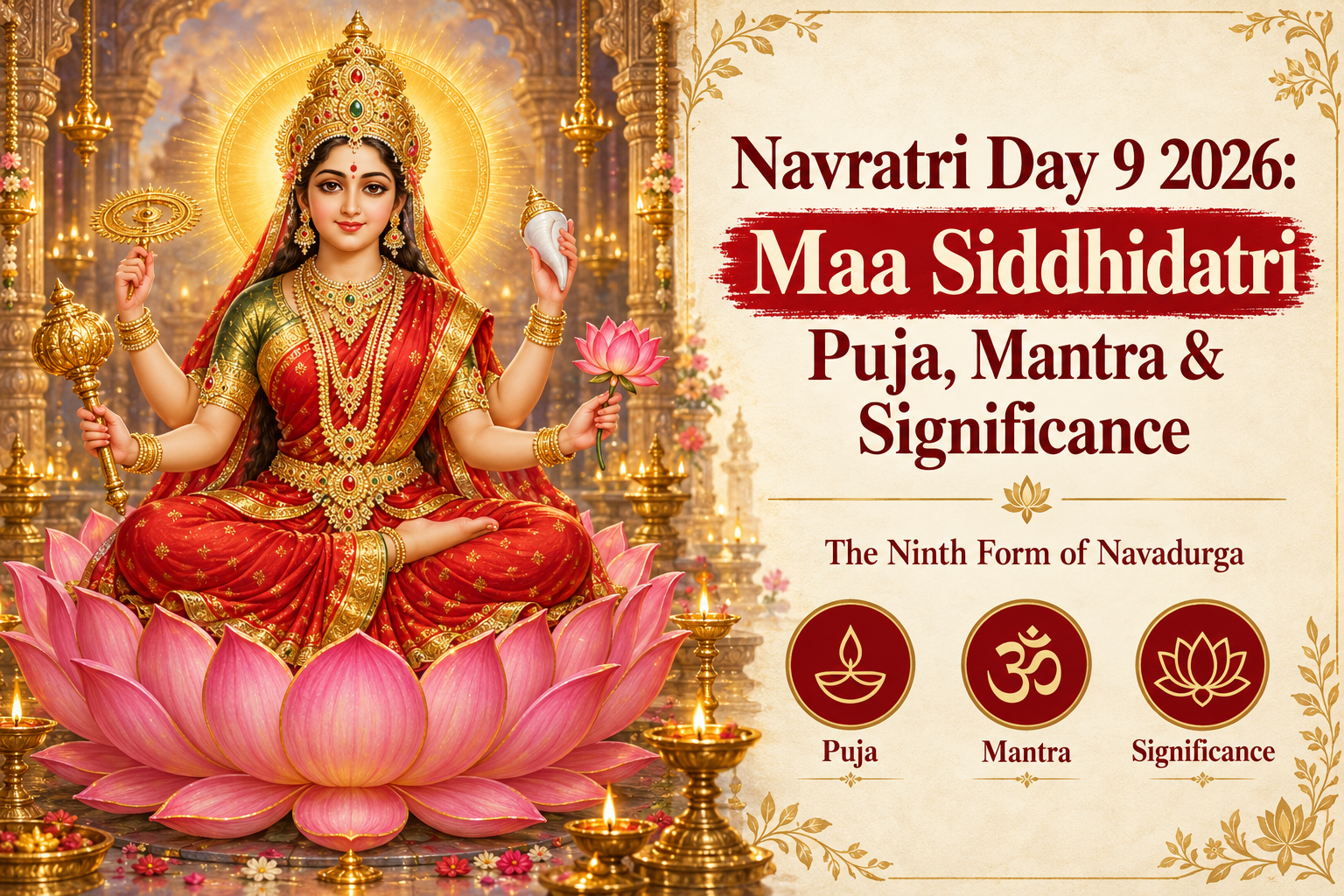
Maa Siddhidatri is the ninth and final form of Navadurga. Her name combines Siddhi, meaning accomplishment or spiritual attainment, and Datri, meaning giver. She is therefore traditionally understood as the goddess who bestows siddhis and divine blessings upon devotees.
She is commonly depicted seated on a lotus or riding a lion, with four arms holding a lotus, a conch, a discus, and a mace. Her iconography may vary across artistic and regional traditions.
In Hindu religious traditions, Maa Siddhidatri represents the completion of the Navadurga journey. Her worship encourages devotees to reflect on spiritual growth, humility, wisdom, and the importance of using knowledge responsibly.
Spiritual Significance of Maa Siddhidatri
Maa Siddhidatri is revered for her association with divine wisdom, spiritual accomplishment, and grace. Her symbolism offers several lessons:
- Spiritual growth: She represents progress on the path of devotion and self-reflection.
- Wisdom and understanding: Her worship encourages discernment and thoughtful action.
- Divine grace: Devotees pray for blessings, guidance, and strength to face life’s challenges.
- Humility: Spiritual accomplishments are traditionally valued alongside compassion and self-control.
- Completion and fulfilment: As the ninth form of Navadurga, she symbolizes the culmination of the nine-day devotional journey.
The concept of siddhis has different interpretations in Hindu traditions, including spiritual accomplishments and extraordinary abilities described in religious texts. These beliefs should be understood within their spiritual and cultural context rather than as scientifically established outcomes.
Maa Siddhidatri Puja Vidhi for Navratri Day 9
Devotees may follow these simple worship practices according to their family customs and regional traditions.
1. Clean the Puja Space
Clean the place of worship and arrange Maa Durga’s image or idol respectfully.
2. Light a Diya and Offer Flowers
Light a diya safely and offer flowers as a gesture of devotion. Lotus imagery is commonly associated with Maa Siddhidatri.
3. Chant Maa Siddhidatri’s Mantra
Recite her mantra with concentration and sincerity. Some devotees repeat it 11, 21, or 108 times according to their personal practice.
4. Offer Bhog
Devotees may offer fruits, sweets, or other traditional foods according to their family and regional customs.
5. Perform Kanya Puja
Many families perform Kanya Puja on Ashtami or Navami, honouring young girls as symbolic representations of the Divine Feminine. The practice and the number of girls honoured vary by tradition.
6. Perform Aarti
Conclude the puja with Maa Durga’s aarti and prayers for wisdom, peace, spiritual growth, and well-being.
Puja procedures and offerings vary, so devotees can follow the practices customary in their own household or community.
Maa Siddhidatri Mantra
A commonly recited mantra dedicated to Maa Siddhidatri is:
ॐ देवी सिद्धिदात्र्यै नमः॥
Om Devi Siddhidatryai Namah.
Meaning: I bow to Goddess Siddhidatri, the bestower of spiritual accomplishments.
Devotees may chant this mantra during puja, meditation, or quiet prayer as a way to focus their minds on devotion, wisdom, and spiritual development.
Why Is Maa Siddhidatri Worshipped on the Ninth Day of Navratri?
Maa Siddhidatri is worshipped on the ninth day because she is the final form in the traditional sequence of Navadurga. The nine days represent a devotional journey through different aspects of the Divine Feminine, including strength, discipline, courage, compassion, and wisdom.
Her worship brings this journey to a close with reflection on spiritual fulfilment and divine grace. In many communities, Navami also includes special prayers, offerings, and the conclusion of particular Navratri rituals.
What Can Devotees Learn from Maa Siddhidatri?
Maa Siddhidatri’s traditional significance reminds devotees that spiritual progress involves more than seeking accomplishments. It also calls for humility, compassion, patience, and responsible action.
As Navratri concludes, devotees can reflect on the lessons of all nine forms of Maa Durga and carry their values into everyday life. Faith can inspire people to approach challenges thoughtfully, treat others kindly, and remain committed to personal growth.
Conclusion:
Navratri Day 9 is a meaningful occasion to worship Maa Siddhidatri and reflect on the spiritual journey of the nine forms of Maa Durga. Her traditional symbolism encourages devotees to seek wisdom, cultivate humility, and use their abilities with compassion and responsibility.
May Maa Siddhidatri bless everyone with wisdom, peace, spiritual growth, and divine grace.
Jai Maa Siddhidatri!