Navratri Day 6 is dedicated to Maa Katyayani, the sixth form of Navadurga. Revered as a powerful manifestation of Maa Durga, she represents courage, strength, divine power, protection, and determination.
Her worship holds special significance during Navratri, and her story is closely connected with the defeat of the demon Mahishasura.
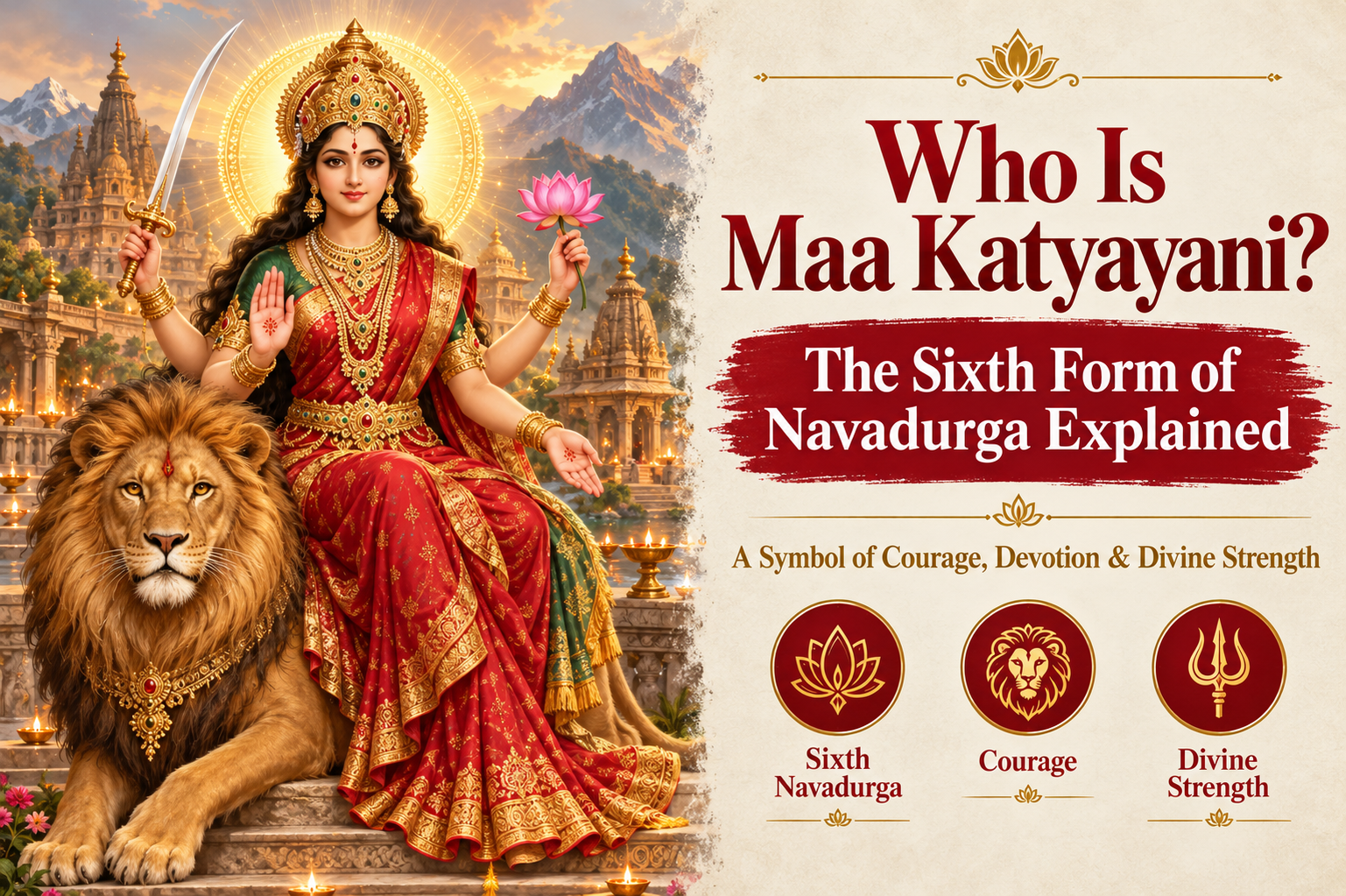
Who Is Maa Katyayani?
Maa Katyayani is worshipped as the sixth form of Navadurga and is traditionally worshipped on the sixth day of Navratri.
According to Hindu traditions, she is associated with the sage Katyayana. One traditional account describes the Goddess manifesting to fulfil the sage’s devotion and becoming known as Katyayani.
She is particularly revered as a warrior form of Shakti, symbolizing the divine power that confronts injustice and negativity.
The Story Behind Maa Katyayani
One of the most well-known traditions connects Maa Katyayani with the battle against Mahishasura, the buffalo demon.
According to the Devi Mahatmya, Mahishasura had received a boon that made him extremely difficult for the gods to defeat. The divine powers of the gods combined to manifest Maa Durga, who ultimately fought Mahishasura and defeated him.
In later traditions and retellings, Maa Katyayani is closely associated with this powerful warrior aspect of the Goddess.
Her story represents the victory of divine strength over destructive forces.
Why Is Maa Katyayani Worshipped on Day 6?
Each day of Navratri is traditionally dedicated to one of the nine forms of Maa Durga.
The sequence is:
- Maa Shailputri
- Maa Brahmacharini
- Maa Chandraghanta
- Maa Kushmanda
- Maa Skandamata
- Maa Katyayani
- Maa Kalaratri
- Maa Mahagauri
- Maa Siddhidatri
On Day 6, devotees worship Maa Katyayani with prayers for courage, strength, protection, determination, and spiritual progress.
What Does Maa Katyayani Symbolize?
Maa Katyayani’s powerful form carries several layers of spiritual symbolism.
Courage and Strength
Her warrior form represents the courage to face difficult circumstances and stand firmly against challenges.
Protection
Devotees traditionally seek the Goddess’s blessings for protection and strength while navigating life’s difficulties.
Determination
Her association with overcoming Mahishasura symbolizes the importance of determination when confronting obstacles.
Divine Feminine Power
Maa Katyayani represents Shakti, the divine feminine power that can be both nurturing and fiercely protective.
Devotion
Her worship encourages devotees to cultivate faith, discipline, and sincere devotion.
These are traditional spiritual interpretations rather than scientifically established effects.
How Is Maa Katyayani Depicted?
Maa Katyayani is commonly portrayed as a four-armed Goddess riding a lion.
Her iconography may show her holding:
- A sword
- A lotus
- Other divine weapons
- A blessing or protective gesture
The exact number of arms, weapons, and visual details can vary between regional traditions, scriptures, and artistic representations.
The lion is an important part of her imagery and traditionally symbolizes courage, power, and fearlessness.
Maa Katyayani and the Story of Mahishasura
The battle between the Goddess and Mahishasura is one of the most powerful symbolic stories associated with Devi worship.
Mahishasura represents forces of arrogance, uncontrolled power, and destructive tendencies, while the Goddess represents divine order, courage, wisdom, and Shakti.
Her victory reminds devotees that challenges can be confronted with:
Faith + Courage + Determination + Divine Grace
Maa Katyayani and Marriage Traditions
Maa Katyayani also has a special place in certain Hindu traditions related to marriage and the desire for a suitable life partner.
The Bhagavata Purana describes the young unmarried Gopis of Vrindavan observing a vow to worship Katyayani Devi with the desire to have Krishna as their husband.
Because of this tradition, unmarried devotees may worship Maa Katyayani while praying for a suitable, compatible, and respectful life partner.
Such worship should be understood as a devotional practice and not as a guarantee of marriage or a means of controlling another person’s feelings or choices.
Maa Katyayani Mantra
A commonly recited mantra for Maa Katyayani is:
ॐ देवी कात्यायन्यै नमः। Om Devi Katyayanyai Namah.
Devotees may chant this mantra during Navratri prayers or meditation according to their family or spiritual tradition.
The Traditional Katyayani Prayer
A well-known prayer associated with the Katyayani worship of the Gopis is:
Katyayani Mahamaye Mahayoginy Adhishvari
Nandagopa Sutam Devi Patim Me Kuru Te Namah
This prayer is traditionally connected with seeking the Goddess’s grace regarding a desired marital union.
The meaning and ritual context can vary according to the tradition in which it is recited.
How to Worship Maa Katyayani on Navratri Day 6?
A simple devotional routine may include:
- Clean the Puja Space
Keep the place of worship clean and peaceful. - Light a Diya
Light a diya according to your household or temple tradition. - Offer Flowers
Offer flowers to Maa Katyayani as part of the puja. - Offer Naivedya
Offer fruits, sweets, or other traditional food according to your family’s customs. - Chant the Mantra
Recite “Om Devi Katyayanyai Namah” with devotion and concentration. - Pray for Strength and Guidance
Use the occasion to pray for courage, clarity, harmony, and the strength to overcome challenges.
What Can Devotees Learn From Maa Katyayani?
Maa Katyayani’s story offers several meaningful spiritual lessons.
Face Challenges With Courage
Difficult situations require determination rather than fear. Her warrior form symbolizes the courage to face challenges.
Stand Against Negativity
Her battle with Mahishasura can be viewed as a reminder to recognize and overcome destructive tendencies within and around us.
Balance Power With Purpose
Strength becomes meaningful when it is guided by wisdom and a constructive purpose.
Keep Faith During Difficult Times
Her worship encourages devotees to maintain faith and perseverance when circumstances become challenging.
Conclusion:
Maa Katyayani, the sixth form of Navadurga, represents the powerful and courageous aspect of Maa Durga. Her story reminds devotees of the importance of strength, determination, faith, and the courage to overcome obstacles.
On Navratri Day 6, devotees can use her worship as an opportunity to reflect on the challenges they face and cultivate greater courage, clarity, and devotion.
Jai Maa Katyayani!