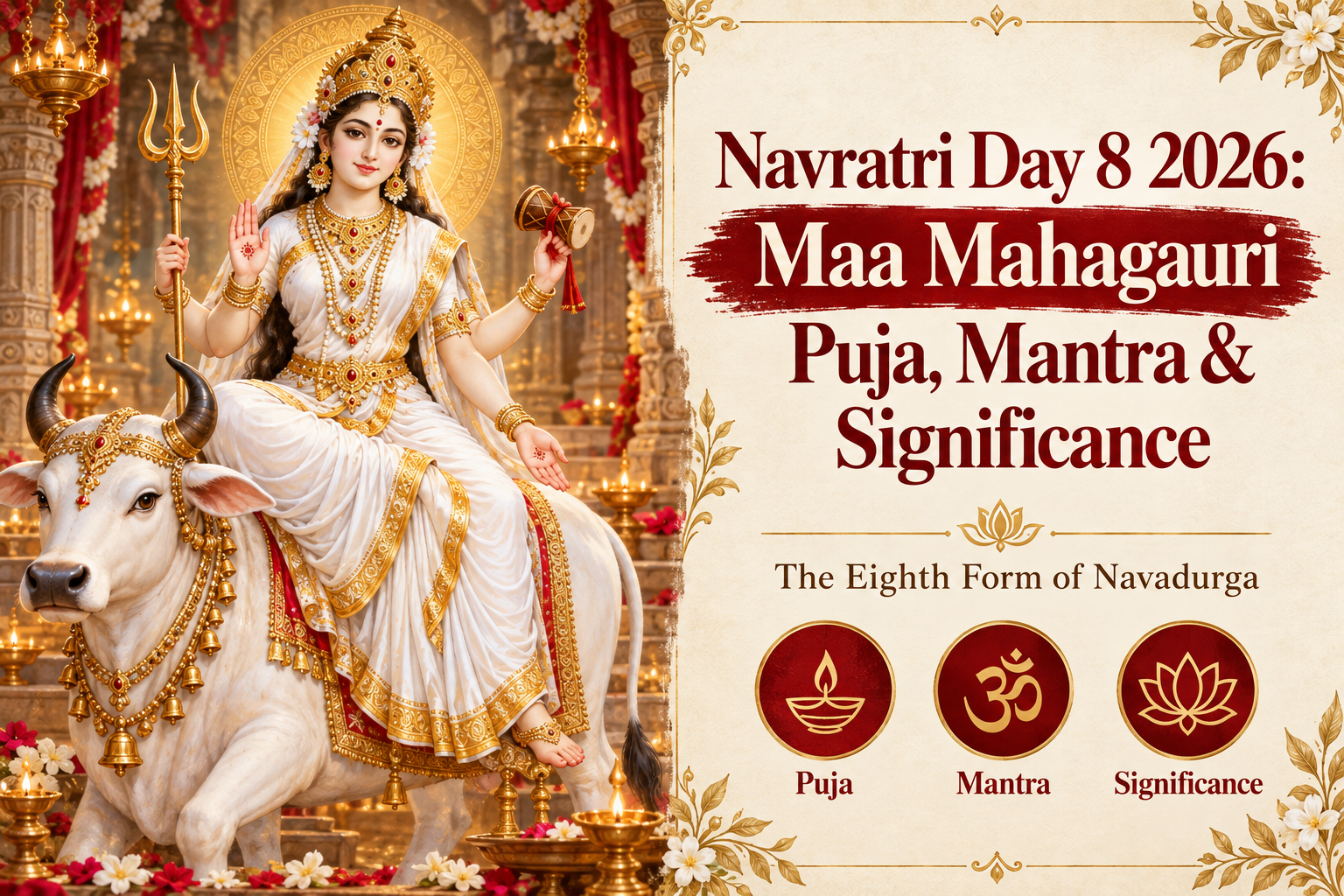
Navratri is a sacred Hindu festival dedicated to the nine divine forms of Maa Durga, collectively known as Navadurga. The eighth day of Navratri, called Durga Ashtami or Maha Ashtami in many traditions, is dedicated to Maa Mahagauri, the eighth form of Navadurga. She symbolizes purity, peace, compassion, wisdom, and spiritual transformation.
In 2026, Navratri Day 8 falls on Sunday, 18 October, according to the commonly followed Sharadiya Navratri calendar. As festival dates and observances can vary by location and regional tradition, devotees should check their local Panchang for the precise Ashtami tithi and puja timings.
Who Is Maa Mahagauri?
Maa Mahagauri is the eighth form of Maa Durga. Her name combines Maha, meaning great, and Gauri, meaning fair or radiant. She is traditionally depicted wearing white garments, riding a white bull, and holding a Trishul and a damaru or other attributes, depending on the depiction.
According to a popular traditional account, Goddess Parvati performed intense penance to attain Lord Shiva as her consort. During this period, her complexion became darkened by the hardships of her austerities. After Lord Shiva cleansed her with the waters of the sacred Ganga, she regained a radiant appearance and came to be worshipped as Mahagauri.
Her story represents the transformation that can emerge through devotion, patience, discipline, and spiritual dedication.
Spiritual Significance of Maa Mahagauri
Maa Mahagauri is worshipped for her gentle yet powerful divine presence. Her symbolism offers several spiritual lessons:
- Purity: Her white attire represents cleanliness, peace, and purity of intention.
- Peace and harmony: Devotees reflect on her compassionate nature while praying for harmony in their lives and families.
- Forgiveness and compassion: Her form inspires kindness, understanding, and a forgiving heart.
- Devotion and discipline: Her traditional story highlights the importance of faith and perseverance.
- Spiritual renewal: Her radiant appearance symbolizes transformation and the possibility of beginning again with renewed faith.
These meanings belong to Hindu religious and devotional traditions and may be interpreted differently across communities.
Maa Mahagauri Puja Vidhi for Navratri Day 8
Devotees may follow these simple worship practices on Ashtami according to their family traditions.
- Clean the Puja Space
Clean the place of worship and arrange Maa Durga’s image or idol respectfully.
- Offer Prayers
Light a diya, offer flowers, and pray with devotion. White flowers are often associated with Maa Mahagauri because of her traditional symbolism of purity and peace.
- Chant Maa Mahagauri’s Mantra
Recite her mantra with concentration and sincerity. You may repeat it 11, 21, or 108 times, according to your personal practice.
- Offer Bhog
White sweets, coconut, milk-based preparations, or other suitable offerings may be offered according to family and regional customs.
- Perform Kanya Puja, If Practised
Many families observe Kanya Puja on Ashtami or Navami by honouring young girls as symbolic representations of the Divine Feminine. The exact customs differ by region and household.
- Conclude with Aarti
Perform Maa Durga’s aarti and offer prayers for peace, wisdom, strength, and well-being.
Remember that puja procedures and offerings vary across traditions. Sincere devotion is central to personal worship.
Maa Mahagauri Mantra
A commonly recited mantra dedicated to Maa Mahagauri is:
ॐ देवी महागौर्यै नमः॥
Om Devi Mahagauryai Namah.
Meaning: I bow to Goddess Mahagauri.
Devotees may chant this mantra during puja, meditation, or quiet prayer. It can serve as a reminder of purity, peace, compassion, and devotion.
Why Is White Colour Associated with Maa Mahagauri?
White is traditionally associated with Maa Mahagauri because of her radiant appearance and gentle nature. In Hindu symbolism, white often represents purity, serenity, peace, and spiritual clarity.
Devotees may wear white clothing or offer white flowers during worship, depending on their customs. However, specific colour practices are not universal and may differ among regional traditions.
What Can Devotees Learn from Maa Mahagauri?
Maa Mahagauri’s form encourages devotees to look beyond outward appearances and cultivate inner qualities. Her story reminds us to practise patience during difficult times, maintain faith through challenges, and approach others with compassion.
Navratri is also an opportunity to reflect on personal growth, strengthen spiritual routines, and bring greater kindness and balance into everyday life.
Final Thoughts
Navratri Day 8 is an opportunity to seek Maa Mahagauri’s blessings through prayer, devotion, and reflection. Her traditional symbolism of purity, peace, compassion, and transformation reminds devotees to nurture inner strength while living with kindness and sincerity.
May Maa Mahagauri bless everyone with peace, wisdom, harmony, and renewed devotion.
Jai Maa Mahagauri!