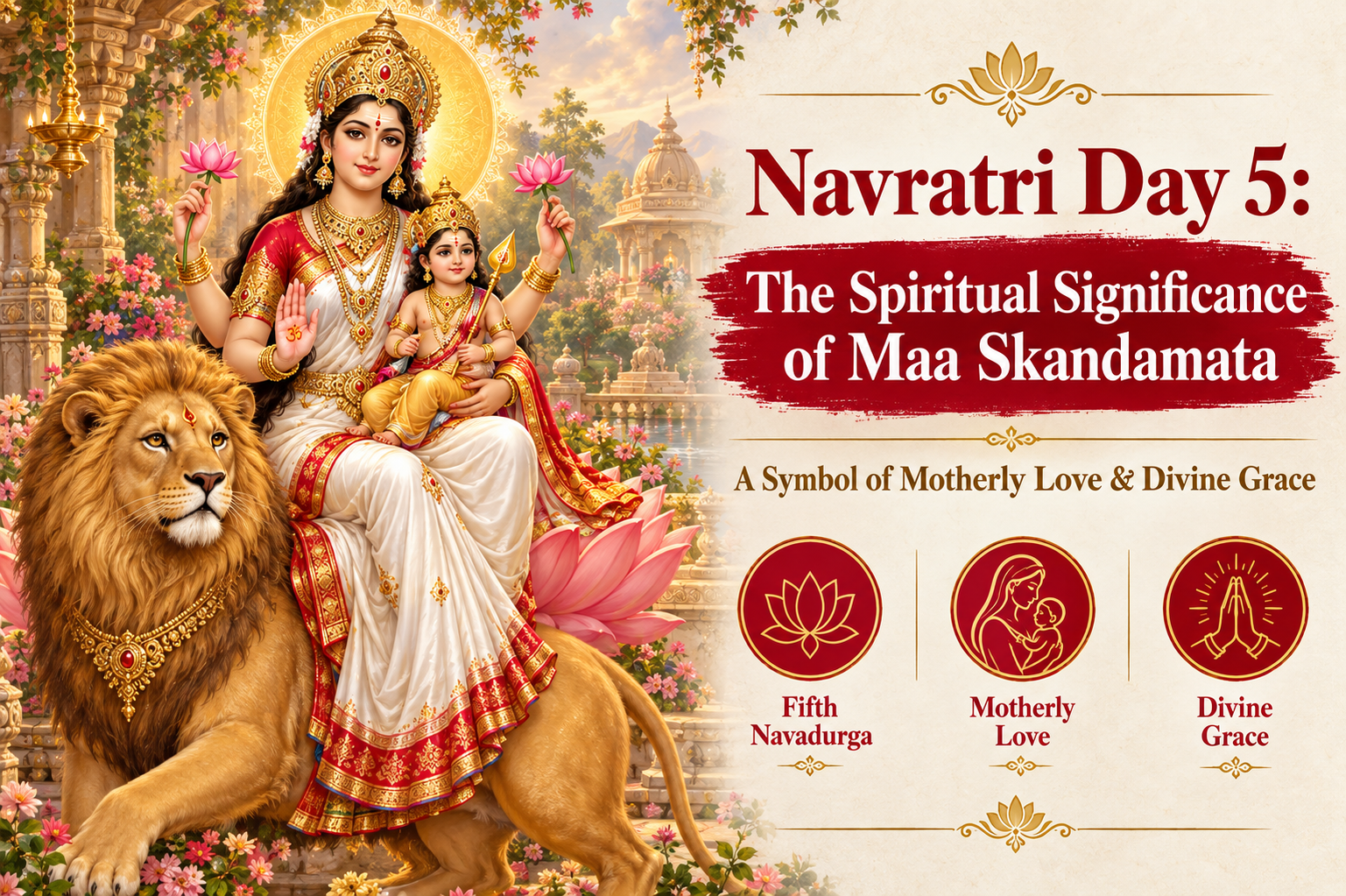
Navratri Day 5 is dedicated to Maa Skandamata, the fifth form of Navadurga. She is revered as the divine mother of Lord Skanda, also known as Kartikeya, and is worshipped as a compassionate yet powerful manifestation of Maa Durga.
Her form beautifully represents the connection between motherhood, courage, compassion, strength, and spiritual devotion.
Who Is Maa Skandamata?
Maa Skandamata is the fifth form of Navadurga and is worshipped on the fifth day of Navratri.
Her name is made up of two words:
Skanda – another name for Lord Kartikeya
Mata – meaning mother
Thus, Skandamata means “Mother of Skanda.”
She is traditionally depicted holding infant Skanda in her lap while seated on a lion. Her imagery combines the nurturing qualities of a mother with the strength and courage associated with divine Shakti.
Why Do Devotees Worship Maa Skandamata?
Devotees worship Maa Skandamata with prayers for strength, peace, wisdom, compassion, and spiritual growth.
Her worship is traditionally associated with:
- Motherly love and compassion
- Courage and inner strength
- Peace and emotional balance
- Wisdom and spiritual awareness
- Devotion and surrender
- Growth and nurturing energy
These are traditional religious and spiritual associations, not scientifically established effects.
The Divine Form of Maa Skandamata
Maa Skandamata is commonly portrayed with four arms.
She is traditionally shown:
- Holding baby Skanda in one arm
- Carrying lotus flowers in two hands
- Keeping one hand in a blessing gesture
She is generally depicted seated on a lion, which represents courage, power, and fearlessness.
Because of her association with lotus flowers, she is also known in some traditions as Padmasana Devi or Vidya Vahini, reflecting different aspects of her iconography and symbolism.
What Does Maa Skandamata Symbolize?
Maa Skandamata’s form carries several layers of spiritual symbolism.
Motherhood and Compassion
As the mother of Skanda, she represents the nurturing and protective qualities of motherhood. Her form reminds devotees of the importance of love, care, patience, and compassion.
Courage and Strength
Her lion vehicle symbolizes fearlessness and divine power.
It reminds devotees that compassion does not mean weakness—true compassion can exist alongside courage and strength.
Purity and Spiritual Growth
The lotus associated with Maa Skandamata is traditionally viewed as a symbol of purity, spiritual awakening, and growth.
The lotus grows in muddy surroundings while remaining above the water, making it a powerful spiritual metaphor for maintaining inner purity amid life’s challenges.
Devotion and Surrender: Her peaceful expression encourages devotees to cultivate faith, devotion, patience, and inner calm.
Why Is Maa Skandamata Worshipped on Day 5?
The Navadurga sequence represents different manifestations of Shakti throughout Navratri.
After worshipping:
- Maa Shailputri
- Maa Brahmacharini
- Maa Chandraghanta
- Maa Kushmanda
devotees worship Maa Skandamata on Day 5.
Her appearance in the sequence can be viewed as a representation of divine motherhood, nurturing energy, courage, and spiritual development.
What Is the Traditional Significance of Worshipping Maa Skandamata?
According to devotional traditions, worshipping Maa Skandamata is associated with seeking her blessings for peace, strength, wisdom, and family well-being.
Her form also encourages devotees to reflect on the qualities of a nurturing heart:
Love → Compassion → Courage → Wisdom → Spiritual Growth
Rather than focusing only on material wishes, her worship can become an opportunity for gratitude and self-reflection.
Maa Skandamata Mantra
A commonly recited mantra for Maa Skandamata is: ॐ देवी स्कन्दमातायै नमः। Om Devi Skandamatayai Namah.
Devotees may chant the mantra during their Navratri prayers with a calm and devotional mindset.
How to Worship Maa Skandamata on Navratri Day 5?
A simple devotional routine may include:
- Clean the Puja Space
Keep the worship area clean and peaceful. - Light a Diya
Light a diya according to your family or temple tradition. - Offer Flowers
Lotus flowers are traditionally associated with Maa Skandamata. If lotus is unavailable, devotees can offer flowers according to their local tradition. - Offer Naivedya
Prepare and offer a traditional sweet or other suitable naivedya according to your family’s customs. - Chant the Mantra
Recite “Om Devi Skandamatayai Namah” during prayer or meditation. - Pray With Gratitude
Take a few moments to reflect on family, relationships, compassion, courage, and spiritual growth.
What Can Devotees Learn From Maa Skandamata?
Maa Skandamata’s form offers several meaningful life lessons.
Be Strong and Compassionate
Her image combines the strength of a lion with the tenderness of a mother. It reminds us that strength and compassion can exist together.
Nurture What Matters
Motherhood symbolically represents the responsibility of nurturing people, relationships, values, and aspirations.
Face Challenges With Courage
Her lion represents fearlessness and encourages devotees to approach difficulties with determination.
Maintain Inner Purity
The lotus symbolizes the ability to remain spiritually grounded even when surrounded by challenges.
Maa Skandamata and Family Well-Being
Because Maa Skandamata is worshipped as a mother, devotees may especially connect her worship with family love, nurturing relationships, protection, and harmony.
However, religious practices differ across regions and families. Devotees can follow the customs and rituals traditionally observed in their own household or temple.
Conclusion:
Navratri Day 5 is a beautiful opportunity to worship Maa Skandamata, the divine mother of Lord Skanda and the fifth form of Navadurga.
Her peaceful yet powerful form reminds devotees that true strength can be compassionate, and true compassion can be courageous.
As you continue the Navratri journey, let the blessings and symbolism of Maa Skandamata inspire love, patience, courage, gratitude, and spiritual growth.
Jai Maa Skandamata!