Maa Shailputri is traditionally worshipped as the first form of Navadurga, the nine forms of Maa Durga revered during Navratri. Her name, imagery, and story connect her with the mountains, devotion, strength, and the beginning of the spiritual journey associated with the nine days of Navratri.
On the first day of Navratri, devotees worship Maa Shailputri and begin the festival with prayers, devotion, and positive intentions.
But who is Maa Shailputri, and what is the story behind this first form of Navadurga?
Who Is Maa Shailputri?
The name Shailputri comes from two Sanskrit words:
- Shaila – mountain
- Putri – daughter
Thus, Shailputri means “Daughter of the Mountain.”
She is traditionally identified with Parvati, the daughter of Himavan, the personification or king of the Himalayas in Hindu traditions.
Maa Shailputri represents the Goddess in a form closely connected with nature, strength, purity, and divine femininity.
The Story Behind Maa Shailputri
The story of Maa Shailputri is connected with the well-known narrative of Sati and Lord Shiva.
According to Hindu tradition, Sati was the daughter of King Daksha and the first consort of Lord Shiva. Daksha did not approve of Shiva and felt displeasure toward their relationship.
During a great yajna organized by Daksha, Sati was not respectfully invited. Despite this, she went to the ceremony.
At the gathering, Daksha insulted Lord Shiva. Unable to accept the disrespect shown toward her husband, Sati gave up her physical body through yogic fire.
Later, Sati was reborn as the daughter of Himavan, the mountain king, and was known as Parvati.
This rebirth is traditionally connected with the form of Maa Shailputri.
Maa Shailputri and Lord Shiva
As Parvati, Maa Shailputri is traditionally associated with the continuation of her divine relationship with Lord Shiva.
Her story represents devotion, determination, and spiritual perseverance.
In later traditions, Parvati undertakes intense spiritual practices to unite with Shiva again.
This makes Maa Shailputri an important symbolic representation of steadfast devotion and inner strength.
How Is Maa Shailputri Depicted?
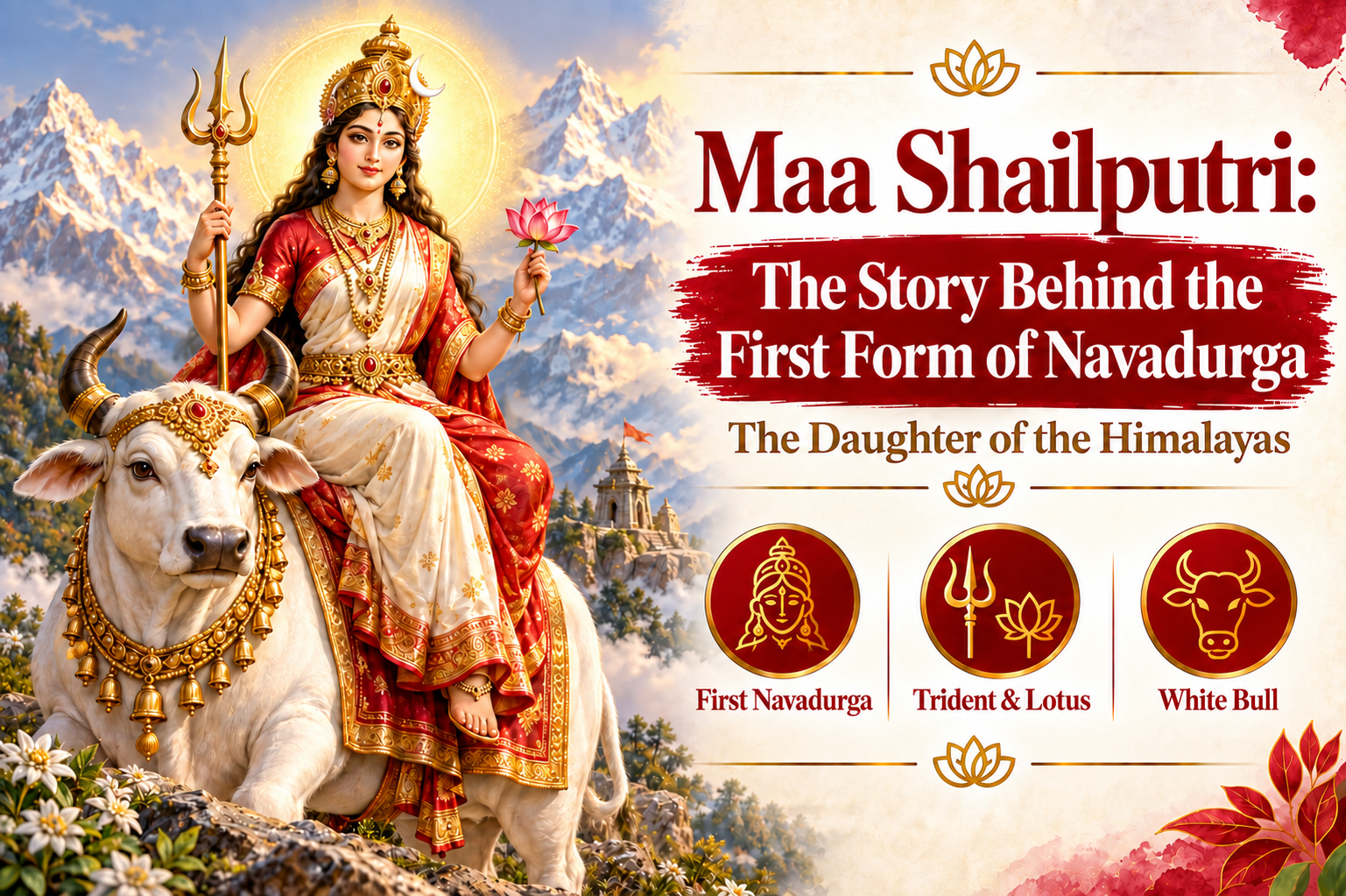
Maa Shailputri is traditionally depicted riding a bull, known as Nandi.
She generally has two hands:
- One hand carries a trident (Trishul)
- The other holds a lotus flower
Her appearance is often portrayed as peaceful yet powerful.
The Bull
The bull is traditionally associated with strength, stability, patience, and groundedness.
The Trishul
The Trishul is an important symbol associated with Lord Shiva and Shakti. Its three points are interpreted in different ways across Hindu traditions.
The Lotus
The lotus traditionally represents purity, spiritual growth, and the ability to remain elevated despite difficult surroundings.
Together, these symbols create a powerful representation of balanced divine strength.
Why Is Maa Shailputri Worshipped on the First Day of Navratri?
Navratri is traditionally associated with the worship of the nine forms of Maa Durga, known as Navadurga.
Maa Shailputri is placed first in this sequence.
Her position at the beginning of Navratri can be understood symbolically as representing the starting point of a spiritual journey.
The first day encourages devotees to begin the festival with:
- Faith
- Purity of intention
- Stability
- Devotion
- Inner strength
The nine-day progression is interpreted differently across traditions, but Maa Shailputri’s position as the first form is widely recognized.
What Does Maa Shailputri Symbolize?
Maa Shailputri is traditionally associated with several qualities.
🌿 Stability
As the Daughter of the Mountain, she symbolizes strength and steadiness.
🌸 Purity
Her lotus is traditionally connected with purity and spiritual awakening.
🔱 Strength
Her Trishul represents divine power and the ability to confront challenges.
🕉️ Devotion
Her story is strongly connected with devotion toward Lord Shiva and spiritual determination.
🌄 A New Beginning
As the first form of Navadurga, she can symbolically represent the beginning of a new spiritual chapter.
Maa Shailputri and the First Day of Navratri
The first day of Navratri is traditionally a time for devotees to establish their spiritual intention for the festival.
Many devotees begin their worship with:
- Kalash Sthapana or Ghatasthapana, according to their tradition
- Prayers to Maa Shailputri
- Lighting a diya
- Offering flowers
- Reciting devotional prayers or mantras
- Meditation and reflection
Specific rituals differ across regions, families, temples, and religious traditions.
Maa Shailputri Mantra
A commonly recited mantra associated with Maa Shailputri is:
“Om Devi Shailputryai Namah.”
Devotees may chant it during prayer or meditation on the first day of Navratri.
Different traditions may use additional prayers and devotional practices.
What Can We Learn From Maa Shailputri?
The story of Maa Shailputri offers several symbolic lessons.
Start With a Strong Foundation
As the first form of Navadurga and the Daughter of the Mountain, she can represent the importance of building a stable foundation before moving forward.
Stay Determined
Her connection with Parvati’s spiritual journey reflects perseverance and dedication.
Keep Faith During Change
The story of Sati’s rebirth as Parvati can be interpreted as a reminder of transformation, renewal, and continuity.
Balance Strength With Purity
Maa Shailputri’s imagery combines the power of the Trishul with the purity of the lotus.
Maa Shailputri in Navadurga
The nine forms of Navadurga are traditionally listed as:
- Maa Shailputri
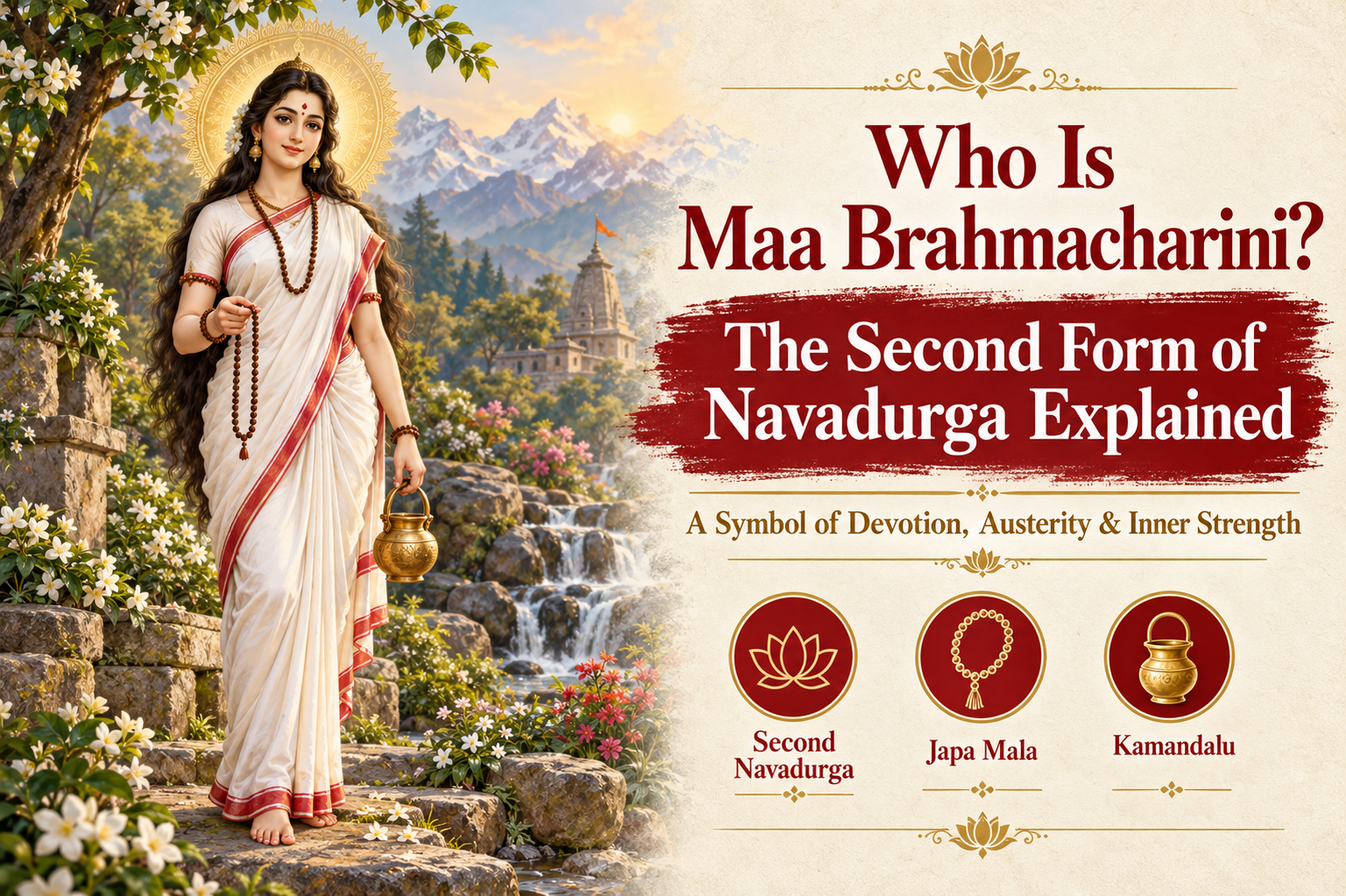
- Maa Brahmacharini
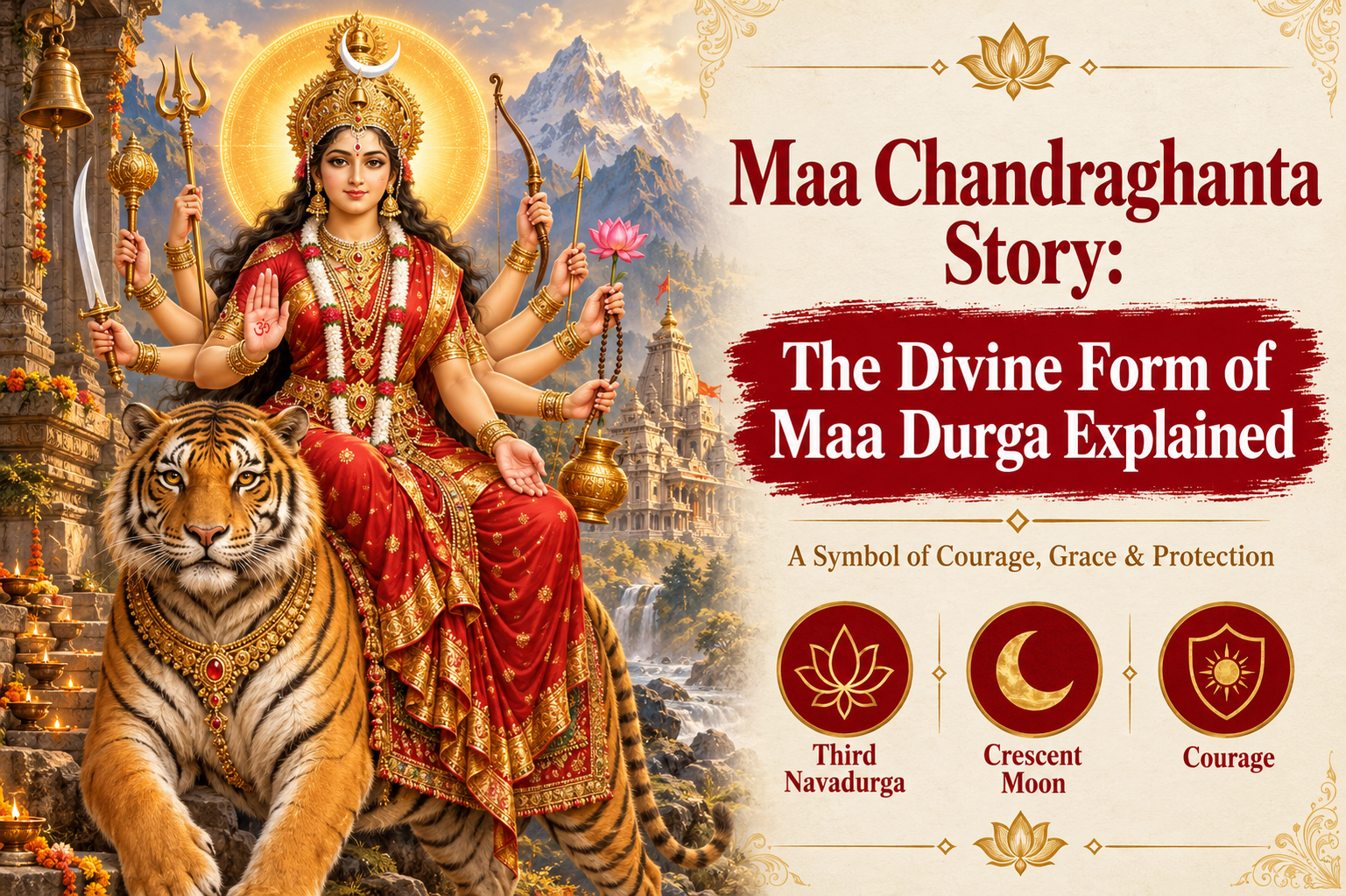
- Maa Chandraghanta
- Maa Kushmanda
- Maa Skandamata
- Maa Katyayani
- Maa Kalaratri
- Maa Mahagauri
- Maa Siddhidatri
Each form has its own story, iconography, devotional practices, and symbolic significance.
FAQs
Who is Maa Shailputri?
Maa Shailputri is traditionally regarded as the first form of Navadurga. She is identified with Parvati, the daughter of Himavan, and is associated with mountains, strength, devotion, and stability.
Why is Maa Shailputri worshipped on the first day of Navratri?
She is traditionally the first of the nine forms of Navadurga. Worshipping her marks the beginning of the Navratri devotional journey.
What does the name Shailputri mean?
Shailputri means “Daughter of the Mountain”, from Shaila (mountain) and Putri (daughter).
What does Maa Shailputri ride?
Maa Shailputri is traditionally depicted riding a bull.
What does Maa Shailputri hold?
She is commonly depicted holding a Trishul in one hand and a lotus in the other.
What is Maa Shailputri’s mantra?
A commonly recited mantra is “Om Devi Shailputryai Namah.”
Final Thoughts
Maa Shailputri, the first form of Navadurga, represents a beautiful combination of strength, stability, devotion, purity, and new beginnings.
Her story connects the traditions of Sati and Parvati with the beginning of the Navratri journey. As devotees worship her on the first day, the symbolism of the mountain reminds them to remain grounded, while the lotus represents purity and spiritual growth.
Navratri begins with Maa Shailputri—and her traditional message can be understood simply: build a strong foundation, remain devoted, and move forward with inner strength.