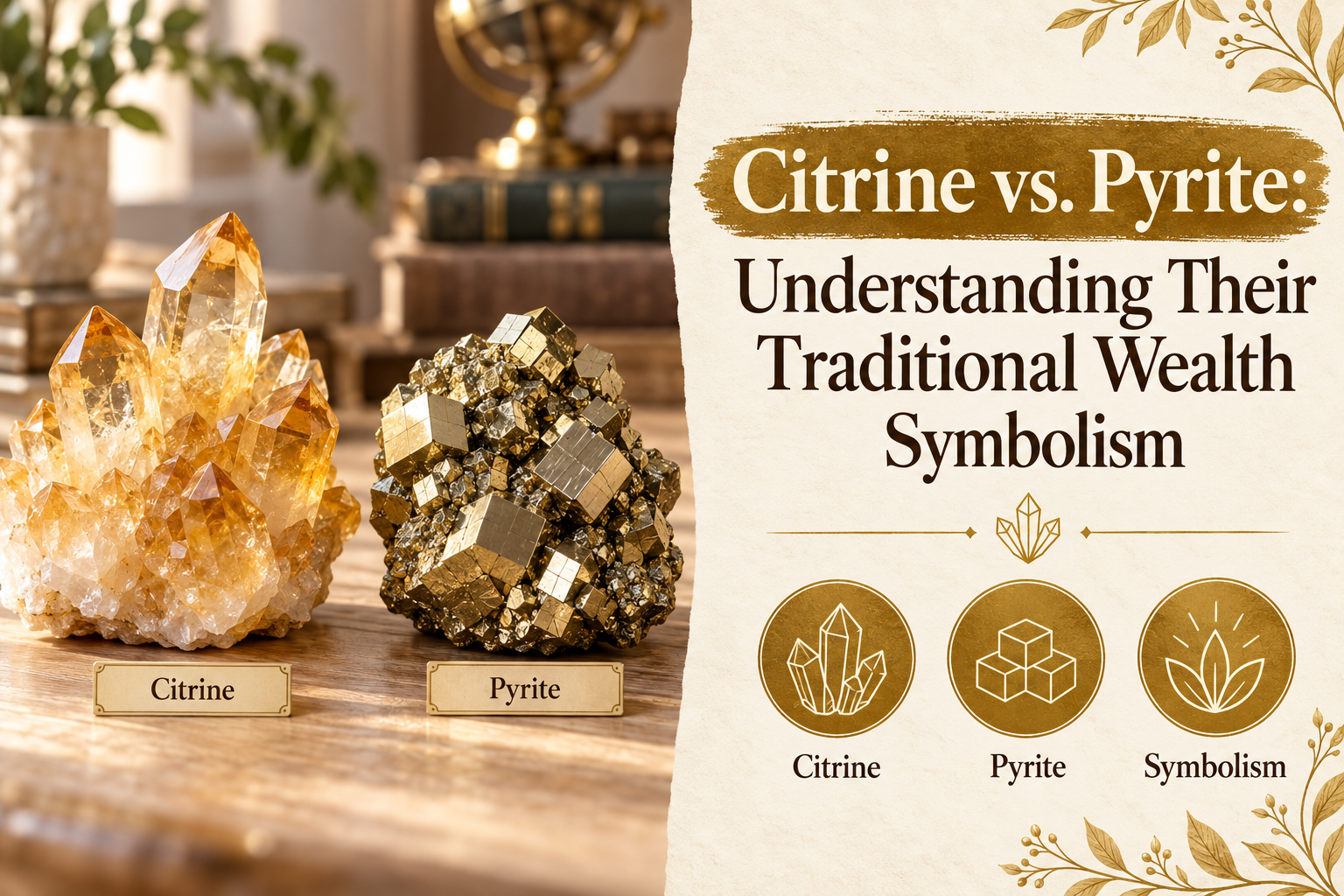
Citrine and Pyrite are two popular gemstones often associated with wealth, abundance, confidence, and prosperity in modern crystal traditions. Their golden and metallic appearances make them especially popular in gemstone bracelets, crystal trees, pyramids, decorative objects, and wealth-themed collections.
Although both stones are commonly used in prosperity-inspired décor, they are very different in their mineral composition, appearance, traditional symbolism, and uses.
Citrine is a yellow variety of Quartz, while Pyrite is an iron sulphide mineral popularly known as Fool’s Gold. Let’s explore their differences and understand why both have become popular choices among crystal enthusiasts.
What Is Citrine?
Citrine is a yellow to golden-orange variety of Quartz. Its warm colour makes it a popular gemstone for jewellery, crystal bracelets, decorative trees, and meditation collections.
In modern crystal traditions, Citrine is commonly associated with:
- Abundance and prosperity
- Optimism and positivity
- Confidence and motivation
- Creativity and personal growth
- Business ambition and new opportunities
Because of these symbolic associations, Citrine is often called the Merchant’s Stone or Stone of Abundance in crystal-related literature.
These are traditional and contemporary symbolic beliefs, not scientifically proven effects.
What Is Pyrite?
Pyrite is a naturally occurring iron sulphide mineral with a distinctive metallic golden appearance. Its sparkling surface and geometric crystal formations make it popular for decorative displays and gemstone collections.
In modern crystal traditions, Pyrite is associated with:
- Wealth and prosperity
- Confidence and determination
- Ambition and success
- Protection symbolism
- Focus and personal strength
Pyrite is particularly popular in wealth-themed crystal arrangements, including Pyrite cubes, Pyrite pyramids, Pyrite trees, and decorative wealth corners.
Its association with abundance is symbolic and should not be understood as a guarantee of financial results.
5 Differences in Their Traditional Wealth Symbolism
- Citrine: Abundance and Positive Outlook
Citrine is traditionally associated with abundance, optimism, and a positive approach towards opportunities.
In modern crystal practices, it is often chosen by people who want a symbolic reminder to remain motivated, confident, and open to new possibilities.
- Pyrite: Ambition and Determination
Pyrite is commonly associated with ambition, confidence, and determination.
Its metallic golden appearance has helped establish its connection with wealth-themed décor. Some crystal enthusiasts display it as a reminder of discipline, persistence, and professional goals.
- Citrine: Creativity and Personal Growth
Citrine is also associated with creativity and self-expression in modern crystal traditions.
People who enjoy crystal symbolism may choose it as a decorative reminder to approach challenges with optimism and develop new ideas.
- Pyrite: Strength and Confidence
Pyrite is traditionally associated with strength, willpower, and confidence.
Its bold metallic appearance makes it a popular choice for office desks, business reception areas, and decorative crystal collections.
- Both: Prosperity-Inspired Décor
Citrine and Pyrite are frequently combined in modern crystal arrangements because their colours and symbolic meanings complement each other.
Citrine represents abundance and optimism, while Pyrite is associated with ambition and determination. Together, they can create an attractive golden-themed display.
These associations are matters of personal belief and do not establish that either stone attracts money or guarantees business success.
Citrine vs. Pyrite: Which One Should You Choose?
Your choice depends on your preferences, intended use, and the type of gemstone décor you enjoy.
Choose Citrine if:
- You prefer transparent or translucent yellow gemstones.
- You enjoy golden-coloured gemstone jewellery.
- You are interested in traditional crystal associations with abundance and optimism.
- You want a gemstone for bracelets, trees, or decorative crystal arrangements.
Choose Pyrite if:
- You like metallic golden mineral formations.
- You prefer decorative gemstone clusters and pyramids.
- You enjoy traditional symbolism associated with ambition and determination.
- You want a distinctive ornament for your office or business space.
Choose both if:
- You enjoy combining different gemstone textures.
- You want a golden-themed crystal display.
- You appreciate their complementary traditional symbolism.
Can Citrine and Pyrite Be Used Together?
Yes. Citrine and Pyrite are commonly combined in modern crystal jewellery and decorative arrangements.
A popular combination is a bracelet containing Citrine, Pyrite, and other stones such as Green Aventurine or Tiger’s Eye.
You can also use them together in a decorative display:
- Keep a Citrine gemstone tree on a shelf.
- Display a Pyrite cluster or pyramid nearby.
- Combine both with neutral décor and natural wooden elements.
- Use them as symbolic reminders of professional goals and personal motivation.
There are no scientifically established benefits from combining these stones, but they can create an attractive and meaningful decorative arrangement.
Where to Place Citrine and Pyrite at Home or in a Business?
If you enjoy Vastu-inspired or crystal-themed décor, you can display Citrine and Pyrite in several places.
- Office desk: A small Citrine tree or Pyrite cluster can add colour and character to your workspace.
- Business reception: Display them on a clean counter or decorative shelf as part of a welcoming interior.
- Living room: Place them on a centre table, side table, or display shelf.
- Home décor corner: Combine them with other gemstone trees and natural decorative objects.
Some Vastu and crystal traditions suggest particular directions for certain objects, but recommendations vary. There is no universally established direction specifically required for Citrine or Pyrite.
How to Identify Genuine Citrine and Pyrite?
Before purchasing these gemstones, it is important to understand their natural characteristics and possible treatments.
Citrine
- Natural Citrine generally has yellow to golden-orange shades.
- Some commercial Citrine is heat-treated Amethyst.
- Natural and treated Citrine can have different colour characteristics.
- Ask the seller about treatment disclosure and gemstone identification.
- Request a reliable gemological report when appropriate.
Pyrite
- Pyrite has a metallic brass-yellow appearance.
- It may occur in cubic crystals, clusters, and irregular formations.
- It is heavier than many common decorative stones.
- Avoid prolonged contact with moisture because Pyrite can oxidise or deteriorate under unsuitable storage conditions.
- Buy from a seller who clearly identifies the mineral.
Conclusion
Citrine and Pyrite are two distinctive gemstones with different mineral properties and traditional wealth symbolism. Citrine is admired for its warm yellow colour and associations with abundance, optimism, and creativity. Pyrite is recognised for its metallic golden appearance and symbolic connection with ambition, confidence, and determination.
Whether you choose Citrine, Pyrite, or both, select them according to your personal preferences, intended use, and gemstone quality.


