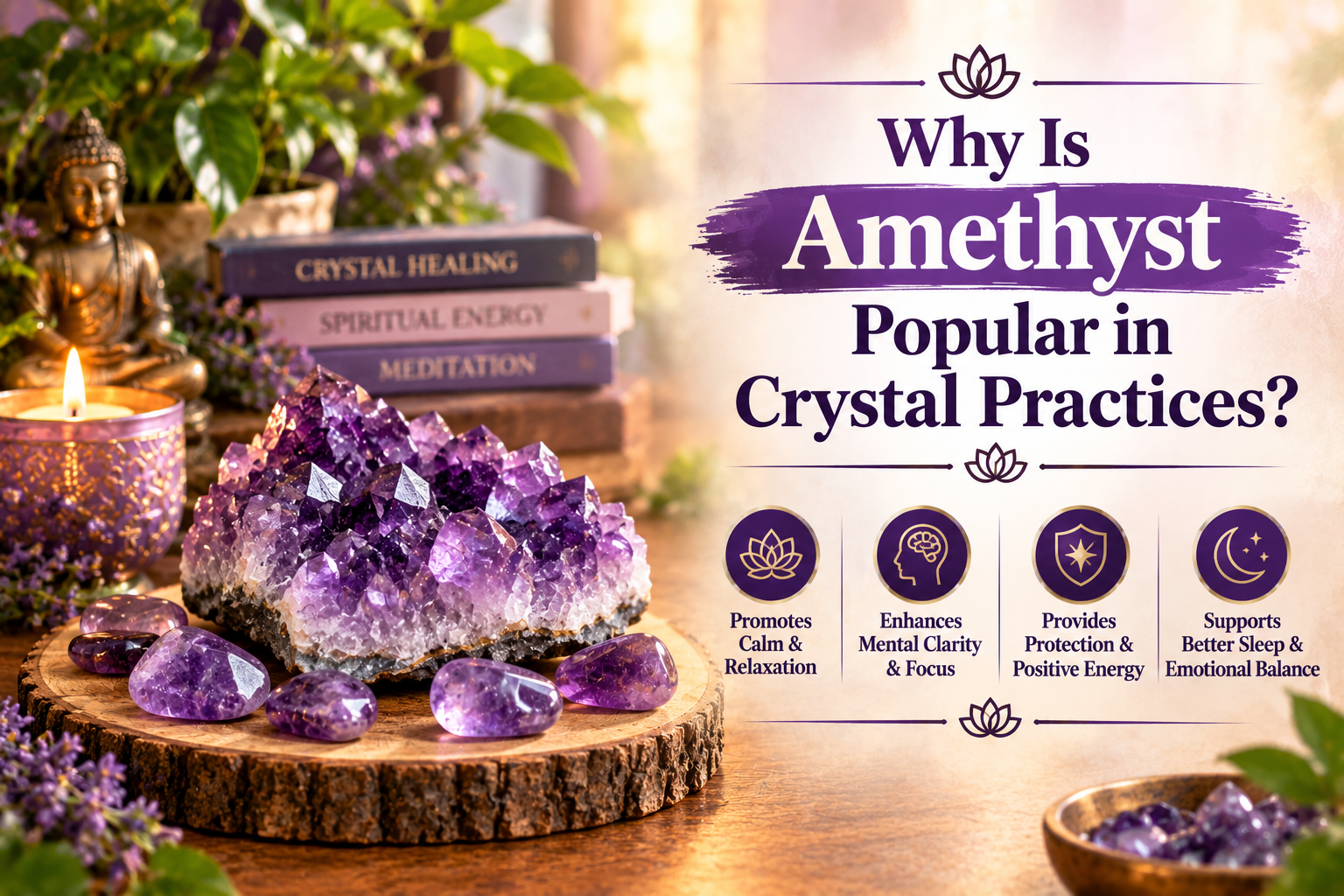
Amethyst is one of the most recognisable purple gemstones and is widely used in jewellery, home décor, meditation spaces, and modern crystal practices.
Its attractive violet colour, natural crystal formations, and long history of cultural symbolism have made it a popular choice among crystal enthusiasts.
But why is Amethyst so popular in crystal practices? Is it simply because of its beautiful appearance, or does it have a deeper traditional significance?
Let’s explore the history, symbolism, traditional uses, and practical ways people incorporate Amethyst into their routines.
Note: Crystal practices are based on traditional beliefs, symbolism, and personal experiences. There is no established scientific evidence that Amethyst produces metaphysical, healing, or energetic effects.
What Is Amethyst?
Amethyst is a purple variety of quartz. Its violet colour is primarily associated with trace amounts of iron and natural irradiation within the crystal.
It can occur in different shades, ranging from:
- Pale lavender
- Soft violet
- Medium purple
- Deep purple
Amethyst commonly forms in geodes and crystalline clusters, making it popular both as a gemstone and as a mineral specimen.
Why Is Amethyst Popular in Crystal Practices?
Amethyst has become particularly popular because it combines distinctive natural beauty with long-standing spiritual symbolism.
In modern crystal traditions, it is commonly associated with:
- Calmness
- Clarity
- Meditation
- Intuition
- Spiritual awareness
- Mindfulness
- Inner reflection
These are traditional or symbolic associations, not scientifically proven effects.
7 Reasons People Use Amethyst
- Association With Calm and Relaxation
Amethyst is often described in crystal traditions as a calming stone.
Some people keep it nearby during meditation, relaxation, or quiet reflection because the colour and symbolism help create a peaceful atmosphere. - Meditation and Mindfulness
Amethyst is frequently incorporated into meditation practices. A person may hold an Amethyst crystal, place it nearby, or simply use it as a visual focal point during meditation.
The crystal itself has not been scientifically shown to produce a meditative state, but the ritual can provide a meaningful reminder to slow down and focus.
- Spiritual Symbolism
Purple has traditionally been associated with spirituality, contemplation, and higher consciousness in various cultural and religious contexts.
Because of its violet colour, Amethyst has developed a strong symbolic connection with spiritual practices.
- Third Eye and Crown Chakra Associations
Modern chakra-based crystal practices often associate Amethyst with the:
Third Eye Chakra
Crown Chakra
These associations are part of contemporary spiritual traditions and are not scientific classifications.
People may use Amethyst during meditation with intentions related to intuition, awareness, and spiritual reflection.
- Intuition and Inner Reflection
Crystal enthusiasts often use Amethyst as a symbolic aid for introspection.
It may be incorporated into practices involving:
- Journaling
- Meditation
- Visualization
- Quiet reflection
- Intention setting
- Beautiful Home Décor
Amethyst does not have to be used spiritually.
Its purple colour and natural crystal structure make it an attractive addition to:
- Living rooms
- Bedrooms
- Offices
- Study spaces
- Meditation areas
- Crystal collections
Large Amethyst clusters and geodes can also become striking decorative pieces.
- Jewellery and Everyday Use
Amethyst is a durable and attractive gemstone that can be used in:
Rings
Pendants
Bracelets
Earrings
Mala beads
Crystal accessories
Wearing Amethyst can therefore be both a fashion choice and, for some people, a symbolic spiritual practice.
Amethyst and the Crown Chakra
One of the most common reasons Amethyst appears in modern crystal practices is its traditional connection with the Crown Chakra.
The Crown Chakra is commonly represented at the top of the head and associated in chakra traditions with:
- Spiritual awareness
- Consciousness
- Reflection
- Connection
- Inner wisdom
Amethyst‘s purple colour is often considered visually compatible with this symbolism.
However, chakras are part of traditional spiritual frameworks rather than scientifically established anatomical structures.
Amethyst for Meditation
Amethyst is particularly popular among people who enjoy meditation.
A simple practice can involve:
- Choose a quiet and comfortable place.
- Keep an Amethyst crystal nearby.
- Sit comfortably and relax your breathing.
- Focus your attention on your breath.
- Use the crystal as a visual or symbolic reminder of your intention.
- Continue for a few minutes.
- End the practice with a moment of reflection.
The purpose is the mindful practice and intention, rather than relying on the crystal as a guaranteed source of an external effect.
Where Do People Keep Amethyst?
Amethyst can be placed almost anywhere that is safe and suitable for the crystal.
Popular locations include:
Bedroom
Some people keep Amethyst near the bedside because of its traditional association with calmness and reflection.
Meditation Space
It can be placed on a meditation table or spiritual altar.
Study Area
Its presence can serve as a visual reminder to pause, focus, and reflect.
Office
Amethyst clusters or decorative pieces can add colour and natural character to a workspace.
Living Room
A larger cluster or geode can function as an attractive décor piece.
Amethyst in Crystal Grids
Some crystal enthusiasts use Amethyst in crystal grids, arranging crystals in geometric patterns according to personal intentions or specific spiritual traditions.
Amethyst may be combined with crystals such as:
- Clear Quartz
- Rose Quartz
- Selenite
- Labradorite
- Moonstone
The arrangement and intended meaning can vary considerably between practitioners.
How to Choose Amethyst?
If you’re buying Amethyst for crystal practice, décor, or jewellery, consider:
Colour
Look for a colour you genuinely enjoy. Amethyst can range from pale lavender to deep purple.
Clarity
Natural Amethyst may contain inclusions, fractures, or colour zoning. A completely flawless appearance is not necessary for a natural specimen.
Crystal Formation
For clusters and geodes, examine the natural crystal points and overall formation.
Size
Choose a size appropriate for whether you want a pocket stone, jewellery piece, decorative cluster, or geode.
How to Care for Amethyst?
Amethyst is relatively durable but should still be handled with care.
- Keep it clean and dry.
- Avoid harsh chemicals.
- Store jewellery separately to prevent scratches.
- Avoid prolonged exposure to strong sunlight, which can contribute to colour fading in some Amethyst.
- Protect clusters and geodes from impacts.
Is Amethyst Scientifically Proven to Have Healing Properties?
Amethyst has well-established mineralogical properties as a variety of quartz.
However, claims that it can heal diseases, balance chakras, remove negative energy, or produce specific physiological effects have not been scientifically established. For this reason, Amethyst should not be used as a substitute for professional medical care or treatment.
Conclusion
Amethyst remains popular in crystal practices because it brings together natural beauty, distinctive purple colour, cultural symbolism, and personal spiritual meaning. For crystal enthusiasts, it can serve as a reminder of calmness, meditation, reflection, intuition, and spiritual awareness.
Whether you choose an Amethyst bracelet, pendant, cluster, geode, or pyramid, the most grounded approach is to appreciate the crystal for both its real mineral properties and its symbolic value.
A crystal can be part of a meaningful personal ritual—but it should not be treated as a scientifically proven replacement for practical action, professional care, or evidence-based solutions.