In Hindu spirituality, the ten Mahavidyas represent ten powerful forms of Goddess Shakti, each symbolising a unique aspect of divine feminine energy. Among them, Maa Dhumavati holds a mysterious and distinctive place. She represents wisdom through life experiences, detachment, transformation, patience, and the ability to find spiritual strength even during difficult times.
The Dhumavati Yantra is a sacred spiritual diagram traditionally associated with Maa Dhumavati. Devotees worship this Yantra with faith and devotion, seeking divine guidance, spiritual awareness, and protection from negative influences.
In this blog, let us explore the meaning, symbolism, traditional significance, and spiritual importance of Dhumavati Yantra.
What Is Dhumavati Yantra?
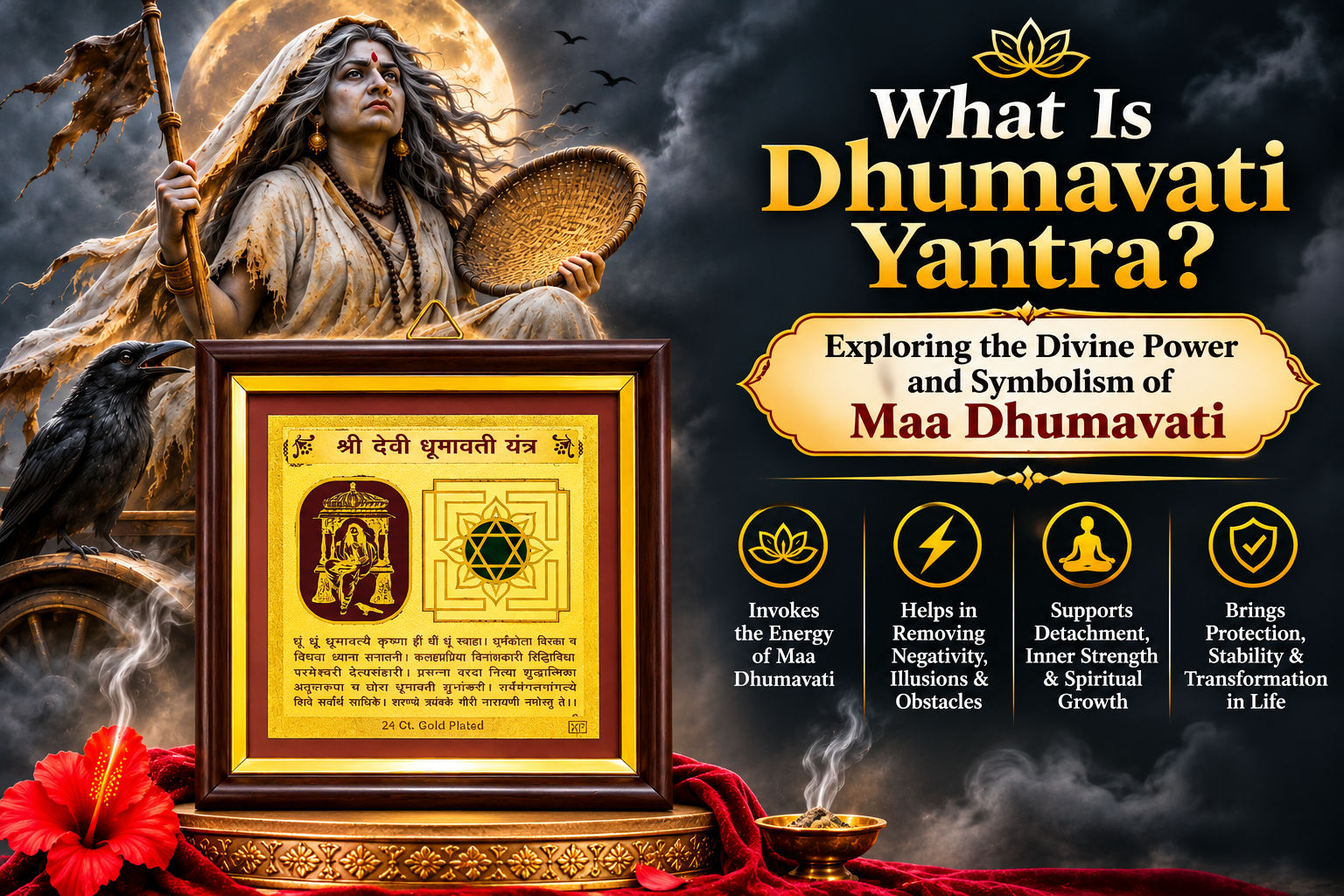
Dhumavati Yantra is a sacred geometric representation associated with Goddess Dhumavati, one of the ten Mahavidyas in the Shakta tradition of Hinduism.
The word ‘Dhumavati’ is derived from the Sanskrit word ‘Dhuma’, meaning smoke. Her name symbolises mystery, impermanence, detachment, and the transformative nature of existence.
Unlike other divine forms associated with beauty, prosperity, or abundance, Maa Dhumavati represents the deeper spiritual realities of life, including uncertainty, loss, wisdom, and liberation.
The Yantra is traditionally worshipped as a symbolic representation of her divine energy and is used in specific spiritual and Tantric practices.
Who Is Maa Dhumavati?
Maa Dhumavati is the seventh of the ten Mahavidyas, the ten wisdom forms of Goddess Adi Parashakti.
She is often depicted as an elderly widow riding a chariot without horses, carrying a winnowing basket. Her unusual appearance represents the deeper philosophical aspects of existence.
Her form teaches that divine wisdom is not limited to material beauty, wealth, or worldly achievements. True spiritual understanding can also emerge through challenges, detachment, and self-realisation.
Maa Dhumavati Symbolises:
- Wisdom: Understanding the deeper truths of life.
- Detachment: Developing freedom from excessive material attachment.
- Transformation: Learning and growing through difficult experiences.
- Inner Strength: Finding courage during challenging situations.
- Spiritual Awareness: Moving towards deeper self-understanding and consciousness.
The Divine Symbolism of Dhumavati Yantra
Every sacred Yantra carries spiritual symbolism through its geometric patterns and traditional worship practices.
Dhumavati Yantra represents the divine energy of Maa Dhumavati and her connection with the deeper aspects of spiritual existence.
Its symbolism can be understood through the following concepts:
- Spiritual Wisdom
Maa Dhumavati represents knowledge that comes through experience. Her Yantra is traditionally associated with self-reflection, awareness, and understanding life’s deeper lessons. - Detachment from Material Illusions
The Goddess symbolises the temporary nature of worldly possessions and attachments. Her worship encourages devotees to develop inner peace and spiritual maturity. - Protection from Negative Influences
In certain Tantric traditions, Maa Dhumavati is worshipped through specialised rituals associated with protection and overcoming obstacles. - Strength During Difficult Times
Her divine symbolism reminds devotees that difficult experiences can become opportunities for learning, patience, and personal transformation. - The Path Towards Liberation
Maa Dhumavati represents spiritual knowledge beyond ordinary material desires, encouraging seekers to explore the deeper meaning of existence.
Traditional Spiritual Benefits of Dhumavati Yantra
Devotees who worship Dhumavati Yantra traditionally associate it with several spiritual qualities.
- Spiritual Protection: Worship is traditionally associated with divine protection and spiritual discipline.
- Overcoming Obstacles: Symbolises the strength to face difficult circumstances.
- Wisdom and Awareness: Encourages self-reflection and deeper understanding.
- Mental Detachment: Represents freedom from unnecessary worldly attachments.
- Inner Strength: Symbolises courage, patience, and resilience.
- Spiritual Growth: Supports devotional practices focused on self-realisation.
These are traditional religious beliefs and symbolic associations, not scientifically established effects or guaranteed outcomes.
Why Is Maa Dhumavati Worshipped?
Maa Dhumavati is worshipped by devotees who seek spiritual wisdom, detachment, and a deeper understanding of life’s challenges.
Her worship has a distinctive place in certain Shakta and Tantric traditions. Unlike everyday devotional worship of other deities, Dhumavati Sadhana can involve specialised rituals and guidance from an experienced Guru.
She teaches an important spiritual lesson: every phase of life has meaning, and wisdom can emerge even from experiences that appear difficult or uncertain.
How to Worship Dhumavati Yantra?
Dhumavati Yantra worship is traditionally connected with specific devotional and Tantric practices.
For general devotional understanding, the following principles are important:
- Keep the Yantra in a clean and respectful prayer space, following the prescribed tradition.
- Maintain cleanliness and a peaceful environment.
- Offer prayers to Maa Dhumavati with devotion.
- Practise meditation and spiritual reflection.
- Follow an appropriate mantra and worship procedure under the guidance of a knowledgeable Guru.
Since Maa Dhumavati is associated with specialised Tantric traditions, advanced rituals, mantra initiation, and Sadhana should not be undertaken casually without proper guidance.
Who Can Worship Dhumavati Yantra?
Dhumavati Yantra may be of spiritual interest to:
- Devotees of Maa Dhumavati.
- Followers of the ten Mahavidyas.
- Spiritual seekers interested in Shakta traditions.
- Practitioners studying traditional Tantra.
- Individuals interested in meditation, detachment, and spiritual wisdom.
For specific rituals and personal worship recommendations, guidance from an experienced practitioner is advisable.
Dhumavati Yantra: A Symbol of Wisdom Beyond Material Desires
One of the most meaningful teachings of Maa Dhumavati is that life is not defined only by success, wealth, beauty, or external achievements.
Her divine form reminds us of impermanence and the importance of developing wisdom beyond material attachments.
The Dhumavati Yantra represents this profound spiritual philosophy. It reminds devotees to embrace self-awareness, patience, inner strength, and the pursuit of higher knowledge.
Conclusion
The Dhumavati Yantra is more than a sacred geometric symbol; it represents the mysterious and transformative spiritual energy of Maa Dhumavati, the seventh Mahavidya.
Through her symbolism, devotees are reminded of the importance of wisdom, detachment, courage, and spiritual awareness. Her divine teachings encourage individuals to look beyond material appearances and discover deeper meaning in life’s experiences.