Dhanteras is one of the most significant occasions during the Diwali festive season. Associated with prosperity, well-being, and auspicious beginnings, this festival is celebrated by bringing home traditional items, performing puja, and preparing for Diwali.
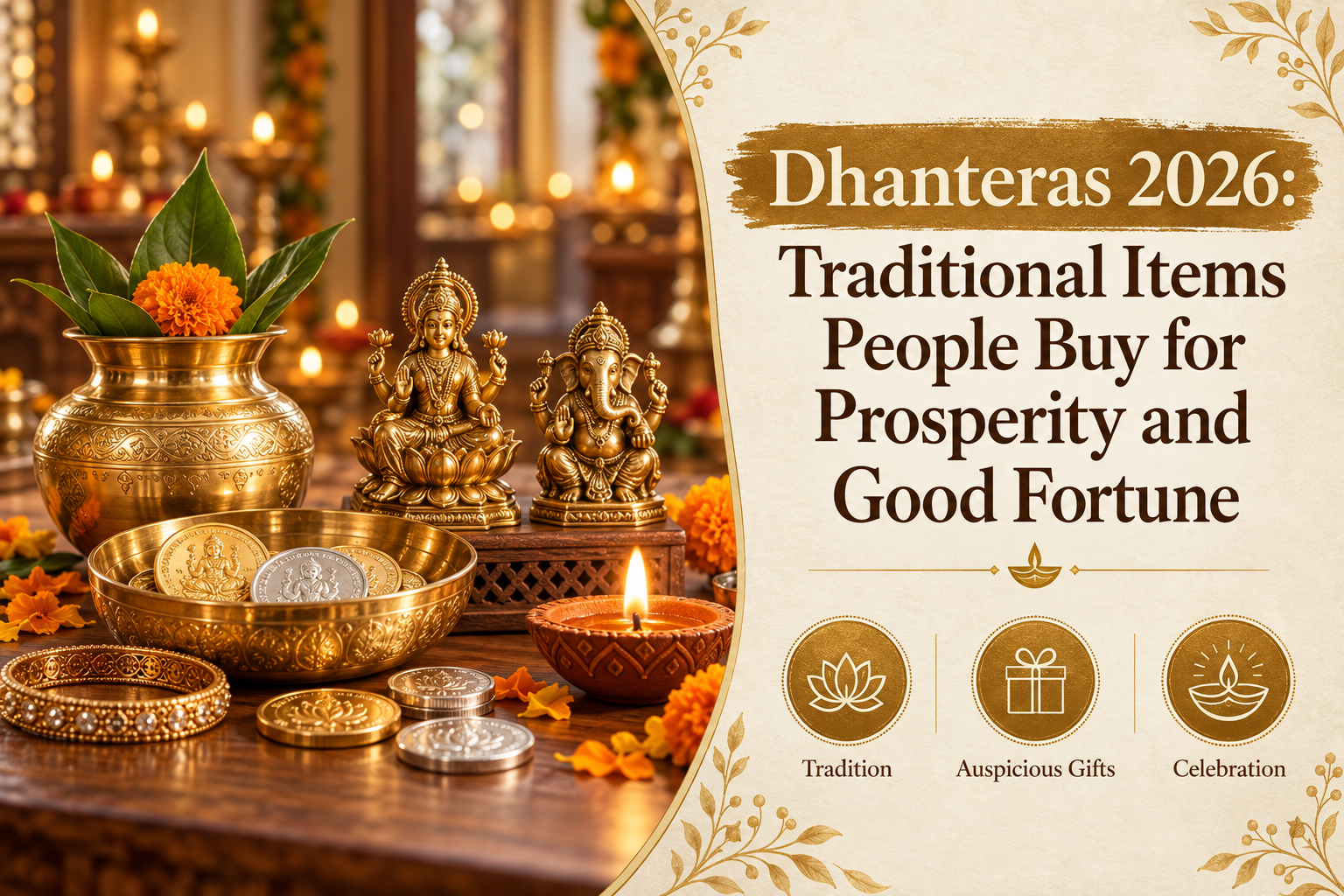
Dhanteras 2026 falls on Friday, 6 November 2026. Many Indian households traditionally purchase gold, silver, new utensils, and other auspicious items on this day. Some families also buy diyas, brooms, coriander seeds, and devotional objects according to their customs. Practices vary across regions and families, and expensive purchases are not essential to observe the festival.
For those who appreciate spiritual traditions, Dhanteras is also an opportunity to explore items such as Shree Yantra, Rudraksha, gemstones, and Vastu-inspired décor as meaningful additions to their homes.
What Is Dhanteras and Why Is It Celebrated?
Dhanteras, also known as Dhantrayodashi, falls on the thirteenth lunar day of Krishna Paksha in the Hindu month of Kartik, according to the traditional calendar.
The festival is associated with Lord Dhanvantari, revered in Hindu tradition as the divine physician. According to the Samudra Manthan narrative, Dhanvantari emerged carrying a pot of amrita, the nectar of immortality. This association connects the occasion with health and well-being.
Dhanteras is also linked with Goddess Lakshmi, who is worshipped as the goddess of wealth and prosperity, and Lord Kubera, traditionally associated with the guardianship of wealth.
Buying new items on Dhanteras is a widely followed custom that symbolises welcoming prosperity and new beginnings. However, the specific items purchased and the rituals performed differ across communities.
- Gold: A Traditional Dhanteras Purchase
Gold is among the most popular purchases associated with Dhanteras. Families may choose gold coins, jewellery, or other gold items according to their preferences and budget.
In Indian traditions, gold is often associated with prosperity, value, auspiciousness, and lasting wealth.
Why Do People Buy Gold on Dhanteras?
- It represents prosperity and abundance in many cultural traditions.
- Gold jewellery can become a meaningful family keepsake.
- Gold coins may be included in festive worship arrangements.
- The occasion offers an opportunity for planned purchases.
Buying tip: Check the purity marking, hallmark details where applicable, making charges, and final price before purchasing. Gold prices can fluctuate, and buying gold does not guarantee investment returns.
- Silver Coins and Silver Utensils
Silver is another traditional choice for Dhanteras. Many households purchase silver coins, small ornaments, or utensils and may use them during Lakshmi puja.
Silver is commonly associated with purity, auspiciousness, and prosperity in Indian festive customs.
Popular options include:
- Silver coins featuring traditional motifs.
- Small silver bowls or utensils.
- Silver diyas or puja accessories.
- Silver ornaments within a comfortable budget.
A small silver coin can be a meaningful option for someone who wants to participate in the custom without making a large purchase.
- Brass, Copper, and Steel Utensils
Purchasing new utensils is a long-standing Dhanteras tradition. Families may choose brass, copper, steel, or silver kitchenware according to their needs.
The custom is often connected symbolically with the vessel carried by Lord Dhanvantari in the Samudra Manthan story.
Common choices include:
- Brass bowls and plates.
- Copper water vessels.
- Steel kitchen utensils.
- Traditional puja thalis.
- Metal kalash or small storage containers.
These purchases combine festive symbolism with everyday usefulness. Choose items that are suitable for their intended use and follow the manufacturer’s care instructions.
- Diyas and Traditional Puja Essentials
Lighting diyas is an important part of Diwali celebrations, and many families purchase fresh clay lamps and puja supplies during the festive period.
Traditional items include:
- Clay diyas.
- Cotton wicks and suitable lamp oil or ghee.
- Incense sticks and camphor.
- Flowers and other customary offerings.
- Rangoli materials and decorative torans.
Dhanteras is also associated with Yama Deepdaan in many traditions, in which a lamp is lit as part of a prayer connected with protection from untimely death.
The exact ritual and timing can vary by region and family custom. Always place lamps on stable, heat-resistant surfaces and keep them away from flammable materials.
- Broom: A Traditional Symbol of Cleanliness
In many Indian households, buying a new broom on Dhanteras is considered an auspicious custom. The broom is symbolically associated with cleanliness and the removal of unwanted things from the home.
The practice also reflects the importance of preparing a clean home for Diwali and its associated worship rituals.
A new broom is an affordable option for families who wish to observe this custom without spending much.
- Whole Coriander Seeds: A Symbol of Growth
Some families purchase whole coriander seeds, known as sabut dhaniya, for Dhanteras or Diwali rituals.
In certain regional customs, coriander seeds are offered during worship and may later be sown or kept as a symbolic reminder of growth and prosperity.
This is a simple, low-cost tradition. The precise practice varies between households, so families may follow their own established customs.
- Lakshmi-Ganesha Idols for Diwali Puja
Dhanteras is also a popular time to purchase new idols or pictures of Goddess Lakshmi and Lord Ganesha for Diwali worship.
Goddess Lakshmi is associated with prosperity and abundance, while Lord Ganesha is revered for wisdom and auspicious beginnings.
When selecting devotional idols, consider:
- The recipient’s religious tradition and preferences.
- The size of the puja space.
- The material, finish, and craftsmanship.
- Whether the item is intended for worship or decoration.
Choose an idol that suits your household’s practices rather than assuming that a particular material or size is compulsory.
- Shree Yantra: A Sacred Symbol in Hindu Tradition
The Shree Yantra is a sacred geometric design revered in several Hindu traditions, particularly those associated with Sri Vidya and Goddess Tripura Sundari. It is also connected with prosperity and devotional practices in many households.
Some people choose a Shree Yantra during Dhanteras as a symbolic addition to their prayer space.
Why Is Shree Yantra Considered Meaningful?
- It represents sacred geometry in Hindu spiritual traditions.
- It is used in certain forms of worship and meditation.
- It can be a meaningful devotional gift for someone who values Hindu spiritual practices.
The Shree Yantra is available in different forms, including flat yantras and three-dimensional Meru designs. Ritual requirements and placement recommendations vary by tradition. It should not be treated as a guaranteed method of attracting wealth.
- Rudraksha: A Traditional Spiritual Gift
Rudraksha beads have a long-standing association with Lord Shiva and are used by many devotees for prayer, mantra recitation, and meditation.
A Rudraksha mala or bracelet may be a thoughtful Dhanteras gift for someone who appreciates devotional jewellery.
When buying Rudraksha, check the seller’s product description, bead identification, quality, and any available documentation. Different Mukhi varieties have different traditional associations, and claims about their spiritual effects should be treated as beliefs rather than established scientific facts.
- Gemstones and Gemstone Bracelets
Gemstones are popular choices for people interested in astrology-inspired jewellery and traditional gemstone symbolism.
Options may include:
- Ruby (Manik).
- Emerald (Panna).
- Yellow Sapphire (Pukhraj).
- Blue Sapphire (Neelam).
- Zodiac-inspired gemstone bracelets.
- Decorative crystal jewellery.
Some gemstones are associated with particular planets in Vedic astrology. However, a gemstone should not be selected solely because it is Dhanteras or because a person belongs to a particular zodiac sign.
If you want a gemstone for astrological purposes, seek individual guidance and verify the stone’s identity, treatments, and certification where appropriate.
- Pyrite Décor and Traditional Prosperity Symbolism
Pyrite is popular in modern crystal-inspired décor and is sometimes associated with abundance, confidence, and prosperity in crystal traditions.
Pyrite pyramids, clusters, and decorative pieces may appeal to people who enjoy distinctive home or office accessories.
These items can be chosen as symbolic reminders of personal goals and ambitions. There is no reliable scientific evidence that Pyrite attracts money or guarantees business success.
When purchasing Pyrite, check the product description and care instructions because the mineral can be damaged by moisture and unsuitable cleaning methods.
- Wealth Pot and Traditional Prosperity Arrangements
A Wealth Pot is a decorative arrangement inspired by traditional prosperity symbolism. Depending on the design, it may include a pot, coins, Kaudi shells, Gomati Chakras, Pyrite, or a small Shree Yantra.
People may display such arrangements in a home or office as a reminder of prosperity, gratitude, and financial aspirations.
Before buying a Wealth Pot, check the materials included and whether the seller provides clear instructions for display and care. Its symbolism should not be confused with a guarantee of wealth or financial improvement.
How to Prepare Your Home for Dhanteras?
Along with traditional purchases, many families prepare their homes for the festive period through simple practices.
- Clean and organise: Tidy the home and arrange the areas used for worship.
- Prepare the puja space: Gather the items your family traditionally uses for worship.
- Decorate thoughtfully: Use diyas, flowers, rangoli, and festive décor where appropriate.
- Make purchases within your budget: Choose items based on your needs and family customs.
- Observe your family’s rituals: Follow the traditions meaningful to your household.
- Prioritise safety: Keep lamps and electrical decorations away from flammable materials and use them carefully.
The most important part of the celebration is the meaning and care behind the observance, not the amount spent.
Conclusion
Dhanteras 2026 is an opportunity to celebrate traditional values of prosperity, well-being, gratitude, and new beginnings. From gold, silver, and utensils to diyas, Rudraksha, Shree Yantra, gemstones, and decorative prosperity symbols, there are many ways to mark the occasion.
The best choice depends on your family’s traditions, personal preferences, and budget. Whether you purchase a practical household item or a spiritual keepsake, focus on quality, meaningful symbolism, and thoughtful spending.
For those exploring gemstones, Rudraksha, and spiritual décor, Effective Gems offers a range of products to consider for festive gifting and personal use.