Maa Durga, one of the most revered goddesses in Hindu tradition, represents divine strength, courage, protection, and the triumph of good over evil. Among the many sacred objects associated with her, the Trishul (trident) holds a special place. It is not merely a weapon in religious iconography; it also symbolises the power to overcome negativity, restore balance, and uphold righteousness.
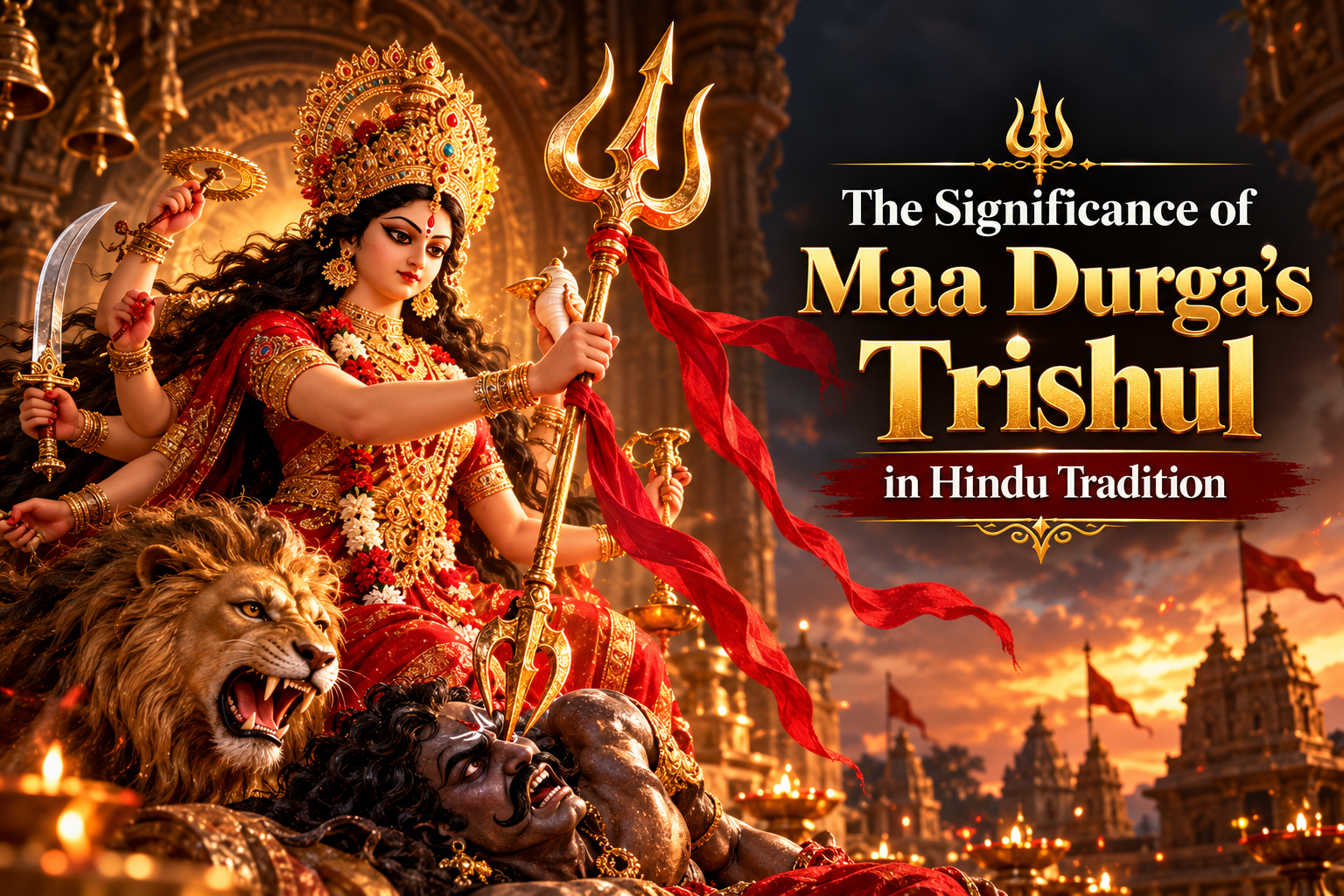
During Navratri and Durga Puja, devotees often see Maa Durga depicted holding a Trishul as she battles the buffalo demon Mahishasura. This powerful image conveys the victory of divine strength over destructive forces and reminds devotees of the importance of courage, wisdom, and self-discipline.
In this blog, we explore the significance of Maa Durga’s Trishul, its symbolism in Hindu tradition, and its role in worship and spiritual practice.
What Is Maa Durga’s Trishul?
The Trishul is a traditional three-pronged weapon commonly associated with Hindu deities, particularly Lord Shiva and Maa Durga. The word Trishul comes from Sanskrit, combining tri, meaning three, and shula, meaning spear or pointed weapon.
In Hindu iconography, Maa Durga is frequently portrayed holding the Trishul as one of her divine weapons. According to popular retellings of the Durga-Mahishasura story, the gods bestowed their powers and weapons upon the goddess to help her defeat Mahishasura, who threatened the balance of the universe.
The Trishul represents divine authority, strength, and the power to confront forces that threaten righteousness.
The Story Behind Maa Durga’s Trishul
The story of Maa Durga and Mahishasura is an important part of Hindu religious tradition, especially during Navratri and Durga Puja.
According to the Devi Mahatmya, a revered section of the Markandeya Purana, Mahishasura received a boon that made him difficult for the gods to defeat. As his power grew, he challenged the devas and disrupted cosmic order.
In response, the divine energies of the gods came together to manifest Maa Durga. The gods equipped her with various weapons, each representing divine power and the ability to confront evil.
The Trishul became one of the most recognisable symbols of her strength. In the traditional narrative, Maa Durga ultimately defeated Mahishasura, restoring balance and demonstrating that arrogance and destructive power cannot prevail forever.
This story is remembered during Navratri and Durga Puja as a celebration of divine courage, justice, and the victory of good over evil.
The Spiritual Symbolism of the Three Points of the Trishul
The three prongs of the Trishul have several symbolic interpretations across Hindu traditions. No single explanation applies universally, but these interpretations offer meaningful ways to understand the sacred symbol.
- The Three Gunas: Sattva, Rajas, and Tamas
In Hindu philosophy, nature is often described through three gunas:
- Sattva: Associated with harmony, clarity, and wisdom.
- Rajas: Associated with activity, desire, and movement.
- Tamas: Associated with inertia, darkness, and ignorance.
The Trishul may be interpreted as symbolising mastery over these three qualities. Its symbolism encourages people to cultivate clarity, direct their energy constructively, and recognise habits that hold them back.
- The Three Dimensions of Time
Another interpretation connects the three prongs with the past, present, and future.
This association reminds devotees that life unfolds through changing circumstances and that wisdom involves learning from the past, acting responsibly in the present, and preparing thoughtfully for the future.
- Body, Mind, and Spirit
The Trishul is also sometimes interpreted as representing the body, mind, and spirit.
From this perspective, its symbolism encourages a balanced approach to life: caring for the body, developing a disciplined mind, and nurturing one’s spiritual or ethical values.
These interpretations are symbolic readings found in religious and spiritual discussions rather than a single fixed doctrine shared by every Hindu tradition.
Why Does Maa Durga Hold a Trishul?
Maa Durga’s Trishul carries several important meanings in Hindu religious imagery.
Symbol of Courage and Divine Strength
The Trishul represents the courage required to face challenges. Maa Durga’s image inspires devotees to approach difficulties with determination and to stand up for what is right.
Symbol of Protection
Maa Durga is widely worshipped as a protective mother who defends her devotees against harm and destructive forces. Her Trishul reinforces this image of divine guardianship within Hindu belief.
Symbol of the Victory of Good Over Evil
The Trishul is closely connected with Maa Durga’s battle against Mahishasura. It represents the defeat of arrogance, injustice, and destructive behaviour, reminding devotees of the importance of truth and righteousness.
Symbol of Discipline and Self-Control
The weapon can also be understood as a reminder to confront inner challenges, such as anger, greed, pride, and harmful habits. In this interpretation, the greatest victory begins with self-awareness and disciplined action.
The Significance of the Trishul During Navratri and Durga Puja
During Navratri, devotees honour the different forms of Maa Durga through prayers, fasting, devotional songs, and rituals that vary by region and family tradition.
The Trishul appears prominently in religious images, temple decorations, and depictions of the goddess during these celebrations.
During Durga Puja, especially in eastern India, Maa Durga is commonly portrayed defeating Mahishasura with her divine weapons. The Trishul is a central element of this imagery, representing the restoration of harmony and the triumph of divine justice.
For devotees, the symbol serves as a reminder to approach life’s struggles with courage, uphold ethical values, and maintain faith during difficult times.
What Does a Trishul Represent in Hindu Worship?
Beyond its association with Maa Durga, the Trishul has a broader place in Hindu religious symbolism.
- Divine power: It represents the strength of the deity associated with it.
- Righteousness: It is connected with the defeat of destructive forces.
- Spiritual awareness: Some interpretations associate it with overcoming ignorance and developing wisdom.
- Balance: Its three points can be understood as representing interconnected aspects of existence.
- Devotion: It appears in temple art, religious imagery, and sacred spaces as an expression of faith.
The exact meaning depends on the deity, religious text, regional tradition, and context in which the Trishul appears.
Can You Keep a Trishul Symbol at Home?
Some devotees choose to keep a small Trishul, an image of Maa Durga holding one, or a devotional statue in their home shrine. For them, it can represent faith, courage, devotion, and the protection associated with the goddess.
If you wish to display a Trishul symbol at home, consider these simple suggestions:
- Choose a respectful location: Place it in your home shrine or another clean, suitable space used for devotional items.
- Follow your family tradition: Practices regarding placement and worship can differ among households and religious lineages.
- Keep the area clean: Maintain the space with the same care you give other devotional objects.
- Offer prayers according to your tradition: You may chant a familiar prayer to Maa Durga or simply offer a moment of gratitude.
- Focus on its meaning: Let the symbol remind you to practise courage, compassion, self-control, and responsibility.
There is no need to assume that a particular object or placement guarantees protection or material success. For many devotees, the value lies in devotion and the principles the symbol represents.
Lessons We Can Learn From Maa Durga’s Trishul
Maa Durga’s Trishul offers several reflections that can be applied to everyday life:
- Face challenges bravely: Difficult situations often require patience and determination.
- Recognise inner struggles: Becoming aware of anger, pride, or unhealthy habits is an important step towards personal growth.
- Choose righteousness: Act honestly and treat others with fairness and respect.
- Maintain balance: Give appropriate attention to responsibilities, relationships, health, and personal values.
- Stand against injustice: Strength is most meaningful when guided by wisdom and compassion.
These lessons help explain why the Trishul remains a powerful and recognisable symbol in Hindu devotional culture.
Conclusion:
The significance of Maa Durga’s Trishul extends beyond its appearance as a divine weapon. In Hindu tradition, it represents courage, strength, protection, and the triumph of righteousness over destructive forces.
Whether seen during Navratri, admired in Durga Puja imagery, or displayed in a home shrine, the Trishul reminds devotees that true strength is guided by wisdom, discipline, and compassion.
As we honour Maa Durga, her Trishul can inspire us to face challenges with courage, overcome harmful habits, and work towards a more balanced and responsible life.
Celebrate the divine symbolism of Hindu tradition with Effective Gems, your destination for gemstones, Rudraksha, crystals, and spiritual products.