Vijayadashami is one of the most significant Hindu festivals, celebrated as a symbol of the victory of good over evil. It marks the conclusion of Sharadiya Navratri and is closely connected with the celebration of Durga Puja in many parts of India.
In 2026, Vijayadashami falls on Tuesday, 20 October, according to commonly followed festival calendars. It is observed on the tenth lunar day, known as Dashami, although exact tithi timings and local observances may vary.
But why is Vijayadashami celebrated after Durga Puja? The answer lies in the sacred story of Maa Durga’s victory over Mahishasura, the spiritual meaning of triumph over negativity, and the traditions through which devotees express gratitude and devotion.
What Is Vijayadashami?
The word Vijayadashami combines two Sanskrit-derived terms: Vijaya, meaning victory, and Dashami, referring to the tenth lunar day.
The festival is celebrated in different ways across India. In many eastern regions, including Odisha and West Bengal, it marks the culmination of Durga Puja and commemorates Maa Durga’s victory over Mahishasura. In several other regions, it is associated with Lord Rama’s victory over Ravana, as narrated in the Ramayana.
Although the stories and customs differ, both traditions emphasize the triumph of righteousness over destructive forces.
Why Is Vijayadashami Celebrated After Durga Puja?
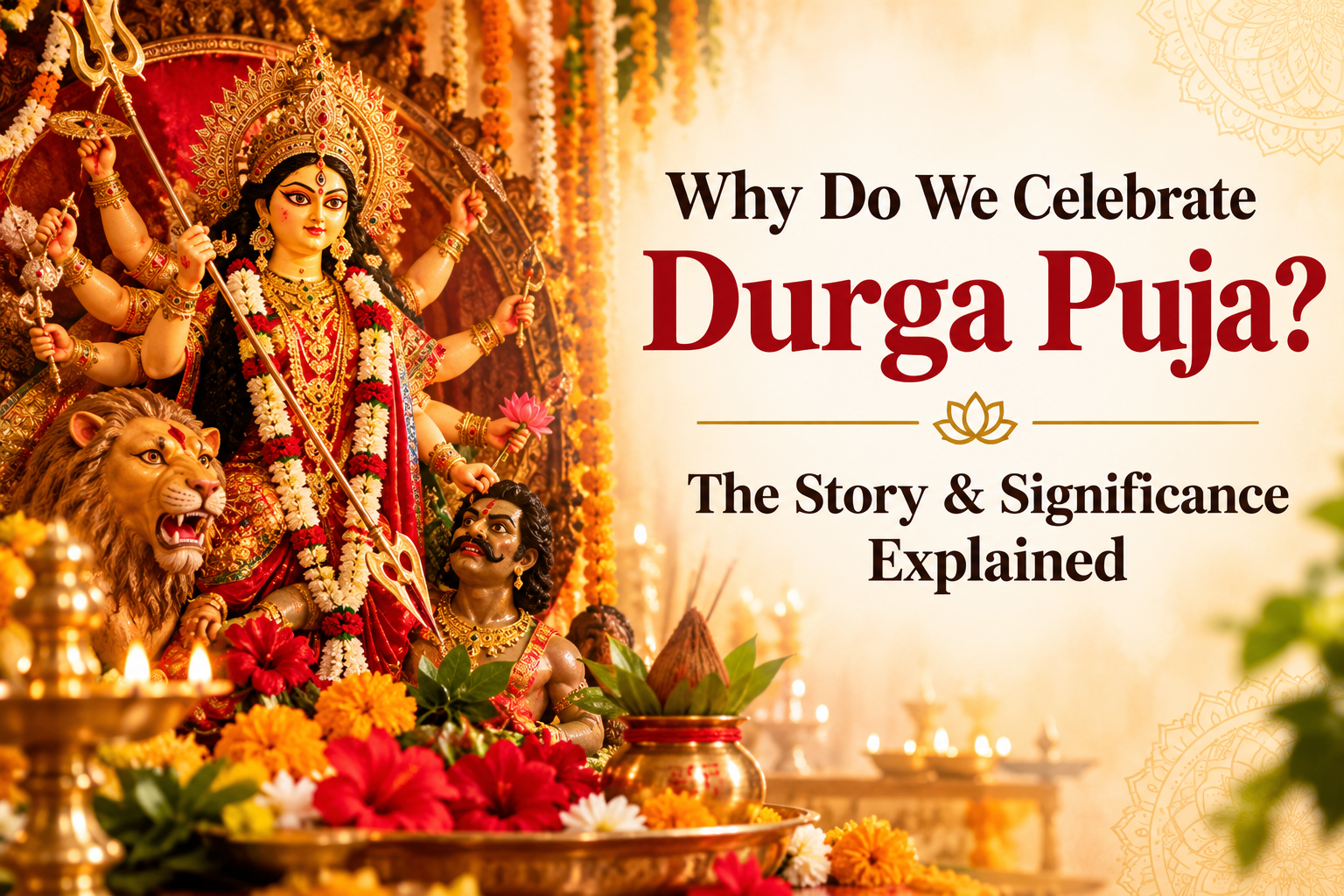
Durga Puja honours Maa Durga and her victory over Mahishasura. The festival progresses through days of worship, devotion, and celebration, culminating in Vijayadashami.
According to the Devi Mahatmya, which forms part of the Markandeya Purana, Maa Durga manifests through divine power to defeat Mahishasura and restore cosmic order.
Vijayadashami commemorates this victory and brings the festival to its traditional conclusion. It is a day for devotees to express gratitude, offer prayers, and reflect on the goddess’s courage and strength.
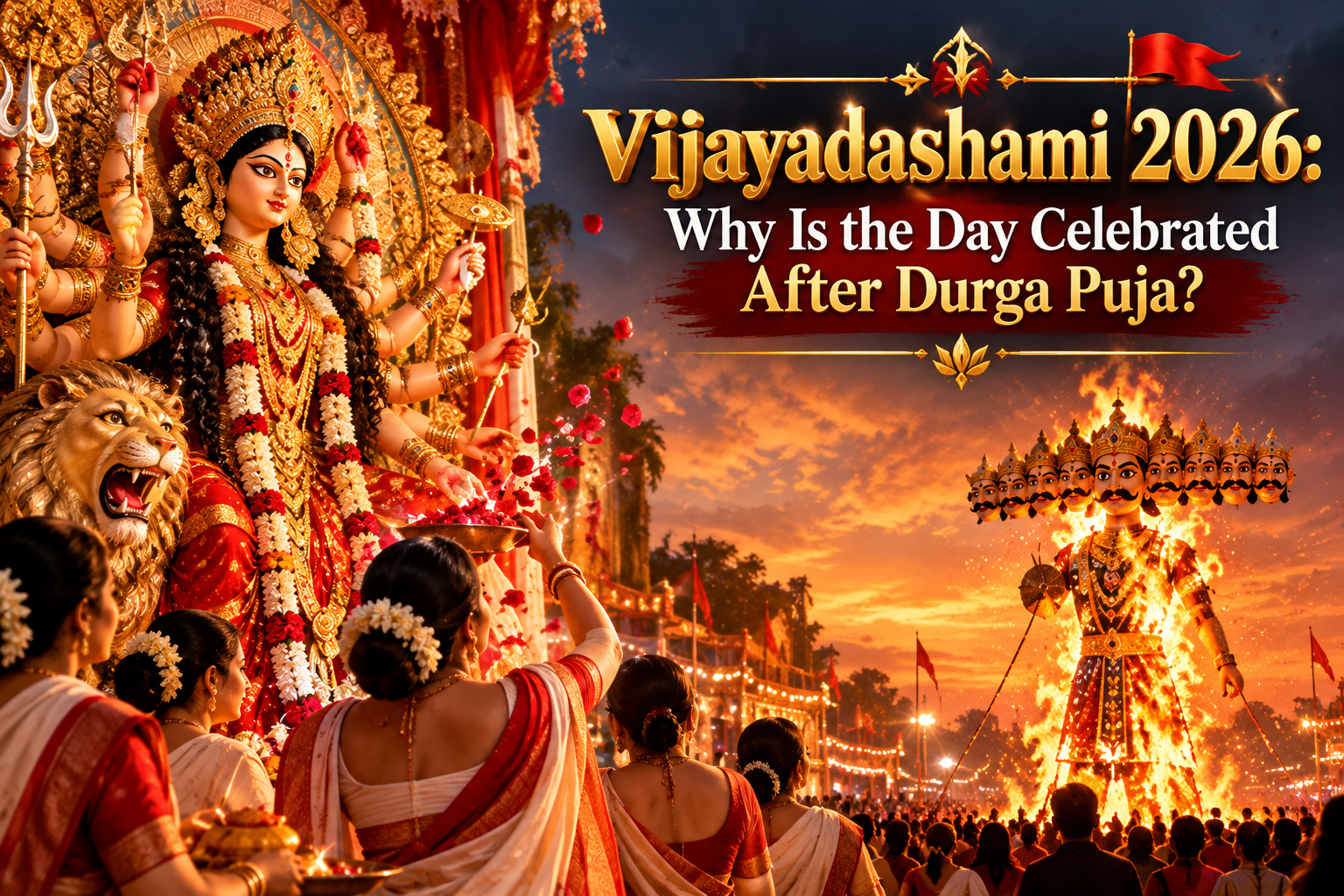
In communities that worship elaborate Durga idols, Vijayadashami also marks the ceremonial farewell to Maa Durga before the idols are immersed according to local customs.
The Story of Maa Durga and Mahishasura
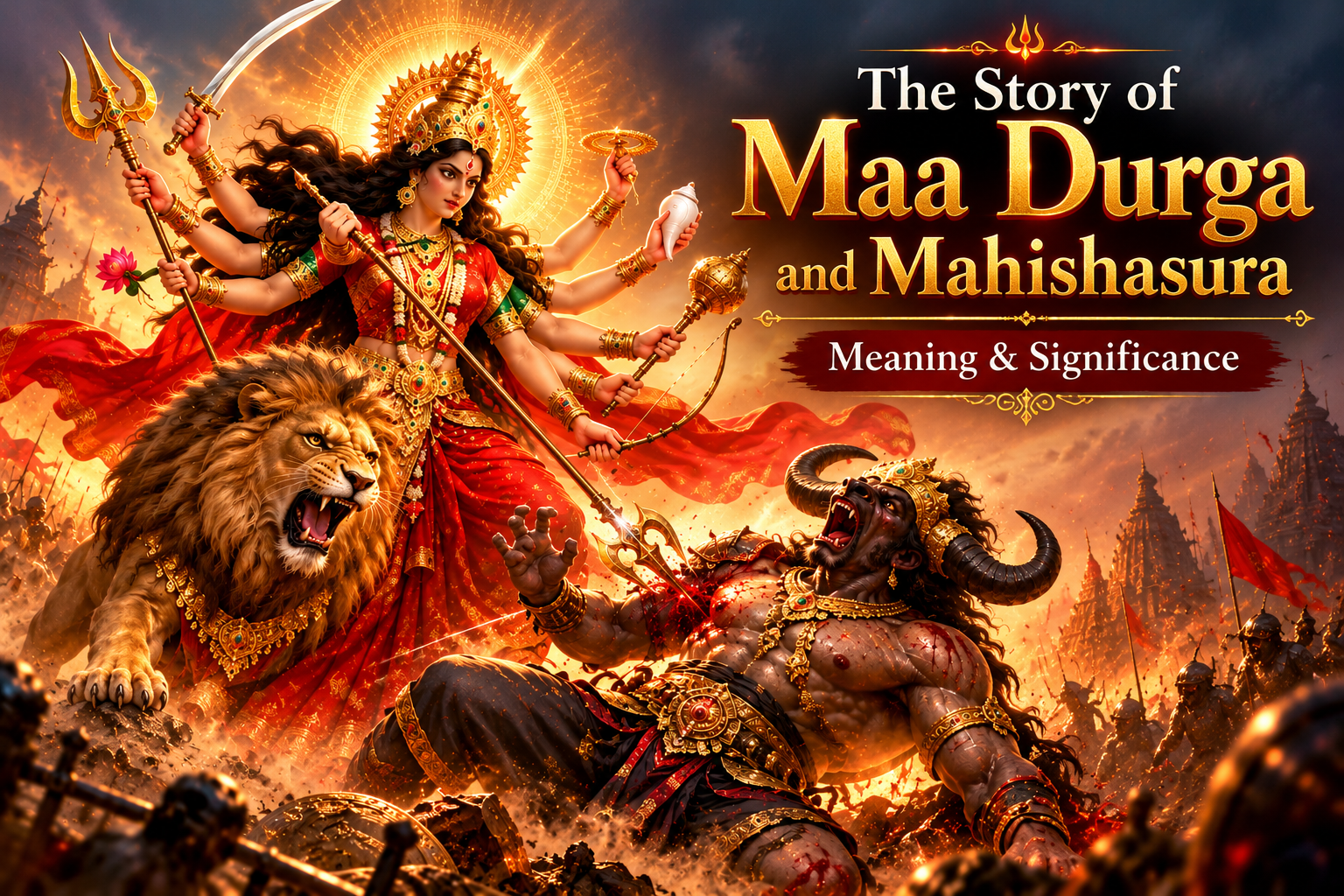
Mahishasura was a powerful asura who challenged the gods and threatened the balance of the universe. Unable to defeat him, the gods united their divine energies, from which Maa Durga emerged.
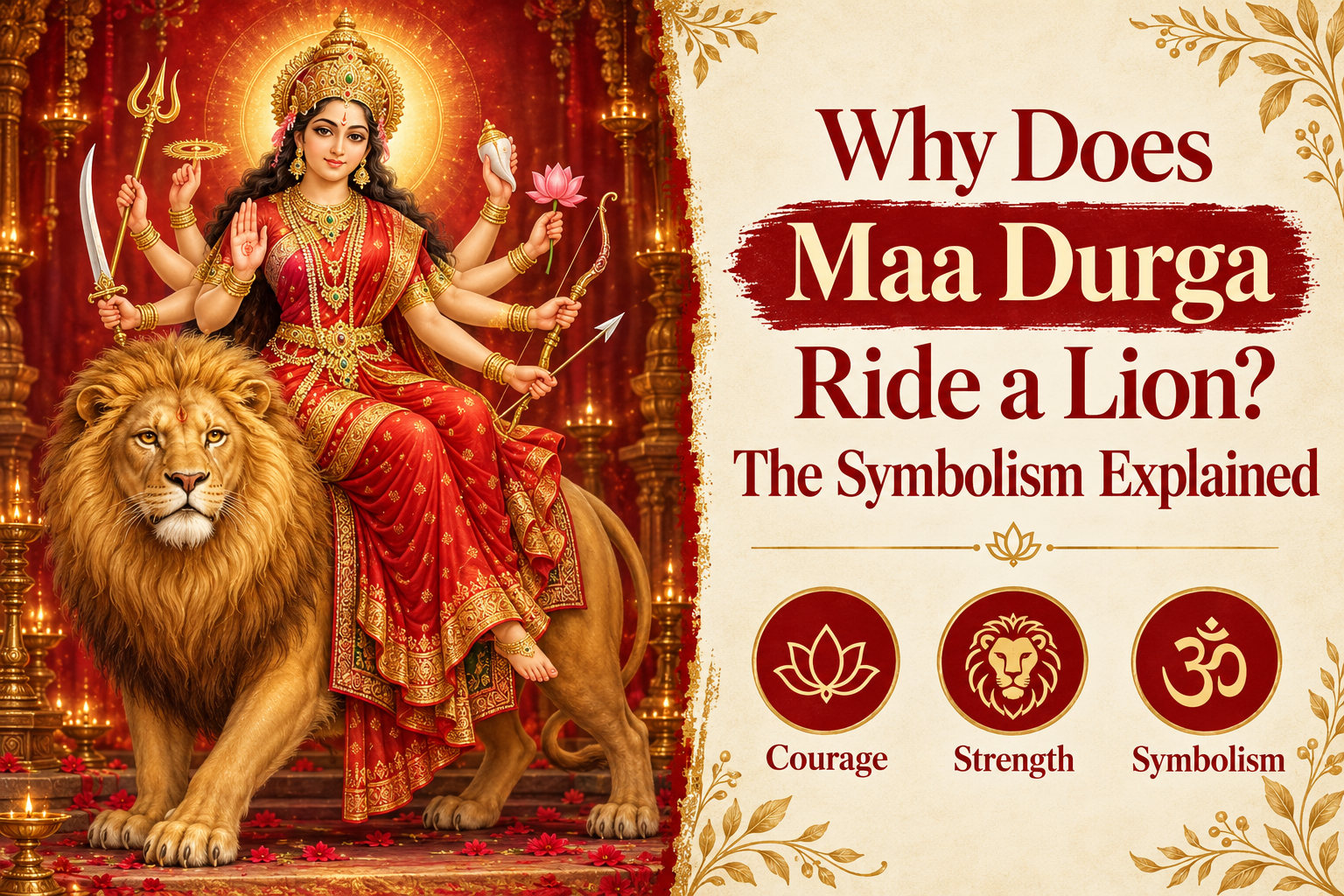
Armed with divine weapons and riding a lion or tiger, the goddess confronted Mahishasura in a fierce battle. After an extended struggle, she defeated him, ending his reign of terror.
Her victory is celebrated as Mahishasura Mardini, meaning the slayer of Mahishasura.
This story forms a central part of Durga Puja’s religious significance. Vijayadashami commemorates the triumph and reminds devotees that arrogance, injustice, and destructive power cannot ultimately prevail over righteousness.
Why Is Vijayadashami Also Associated With Lord Rama?
In many parts of India, Vijayadashami is celebrated as Dussehra, recalling Lord Rama’s victory over Ravana.
According to the Ramayana tradition, Ravana abducted Sita, leading to the conflict in which Rama, aided by Lakshmana, Hanuman, and his allies, fought to rescue her. Rama’s victory represents the triumph of dharma, or righteous conduct, over wrongdoing.
The traditions of Maa Durga’s victory over Mahishasura and Lord Rama’s victory over Ravana are distinct stories celebrated on the same festival day in many communities.
Together, they reinforce the festival’s wider message of courage, justice, humility, and the victory of good over evil.
How Is Vijayadashami Celebrated After Durga Puja?
Vijayadashami customs vary by region, but several practices are widely observed.
- Maa Durga’s Farewell
In Odisha and West Bengal, devotees offer prayers and bid farewell to Maa Durga. In communities that follow idol immersion, the Durga idols are taken in processions for Visarjan according to local traditions. - Sindoor Khela
In some Bengali communities, married women participate in Sindoor Khela, applying vermilion to the goddess and to one another as part of the farewell celebrations. The practice is specific to certain communities and is not universal. - Visiting Family and Friends
People exchange greetings, seek blessings from elders, and spend time with family and friends. These customs reflect the social and devotional spirit of the festival. - Shami Puja and Ayudha Puja
In some regions, devotees worship the Shami tree or honour tools, books, instruments, and work equipment. These practices express respect for livelihood, learning, skill, and the tools people depend on. - Ramlila and Ravana Effigies
In many northern and central Indian communities, Ramlila performances conclude with the burning of Ravana effigies, symbolizing the defeat of wrongdoing.
Spiritual Significance of Vijayadashami
Beyond its stories and rituals, Vijayadashami offers several meaningful lessons.
- Courage: Maa Durga’s victory inspires devotees to face difficulties with determination.
- Humility: The downfall of powerful adversaries reminds people of the dangers of arrogance.
- Righteousness: The festival encourages ethical decisions and respect for others.
- Renewal: The conclusion of Navratri provides an opportunity to begin again with clarity and purpose.
- Gratitude: Prayers and farewell rituals allow devotees to express thankfulness for faith, strength, and community.
These lessons make Vijayadashami meaningful even beyond the festival itself.
Why Is Vijayadashami Considered Auspicious for New Beginnings?
Many families and communities consider Vijayadashami an auspicious occasion to begin learning something new, start a project, purchase tools, or embark on a fresh undertaking.
In some traditions, children participate in Vidyarambham, a ritual marking the beginning of formal learning. Other communities perform Ayudha Puja or worship books and work instruments.
These practices reflect the belief that the day is favourable for purposeful beginnings. Customs differ by region, and anyone planning an important religious observance should consult their local Panchang or family tradition.
Conclusion:
Vijayadashami is celebrated after Durga Puja because it marks the culmination of the festival and commemorates the victory of Maa Durga over Mahishasura in traditions centred on the goddess. Across India, the day also carries the story of Lord Rama’s victory over Ravana.
Both traditions share a powerful message: goodness, courage, humility, and righteousness deserve to guide our lives. As Vijayadashami 2026 approaches, devotees can celebrate the occasion through prayer, gratitude, community, and renewed commitment to positive action.
May Maa Durga bless everyone with courage, wisdom, peace, and prosperity. Shubho Vijayadashami!
Explore gemstones, Rudraksha, Yantras, and spiritual products at Effective Gems.