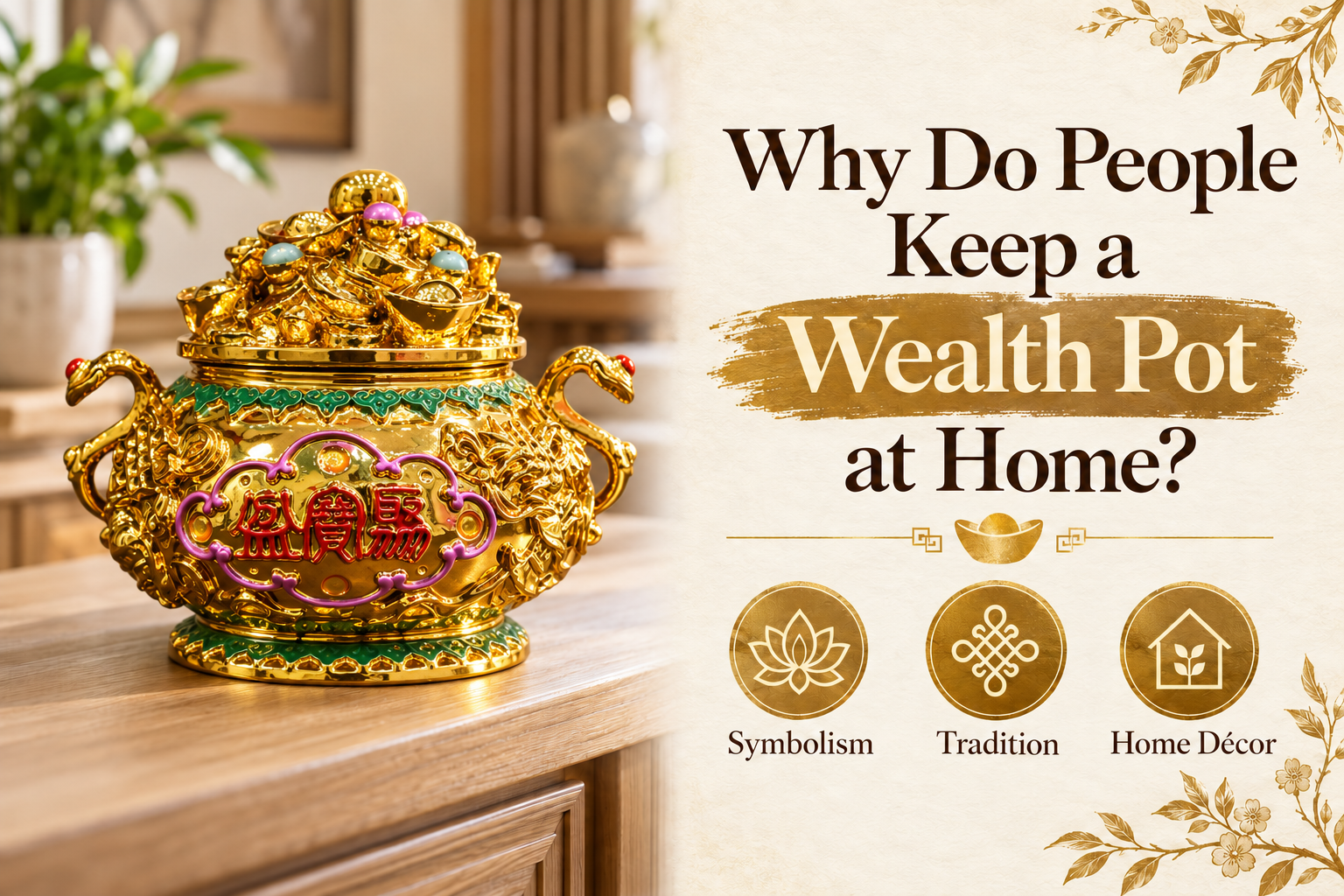
A Wealth Pot is a traditional prosperity-themed arrangement that people keep in their homes, prayer rooms, or workplaces as a symbol of abundance, good fortune, and financial aspirations. Inspired by cultural beliefs about prosperity and auspiciousness, it may contain symbolic items such as coins, grains, crystals, shells, or small devotional objects.
In Hindu traditions, wealth is often associated with Goddess Lakshmi, who represents prosperity, auspiciousness, and well-being. For many families, keeping a Wealth Pot is a way to express gratitude, maintain a positive mindset, and create a meaningful reminder of their financial goals.
But why do people keep a Wealth Pot at home? What does it symbolise, and where should it be placed?
Let’s explore the traditional significance of the Wealth Pot, its commonly used components, and practical considerations for choosing one.
What Is a Wealth Pot?
A Wealth Pot is a decorative or devotional container associated with prosperity and abundance. Depending on the tradition, it may be called a Dhan Potli, Dhan Kalash, or Wealth Pot, although these terms can refer to different arrangements and should not be treated as identical in every custom.
Some Wealth Pots are prepared at home using traditional symbolic items, while others are sold as ready-made arrangements containing selected spiritual or decorative products.
Commonly included items may be:
- Coins or symbolic currency
- Rice or other grains
- Kaudi shells
- Gomati Chakras
- Pyrite stones or chips
- Small Shree Yantra representations
- Red or yellow cloth
- Other items associated with prosperity in particular traditions
The exact contents vary according to family customs, regional practices, and the purpose of the arrangement.
Why Do People Keep a Wealth Pot at Home?
People keep a Wealth Pot for a variety of cultural, devotional, and personal reasons.
- A Symbol of Prosperity and Abundance
One of the main reasons people keep a Wealth Pot is its association with prosperity. In Hindu devotional culture, Goddess Lakshmi is revered as the goddess of wealth, auspiciousness, and well-being.
A Wealth Pot may be kept as a symbolic expression of prayers for financial stability, household well-being, and opportunities for growth.
It is important to understand that a Wealth Pot does not guarantee wealth or income. Its significance comes from the beliefs and intentions associated with it.
- To Create an Auspicious Home Environment
Many people enjoy keeping traditional devotional objects in their homes because they reflect family values, faith, and cultural identity.
A Wealth Pot can form part of a home shrine or a festive display, especially during occasions associated with prosperity and new beginnings.
For some households, it is a reminder to maintain gratitude, generosity, and responsible financial habits.
- As Part of Diwali and Lakshmi Puja Traditions
Diwali is widely associated with the worship of Goddess Lakshmi in many Hindu communities. Families clean and decorate their homes, light lamps, prepare offerings, and perform prayers according to their customs.
Some households include a Wealth Pot or a prosperity-themed arrangement during Lakshmi Puja. Others may use a Kalash, coins, grains, or different symbolic objects.
These practices vary by region and family tradition, so there is no single required Wealth Pot arrangement for everyone.
- To Represent Financial Goals and New Beginnings
A Wealth Pot can also serve as a personal reminder of goals such as saving money, growing a business, managing expenses, or building long-term financial security.
Keeping it in a visible place may encourage reflection on these goals. Pairing this symbolic practice with budgeting, regular saving, and thoughtful financial decisions can make the intention more practical.
- As a Traditional Gift
A Wealth Pot may be given as a housewarming, festive, or business-opening gift because of its association with abundance and auspicious beginnings.
When gifting one, consider the recipient’s beliefs and preferences. A simple note explaining its symbolism can make the gift more meaningful.
Common Wealth Pot Items and Their Symbolic Meanings
Different Wealth Pots contain different materials. The following items are sometimes included in prosperity-themed arrangements.
- Item
Traditional or contemporary symbolism
- Coins
Wealth, resources, and financial stability
- Rice or grains
Nourishment, sustenance, and abundance
- Kaudi shells
Auspiciousness and prosperity in some folk traditions
- Gomati Chakra
A sacred or auspicious symbol in some Hindu practices
- Pyrite
Associated with prosperity and ambition in contemporary crystal traditions
- Shree Yantra
Sacred geometry associated with Goddess Tripura Sundari and, in many devotional practices, prosperity
- Red or yellow cloth
Auspiciousness and festive or devotional significance in various traditions
These associations are cultural, devotional, or symbolic. They should not be interpreted as scientific evidence that the items attract money or guarantee financial success.
Where Should You Keep a Wealth Pot at Home?
The ideal location depends on how you intend to use the Wealth Pot and the customs you follow.
- Home Temple or Prayer Space
A clean, stable home shrine is a suitable option for people who treat the Wealth Pot as a devotional object. It can be included alongside other worship items according to family tradition. - Living Room or Display Shelf
If the Wealth Pot is primarily decorative, you can place it on a clean shelf or side table where it is visible and protected from accidental damage. - Office or Business Space
Some people display prosperity-themed objects in an office or shop as reminders of their aspirations. Choose a tidy, stable location that does not interfere with daily work. - Vastu Considerations
Some Vastu traditions recommend particular areas of the home for storing valuables or displaying prosperity-related objects. Recommendations can vary depending on the tradition and the specific item.
If you follow Vastu principles, consult a knowledgeable practitioner for guidance relevant to your home. Avoid assuming that one direction is compulsory for every Wealth Pot.
When Do People Traditionally Keep or Prepare a Wealth Pot?
A Wealth Pot may be prepared or displayed at different times depending on family and regional customs.
- Diwali: In many Hindu households, prosperity-themed items are included in Lakshmi Puja arrangements.
- Dhanteras: Some families purchase valuables or prepare auspicious displays as part of their festive observances.
- Akshaya Tritiya: The day is associated with auspicious beginnings and is considered significant for purchases and charitable activities in many traditions.
- Housewarming ceremonies: Prosperity-themed gifts may be offered when someone moves into a new home.
- Business openings: Some people display traditional symbols of abundance when starting a shop or enterprise.
These are examples rather than mandatory occasions. Follow your family customs and the religious practices meaningful to you.
How to Choose a Wealth Pot?
If you are considering purchasing a Wealth Pot, keep the following points in mind:
- Check the contents: Review which items are included and whether the description matches the actual product.
- Understand the materials: Ask about the composition, size, and quality of any crystals, shells, metals, or decorative pieces.
- Choose a suitable design: Select an arrangement that fits your home shrine, shelf, or office.
- Consider your tradition: Different families and regional customs may prefer different items.
- Review care instructions: Keep the arrangement clean and protect any delicate materials.
- Avoid unrealistic promises: A trustworthy seller should describe the product clearly without guaranteeing wealth, business growth, or financial results.
A Wealth Pot is best chosen for its symbolism, craftsmanship, and personal significance rather than promises of guaranteed outcomes.
Wealth Pot and Financial Well-Being: A Balanced Perspective
For many people, spiritual practices provide comfort, focus, and a connection to their cultural traditions. A Wealth Pot can symbolise hope, gratitude, and the intention to build a stable future.
However, financial well-being also depends on practical steps, including:
- Tracking income and expenses
- Building an emergency fund
- Saving regularly
- Making informed investment decisions
- Managing debt responsibly
- Seeking qualified financial advice when needed
Combining meaningful personal traditions with sensible financial planning offers a balanced way to approach prosperity.
Conclusion:
A Wealth Pot is a meaningful traditional arrangement for people who value the symbolism of prosperity, auspiciousness, and abundance. Whether kept in a home temple, displayed during Diwali, or gifted for a new beginning, it can represent gratitude and hopes for a stable future.
Its greatest personal value may lie in the intentions it represents: appreciating what you have, planning thoughtfully for what lies ahead, and taking consistent steps towards your goals.
Explore spiritual and prosperity-themed products at Effective Gems, including gemstones, Rudraksha, crystals, yantras, and traditional devotional items.
Choose a Wealth Pot that suits your beliefs and preferences, and let it serve as a reminder to combine positive intentions with practical financial habits.