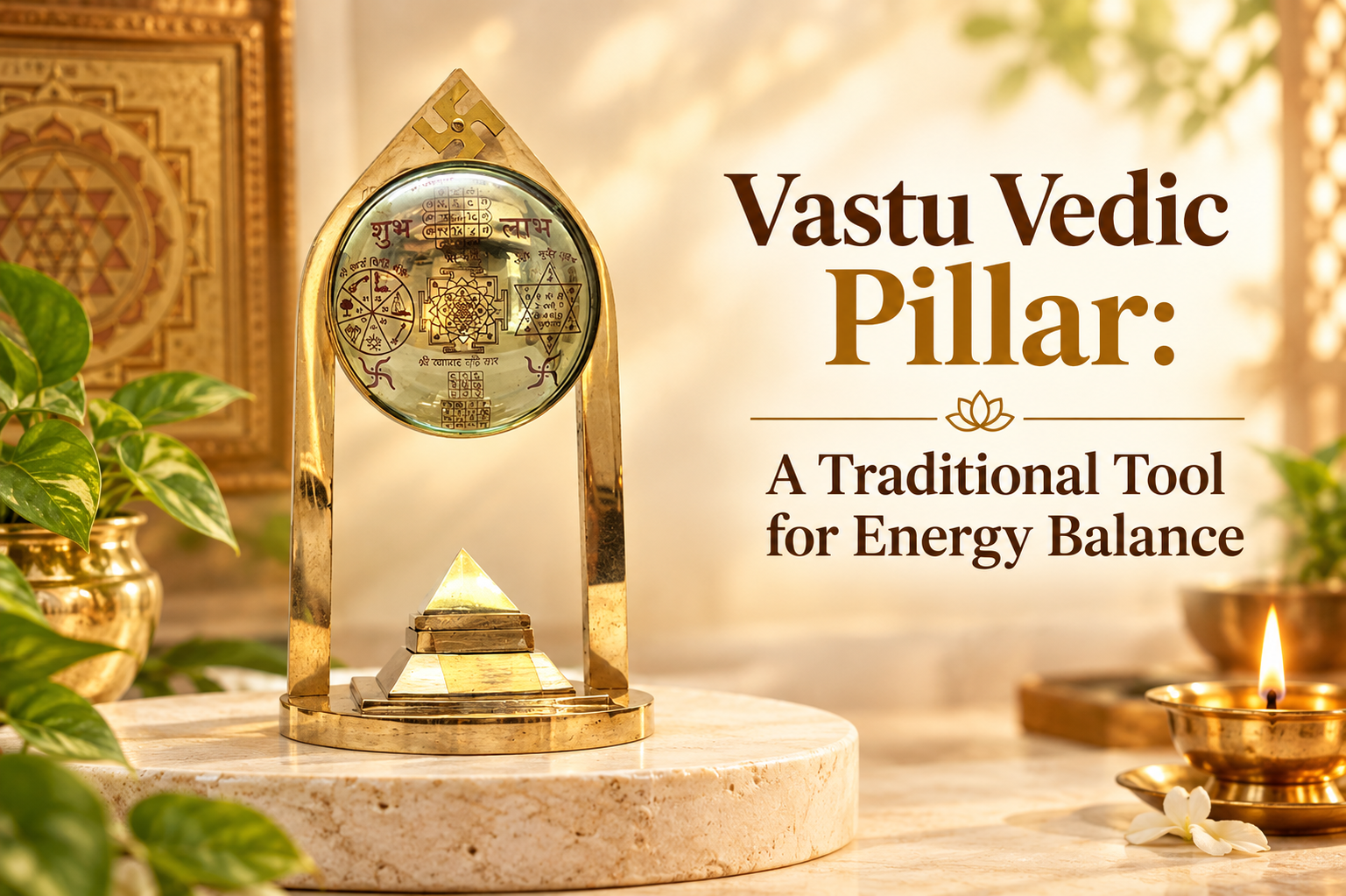
A balanced space is an important concept in Vastu Shastra, the traditional Indian system of architecture and spatial planning. Among the many Vastu products used in modern homes and workplaces, the Vastu Vedic Pillar is often chosen as a symbolic tool for creating harmony and balance within a space.
Designed around traditional Vastu concepts, a Vedic Pillar may be used in homes, offices, shops, entrances, and other spaces where people want to incorporate Vastu-inspired elements into their surroundings.
But what exactly is a Vastu Vedic Pillar, and how is it traditionally used?
Note: Vastu Shastra is a traditional architectural and spiritual practice. Claims about energy balancing or removing negative energy are based on traditional beliefs and are not scientifically established.
What Is a Vastu Vedic Pillar?
A Vastu Vedic Pillar is a decorative Vastu element inspired by traditional Vedic and Vastu principles.
It is generally designed with symbolic geometric patterns, sacred motifs, or traditional elements associated with balance and harmony. The exact design, materials, symbols, and recommended placement can differ between manufacturers and Vastu traditions. In modern spaces, it can serve both as a decorative feature and a symbolic Vastu remedy.
Why Is the Vastu Vedic Pillar Used?
Traditional Vastu practices emphasise the relationship between a structure, its surroundings, directions, elements, and spatial arrangement.
A Vedic Pillar is commonly used with the intention of:
- Supporting a sense of balance
- Creating a harmonious environment
- Symbolically correcting perceived Vastu imbalances
- Enhancing the spiritual character of a space
- Creating a focal point for Vastu practices
- Complementing other traditional Vastu elements
These are traditional interpretations rather than scientifically proven effects.
Traditional Significance of a Vedic Pillar
The word Vedic connects the product concept with India’s broader spiritual and philosophical traditions, while Vastu relates to traditional principles of space and architecture.
A pillar itself can also symbolise:
- Stability
- Strength
- Foundation
- Structure
- Balance
- Protection
Because of this symbolism, Vedic Pillars are often incorporated into spaces where people want to create a stronger connection with traditional Vastu aesthetics.
Where Can a Vastu Vedic Pillar Be Used?
Depending on its specific design and the Vastu guidance being followed, a Vedic Pillar may be placed in:
- Home
It can be incorporated into living rooms, entrances, prayer areas, or other suitable locations.
- Office
Businesses may use Vastu-inspired décor in reception areas, workspaces, meeting rooms, or entrances.
- Shop or Commercial Space
A Vedic Pillar may be used as a decorative and symbolic Vastu element in shops, showrooms, and commercial establishments.
- Entrance Area
Some people choose Vastu products near entrances because the entrance is traditionally considered an important part of a building’s energy and spatial arrangement.
Placement should ideally be based on the specific product instructions and, where relevant, advice from a qualified Vastu practitioner.
Vastu Vedic Pillar and Energy Balance
One of the most common reasons people choose Vastu products is the traditional idea of energy balance.
In Vastu-inspired interpretations, an environment is considered more harmonious when its spatial arrangement is appropriately aligned with traditional principles.
A Vedic Pillar may therefore be used symbolically to support the intention of:
- Harmony
- Stability
- Balance
- Positive atmosphere
- Peaceful surroundings
It should not, however, be presented as a scientifically proven device for changing invisible energy fields.
Vastu Vedic Pillar for Home
For homeowners interested in traditional Vastu, a Vedic Pillar can become part of a broader approach to creating an organised and spiritually meaningful home.
Along with Vastu décor, practical steps such as:
- Keeping entrances clean
- Reducing unnecessary clutter
- Maintaining good ventilation
- Using adequate lighting
- Repairing damaged items
- Keeping important areas organised
can contribute to a more comfortable living environment.
Vastu Vedic Pillar for Business
Business owners sometimes incorporate Vastu products as part of their traditional beliefs about creating a harmonious commercial environment.
A Vedic Pillar may be used alongside other Vastu-inspired products such as:
- Vastu pyramids
- Yantras
- Copper Vastu products
- Crystal products
- Wind chimes
- Vastu strips
- Decorative spiritual products
However, a Vastu product cannot guarantee increased sales, profits, customers, or business growth. Business outcomes depend on many practical factors, including planning, product quality, customer service, competition, and financial management.
How to Choose a Vastu Vedic Pillar?
Before purchasing one, consider:
- Design and Symbols
Check the motifs, geometric patterns, and sacred symbols used in the product. - Material
Vedic Pillars may be available in different materials. Consider durability, finish, and suitability for the intended location. - Size
Choose a size appropriate for the available space. A very large decorative item may overwhelm a small room. - Placement Guidance
Ask the seller for clear information about the recommended placement and intended use. - Product Quality
Look for good finishing, durable construction, and transparent product information. - Traditional Guidance
If the product is being used specifically as a Vastu remedy, consult a knowledgeable Vastu practitioner rather than relying on a universal placement rule. The appropriate product depends on the specific Vastu tradition, space, and purpose.
Common Mistakes to Avoid
When using a Vastu Vedic Pillar, avoid assuming that the product alone will solve every Vastu-related concern.
Also avoid:
- Placing it randomly without understanding its intended use
- Buying solely based on exaggerated promises
- Ignoring the actual layout of the property
- Using damaged or poorly maintained décor
- Expecting guaranteed financial or personal results
- Following multiple conflicting Vastu remedies at once
A Vastu product should complement—not replace—practical improvements to the space.
Conclusion:
The Vastu Vedic Pillar represents a modern way of incorporating traditional Vastu symbolism into homes, offices, and commercial spaces. Its appeal comes from the combination of traditional design, spiritual symbolism, stability, and the idea of spatial harmony.
If you choose to use one, consider it as part of a broader Vastu-inspired environment—while also focusing on practical factors such as cleanliness, organisation, ventilation, lighting, and comfortable space planning.
Traditional beliefs can provide a meaningful framework for décor and spiritual practice, but they should not be treated as guarantees of specific personal, financial, or professional outcomes.