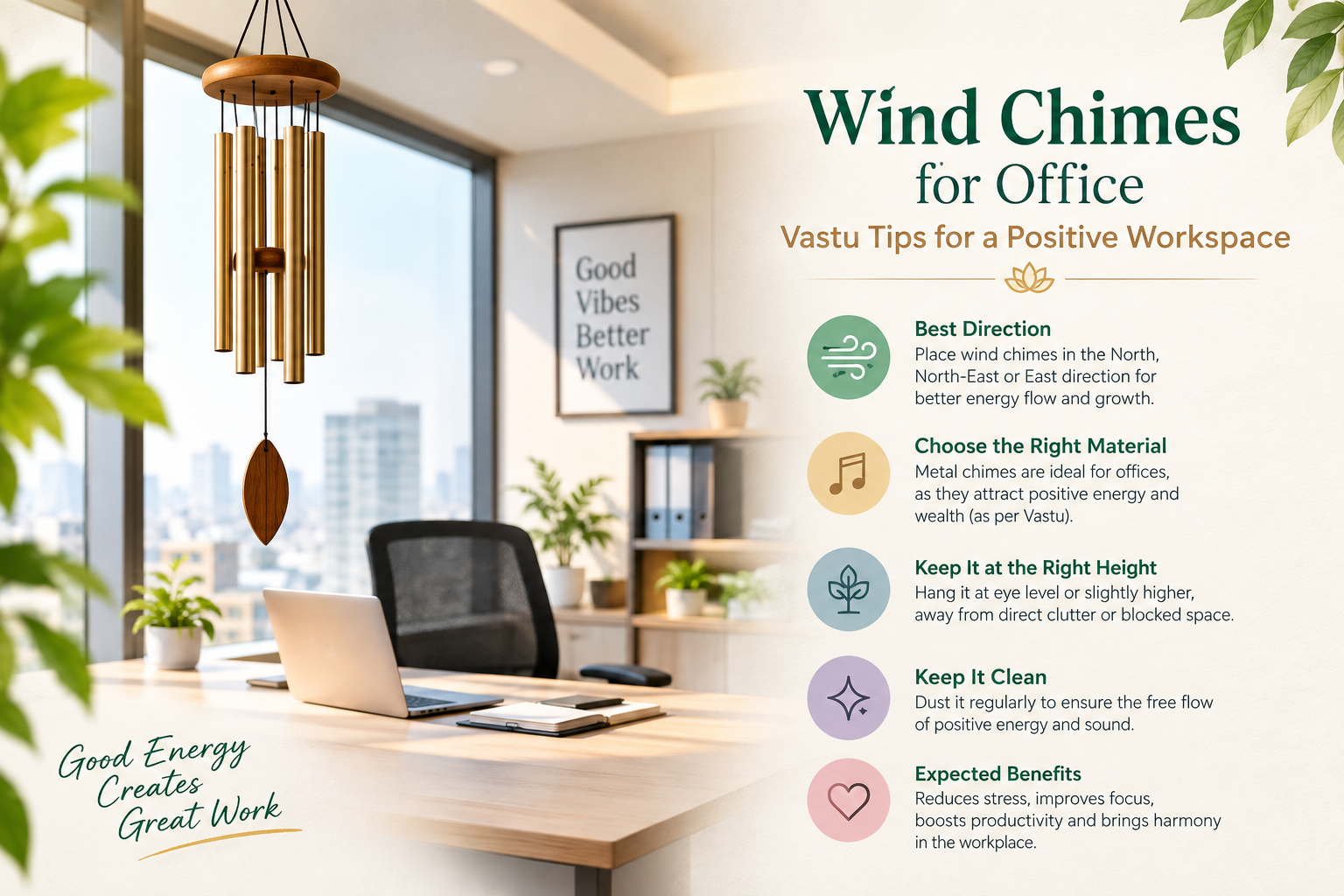
A well-organised office can create a more comfortable environment for working, communicating, and focusing on daily responsibilities. Along with furniture placement, lighting, colours, and décor, some people also incorporate Vastu-inspired elements into their workspace.
One such popular décor item is the wind chime.
In Vastu and Feng Shui-inspired practices, wind chimes are traditionally associated with movement, sound, harmony, and the circulation of energy. Their gentle sound can also add a pleasant decorative element to an office.
But where should you place a wind chime in an office?
Let’s explore some commonly followed Vastu tips for using wind chimes in the workplace.
Note: Vastu recommendations are traditional architectural and spiritual beliefs. They are not scientifically established methods for changing business outcomes or workplace energy.
Why Are Wind Chimes Used in Offices?
Wind chimes produce sound when their tubes or elements move with air. Their sound and movement have made them popular as decorative objects across different cultures.
In Vastu-inspired practices, wind chimes are sometimes used symbolically to represent:
- Positive movement
- Harmony
- Balance
- Freshness
- Peaceful surroundings
- Flow and circulation
- A welcoming atmosphere
For an office, a wind chime can therefore serve both a decorative and symbolic purpose.
Which Direction Is Best for an Office Wind Chime?
There is no single universally accepted Vastu rule for wind chime placement. Recommendations can differ according to the material, number of rods, location, and Vastu tradition being followed.
However, commonly discussed directional associations include:
North Direction
The North is traditionally associated with career, opportunities, and financial activity in some Vastu practices. A metal wind chime may therefore be recommended in the North by some practitioners.
West Direction
The West is traditionally associated with completion, support, and certain forms of stability.
Metal wind chimes are also sometimes suggested for this direction.
Northwest Direction
The Northwest is associated in Vastu traditions with movement, networking, and helpful connections.
A suitable wind chime in this area may be used symbolically to encourage a sense of movement and interaction.
Because recommendations vary, it is better to follow one consistent Vastu approach rather than mixing multiple placement rules.
Which Wind Chime Is Suitable for an Office?
Wind chimes are available in many materials and designs.
Metal Wind Chimes
Metal wind chimes are commonly associated with North, West, and Northwest in several Vastu and Feng Shui-inspired practices. They are popular for offices because of their clean, bright sound and modern appearance.
Wooden Wind Chimes
Wooden wind chimes are often associated with natural, warm, and grounding qualities. They may complement offices that use wooden furniture and nature-inspired décor.
Bamboo Wind Chimes
Bamboo chimes are traditionally associated with natural elements and are commonly used in Feng Shui-inspired spaces.
Crystal Wind Chimes
Crystal wind chimes combine reflective surfaces with sound and movement. They are often chosen for decorative and symbolic purposes.
How Many Rods Should an Office Wind Chime Have?
The number of rods is sometimes given symbolic significance in Vastu and Feng Shui practices. Different traditions recommend different numbers depending on the desired purpose.
Commonly available designs include:
- 4 rods
- 5 rods
- 6 rods
- 7 rods
- 8 rods
There is no universally accepted number that guarantees positive results for every office.
When choosing one, consider the specific Vastu tradition you follow as well as practical factors such as size, sound, and placement.
Where Should You Hang a Wind Chime in an Office?
A wind chime should be positioned where it can move naturally with air circulation.
Suitable locations may include:
Near a Window
A window allows natural air movement to activate the chime.
Near an Entrance
Some people place wind chimes near the office entrance as a welcoming decorative element.
In a Balcony or Veranda
If the office has a covered balcony or open area, a wind chime can add gentle sound and movement.
In a Reception Area
A small wind chime can work as decorative décor in a reception area, provided the sound does not disturb visitors or employees.
Where Should You Avoid Placing a Wind Chime?
Apart from traditional Vastu considerations, practical placement is important.
Avoid hanging a wind chime:
- Directly above someone’s workstation
- Where it may hit people while they walk
- Near sensitive electronic equipment if it can fall
- In a location where strong winds may damage it
- In a place where constant sound becomes distracting
- Where it blocks a doorway or emergency pathway
The purpose should be to create a pleasant environment, not a noisy one.
Wind Chime Near the Main Office Entrance
The entrance is an important area in many Vastu traditions. Some people use a wind chime near the entrance because its movement and sound create a welcoming atmosphere.
If you choose this placement:
- Keep the entrance unobstructed
- Select an appropriate size
- Make sure it is securely mounted
- Avoid excessively loud designs
- Keep it visually compatible with the office
The sound should complement the workspace rather than become a distraction.
Can Wind Chimes Improve Business Growth?
Wind chimes are sometimes marketed as objects that can attract customers, increase sales, remove negative energy, or improve business growth.
These claims should be approached carefully. There is no scientific evidence that a wind chime directly increases revenue, attracts customers, or guarantees business success.
However, it can contribute to the appearance and atmosphere of an office. If employees and visitors enjoy its sound and design, it may become a pleasant part of the workspace.
Business growth ultimately depends on factors such as:
- Product or service quality
- Customer experience
- Marketing
- Financial planning
- Team performance
- Market demand
- Business strategy
- Wind Chimes and Positive Workspace Energy
In traditional Vastu-inspired thinking, movement and sound are sometimes associated with the circulation of energy.
A wind chime moves naturally when air passes through it, creating gentle sound.
Symbolically, this can represent: Movement + Sound + Air + Harmony
For an office, this symbolism may be used as a reminder to maintain an open, organised, and welcoming environment.
How to Choose a Wind Chime for Your Office?
Before purchasing, consider:
- Material
Choose metal, wood, bamboo, crystal, or another material according to your preferred Vastu tradition and décor. - Size
A large office may accommodate a larger chime, while a small workspace may benefit from a compact design. - Sound
Choose a pleasant tone that will not distract employees or visitors. - Number of Rods
If you follow Vastu or Feng Shui recommendations, select the number according to the specific tradition you follow. - Placement
Make sure the chime can move naturally without creating a safety hazard. - Design
Choose a style that complements your office interiors.
Vastu Tips for a Positive Office
A wind chime works best as one small element within a well-maintained workspace.
Consider these practical and Vastu-inspired habits:
- Keep the entrance clean and uncluttered.
- Maintain a well-organised workstation.
- Ensure good natural or artificial lighting.
- Keep broken décor and damaged objects away.
- Maintain comfortable air circulation.
- Avoid unnecessary clutter.
- Use plants where appropriate.
- Keep important documents organised.
- Choose calming and professional décor.
- Use symbolic Vastu elements only as supportive décor rather than substitutes for practical workplace management.
Conclusion:
Wind chimes for offices can be a beautiful combination of décor, sound, movement, and traditional Vastu symbolism. Depending on the tradition being followed, factors such as direction, material, number of rods, and placement may be considered.
For a positive workspace, however, the most important foundation remains practical: keep the office organised, comfortable, well-lit, clean, and welcoming.
If you enjoy Vastu-inspired décor, a thoughtfully selected wind chime can complement these efforts while adding a gentle and pleasant touch to your office environment.