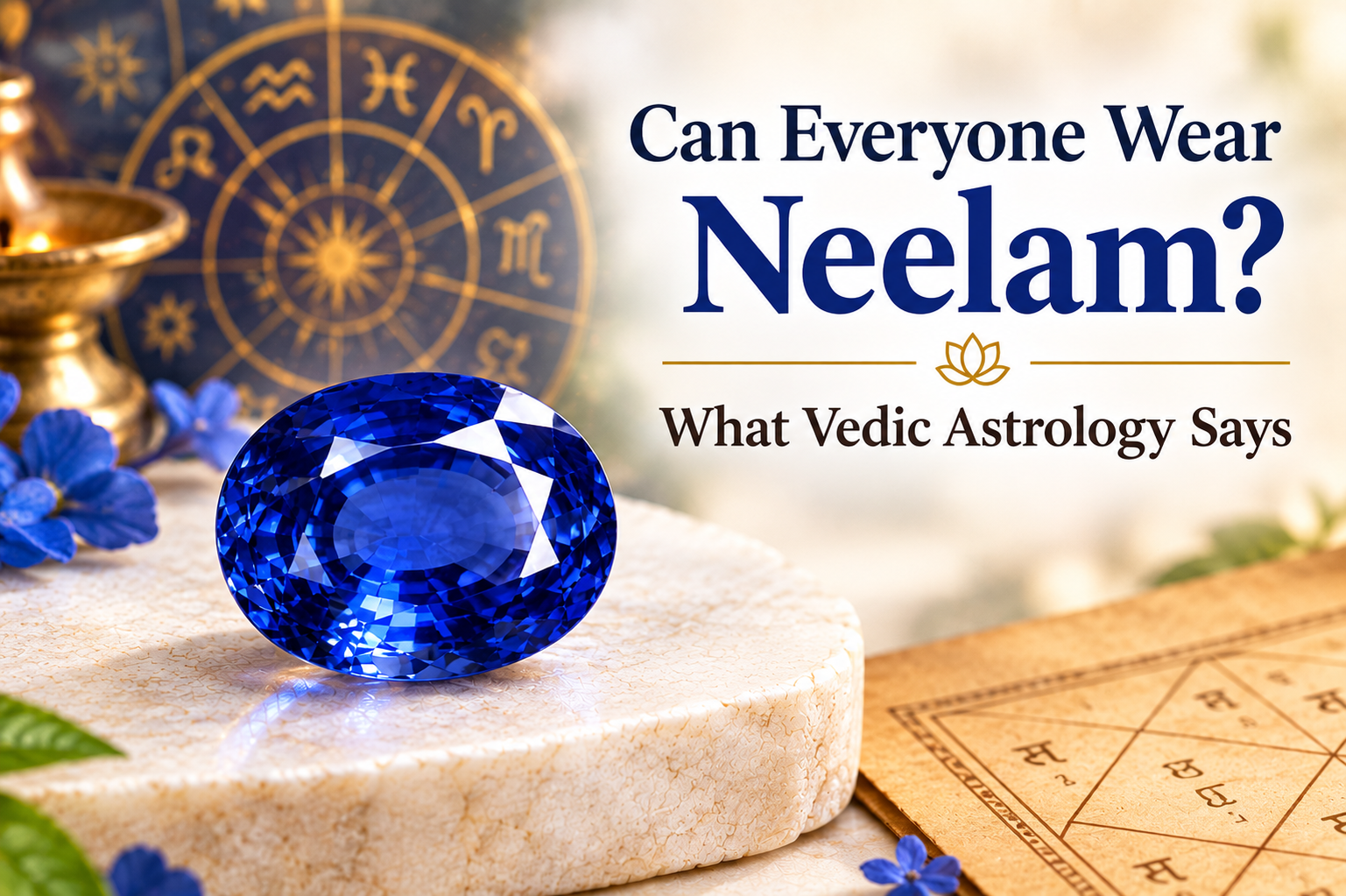
Neelam, or Blue Sapphire, is one of the most well-known gemstones in Vedic astrology. Traditionally associated with Shani (Saturn), Neelam is believed to be connected with discipline, responsibility, patience, structure, hard work and long-term growth.
But one common question is:
Can everyone wear Neelam?
According to traditional Vedic astrology, the answer is no. Neelam is generally considered a gemstone that should be recommended only after examining an individual’s birth chart.
What Is Neelam?
Neelam is the traditional Sanskrit/Hindi name commonly used for Blue Sapphire, a blue variety of the mineral corundum. In Vedic gemstone astrology, it is traditionally associated with Saturn (Shani).
Saturn is traditionally connected with:
- Discipline and responsibility
- Patience and perseverance
- Hard work and commitment
- Structure and organisation
- Delayed but sustained results
- Career and service
- Practicality and realism
- Long-term responsibilities
These are traditional astrological associations and are not scientifically established effects of the gemstone.
Why Is Neelam Considered a Special Gemstone?
Blue Sapphire has a particularly strong reputation in Vedic gemstone traditions. Unlike some gemstones that are commonly suggested for general spiritual or symbolic purposes, Neelam is traditionally considered a planet-strengthening gemstone.
The reasoning is simple: Neelam → Saturn → Strengthening Saturn
Therefore, if Saturn is considered beneficial and suitable for strengthening in a person’s horoscope, an astrologer may recommend Neelam. But if Saturn is not suitable to strengthen, traditional astrologers may advise against wearing it.
Can Everyone Wear Neelam?
Traditionally, No. There is no universal rule that everyone can wear Blue Sapphire.
A Vedic astrologer may examine several factors before recommending Neelam, including:
- Ascendant (Lagna)
- Saturn’s house placement
- Saturn’s zodiac sign
- Saturn’s dignity and strength
- Beneficial or challenging planetary aspects
- Planetary conjunctions
- Nakshatra placement
- Mahadasha and Antardasha
- Relevant divisional charts
- Saturn’s overall role in the horoscope
The same gemstone can therefore be considered appropriate for one horoscope and unsuitable for another.
Why Should Neelam Be Considered Carefully?
In traditional astrology, wearing a gemstone is viewed as a way of strengthening the planetary energy represented by that gemstone.
Because Neelam is associated with Saturn, an astrologer may first determine whether strengthening Saturn is appropriate.
This is why simply choosing Neelam because:
- Saturn is your ruling planet,
- you are experiencing delays,
- you want career growth, or
- someone told you that Blue Sapphire is powerful
may not be enough to determine suitability.
When Do Astrologers Traditionally Consider Neelam?
Depending on the birth chart, Neelam may be considered when Saturn is regarded as a beneficial planet and strengthening it is thought to support the person’s astrological objectives.
Traditional Saturn-related themes can include:
Career & Professional Responsibility
Saturn is associated with service, structure, responsibility and long-term professional commitments.
Discipline & Patience
Saturn symbolises persistence and the ability to work steadily toward long-term goals.
Stability & Structure
Saturn’s traditional symbolism is connected with organisation, boundaries and practical thinking.
Long-Term Growth
Saturn is often associated with gradual progress rather than immediate results.
These associations belong to traditional Vedic astrology and should not be interpreted as guaranteed outcomes from wearing Neelam.
What If Saturn Is Considered Challenging?
A challenging Saturn placement does not automatically mean that Neelam should be worn.
This is an important distinction.
In Vedic astrology, astrologers may consider whether Saturn is:
- Beneficial for the Ascendant
- Strong or weak
- Afflicted by other planets
- Well placed by house and sign
- Connected with important houses
- Active through the current Dasha period
Therefore: “My Saturn is weak, so I should wear Neelam” is not necessarily a complete astrological conclusion. The entire horoscope matters.
Neelam and Saturn Mahadasha
Saturn Mahadasha is traditionally considered a significant period in Vedic astrology, lasting 19 years in the Vimshottari Dasha system.
During this period, astrologers may examine Saturn’s placement, strength and role in the birth chart in greater detail.
However, being in Shani Mahadasha does not automatically mean that everyone should wear Neelam. The gemstone’s suitability still depends on the individual horoscope.
Traditional Qualities Associated With Neelam
When astrologically suitable, Neelam is traditionally associated with:
- Discipline
- Patience
- Responsibility
- Focus
- Perseverance
- Practicality
- Stability
- Long-term planning
These should be understood as traditional symbolic associations, not scientifically proven effects.
How to Choose a Natural Neelam?
If you are considering Blue Sapphire for astrological purposes, gemstone authenticity and quality are important.
Before purchasing, look for:
- Natural Blue Sapphire
- Reliable laboratory certification
- Clear disclosure of treatments
- Good colour
- Suitable clarity
- Proper cut and polish
- Accurate carat weight
- Transparent seller information
- Invoice and return/exchange policy
A laboratory report can help establish the gemstone’s identity and disclose relevant treatments.
Natural vs Synthetic Blue Sapphire
Blue Sapphire may be available as natural, synthetic or imitation material.
- Natural Blue Sapphire
Naturally formed corundum with blue colour.
- Synthetic Blue Sapphire
Laboratory-grown corundum with properties closely related to natural sapphire.
- Imitation
A different material designed to look like Blue Sapphire.
If the purpose is astrological use, buyers should clearly understand which type they are purchasing.
How Is Neelam Traditionally Worn?
Traditional Vedic gemstone practices may recommend specific details such as:
- Metal for the setting
- Finger
- Gemstone weight
- Day and timing
- Mantra
- Purification or energisation ritual
These practices vary between traditions and astrologers.
A commonly recited mantra associated with Saturn is: “Om Sham Shanicharaya Namah.”
The exact wearing method should ideally be selected after considering the individual’s horoscope rather than following a single universal prescription.
Should You Buy Neelam Without Horoscope Analysis?
If the purpose is astrological use, traditional practice generally favours horoscope analysis first.
Before purchasing, consider asking:
- Is Saturn beneficial for my Ascendant?
- Is strengthening Saturn appropriate?
- What is Saturn’s house and sign placement?
- Is Saturn currently active through Dasha?
- What gemstone quality and weight are appropriate?
- Has the gemstone been independently certified?
This approach can help separate astrological suitability from simply choosing a visually attractive blue gemstone.
Common Mistakes When Buying Neelam
- Wearing It Because Someone Else Wears It
A gemstone suitable for one person’s horoscope may not necessarily be suitable for another. - Assuming Expensive Means Better
Price alone does not establish authenticity or astrological suitability. - Buying Without Certification
Visual appearance alone may not reliably establish whether a sapphire is natural, synthetic or treated. - Assuming Saturn Mahadasha Automatically Requires Neelam
Dasha timing is only one part of astrological analysis. - Expecting Instant Results
Traditional Saturn symbolism focuses on patience, discipline and gradual development rather than instant results.
Conclusion:
Neelam (Blue Sapphire) holds an important place in traditional Vedic gemstone astrology because of its association with Saturn (Shani).
But the key question is not simply: “Is Neelam powerful?”
It is: “Is strengthening Saturn appropriate for my horoscope?”
If you are considering Neelam for astrological purposes, first seek a horoscope-based assessment, then focus on the gemstone’s authenticity, quality, treatment disclosure and certification. A thoughtful approach helps ensure that you understand both the traditional astrological reasoning and the gemological characteristics of the Blue Sapphire you are considering.