Why Shravan Is the Most Auspicious Time for Shiva Devotees?
When the holy month of Shravan (Sawan) arrives, the atmosphere becomes filled with devotion to Mahadev—Lord Shiva. Temples echo with the divine chant of “Har Har Mahadev” and “Om Namah Shivaya.” Devotees observe fasts, perform Rudrabhishek, offer Bilva leaves, meditate, visit Shiva temples, and seek the blessings of Lord Shiva for peace, prosperity, protection, and spiritual growth. Among the many sacred symbols associated with Mahadev, Rudraksha holds a unique and powerful place.
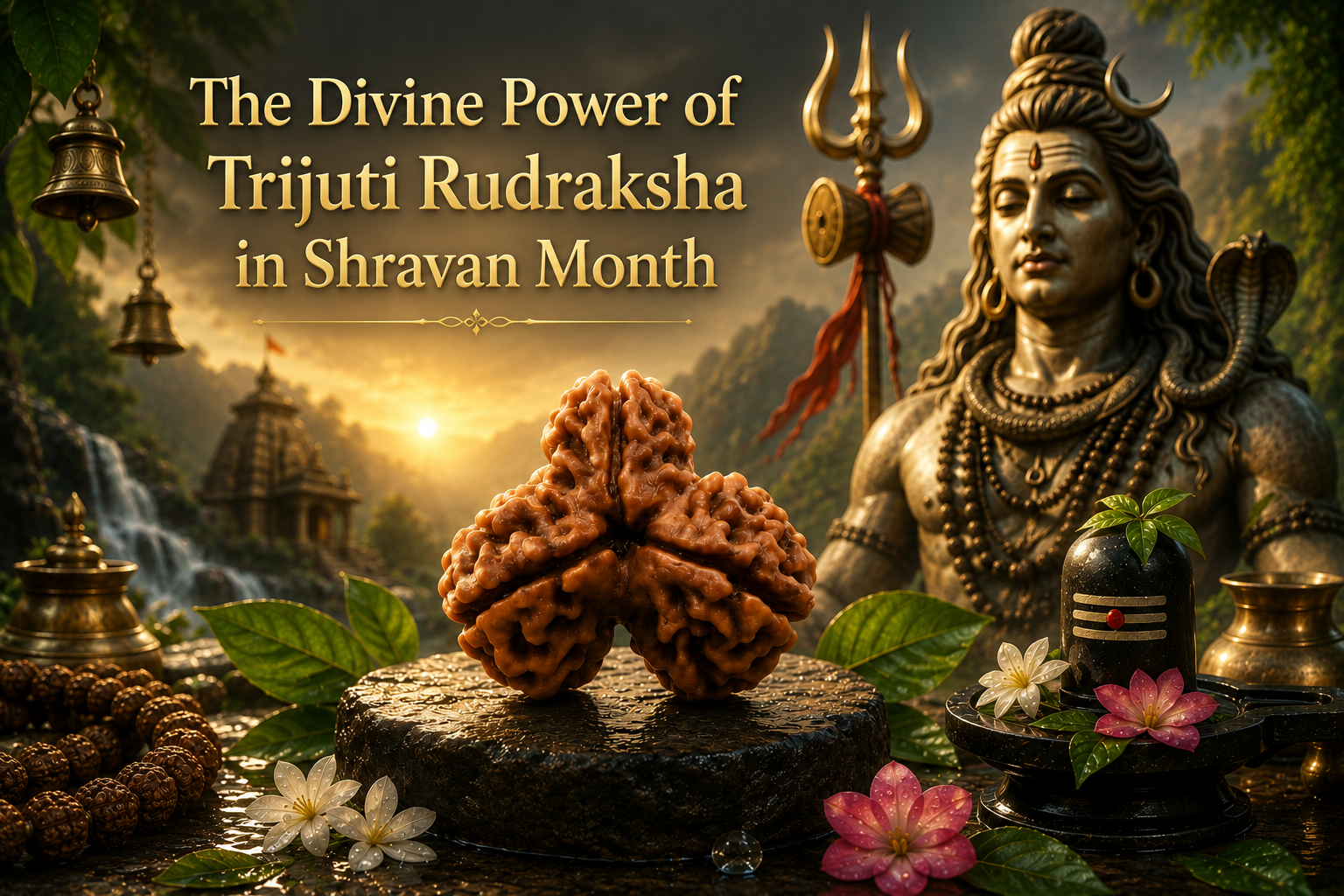
According to Hindu tradition, Rudraksha is associated with the divine tears of Lord Shiva. It is therefore regarded as a sacred bead that represents devotion, meditation, spiritual awareness, and a connection with Shiva consciousness. But among the many varieties of Rudraksha, there is one that stands apart because of its extraordinary natural formation—the Trijuti Rudraksha. Imagine three Rudraksha beads growing together naturally as one. This rare phenomenon gives birth to Trijuti Rudraksha, a sacred bead traditionally associated with the divine power of the Trimurti—Brahma, Vishnu, and Mahesh (Shiva). And when this rare Rudraksha meets the spiritually powerful month of Shravan, its symbolism becomes even more meaningful.
Let us explore why Trijuti Rudraksha (Nepali) is considered so special during Shravan and how devotees can incorporate its spiritual significance into their journey of devotion.
What Is Trijuti Rudraksha?
The word “Trijuti” represents a union of three. Trijuti Rudraksha is an exceptionally rare natural formation in which three Rudraksha beads grow together and remain naturally connected. Unlike a regular Rudraksha bead, which develops individually, Trijuti Rudraksha is formed through a unique natural process.
Its three-part structure is traditionally interpreted as a representation of the Trimurti:
- Brahma – The Creator
- Vishnu – The Preserver
- Mahesh (Shiva) – The Transformer
This makes Trijuti Rudraksha a powerful spiritual symbol of the eternal cycle of:
Creation → Preservation → Transformation
Its natural formation itself carries a beautiful message—that different energies can come together in perfect unity. This is one of the reasons why Trijuti Rudraksha is considered extremely rare, sacred, and spiritually significant.
Why Is Trijuti Rudraksha So Special During Shravan?
Shravan is traditionally regarded as one of the most sacred months for worshipping Lord Shiva. According to Hindu traditions, devotees consider this period highly auspicious for prayer, meditation, fasting, Shiva Puja, Rudrabhishek, and spiritual practices.
During Shravan, people often seek:
- Peace of mind
- Spiritual strength
- Protection from negativity
- Inner transformation
- Divine blessings
- Greater focus and devotion
Trijuti Rudraksha beautifully complements this spiritual journey because of its traditional association with Lord Shiva and the divine trinity.
7 Spiritual Reasons to Embrace Trijuti Rudraksha During Shravan:
- A Symbol of Divine Unity
Three Rudraksha beads naturally joining together is itself a rare and beautiful occurrence. Spiritually, it represents the idea that different energies can exist together in harmony. During Shravan, this symbolism can inspire us to bring harmony into our own lives—between our thoughts, actions, emotions, and spiritual aspirations.
- Represents the Power of the Trimurti
The three beads of Trijuti Rudraksha are traditionally associated with:
- Brahma – Creation
- Vishnu – Preservation
- Shiva – Transformation
This makes the Rudraksha especially meaningful for those who are entering a new phase of life or seeking positive change. Shravan can be seen as a time to create better habits, preserve positive values, and transform negative patterns.
- Supports a Deeper Meditation Practice
Shravan is an ideal time to dedicate yourself to meditation and mantra chanting. Many devotees choose to meditate while holding or wearing Rudraksha as part of their spiritual routine.
Trijuti Rudraksha can serve as a tangible reminder to:
- Calm the mind
- Focus on the present moment
- Connect with one’s spiritual intention
- Develop consistency in meditation
The real power of the practice comes from regularity, devotion, and mindfulness.
- Encourages Inner Transformation
Lord Shiva represents transformation—the power to destroy negativity and make space for new beginnings. During Shravan, devotees often use this sacred period for self-reflection.
Ask yourself:
- What do I need to let go of?
- What do I want to improve?
- Which habits no longer serve me?
- What kind of person do I wish to become?
Trijuti Rudraksha can serve as a spiritual symbol of this transformation. It reminds us that true change begins within.
- A Sacred Companion for Shiva Bhakti
For a Shiva devotee, Shravan is a time of deep connection with Mahadev. Whether you visit a temple, perform Rudrabhishek, chant Om Namah Shivaya, or simply sit quietly in prayer, Trijuti Rudraksha can become part of your devotional environment. It may be worn, kept in a puja room, or placed in a meditation space according to personal tradition.
- A Symbol of Peace & Balance
The three joined beads of Trijuti Rudraksha can be viewed as a reminder of balance.
In our busy lives, we often struggle to balance:
- Work & Personal Life
- Material Goals & Spiritual Growth
- Action & Rest
- Ambition & Inner Peace
The symbolism of Trijuti encourages us to seek harmony rather than extremes. Shravan offers a perfect opportunity to pause, reflect, and reconnect with that balance.
- An Auspicious Symbol for New Beginnings
Shravan can be a powerful time for making positive resolutions.
You may decide to:
- Start meditation
- Improve your spiritual routine
- Practice gratitude
- Let go of negative thoughts
- Spend more time with family
- Develop healthier habits
- Strengthen your connection with God
Trijuti Rudraksha, with its symbolism of creation and transformation, can serve as a beautiful reminder of these intentions.
Trijuti Rudraksha & the Three Divine Energies
The spiritual beauty of Trijuti Rudraksha lies in the story told by its three naturally joined beads.
- Brahma – The Energy of Creation: Brahma represents new beginnings and creation. This energy reminds us that every moment gives us an opportunity to create a better future.
- Vishnu – The Energy of Preservation: Vishnu represents stability and preservation. This reminds us to protect the relationships, values, habits, and spiritual practices that bring positivity into our lives.
- Shiva – The Energy of Transformation: Shiva represents transformation and liberation. He reminds us that sometimes we must release the old to make space for something new.
Together, these three energies create a beautiful spiritual philosophy:
Create what is good. Preserve what is valuable. Transform what needs to change. This is the deeper essence behind the symbolism of Trijuti Rudraksha.
How to Use Trijuti Rudraksha During Shravan ?
There is no single way to connect with a sacred Rudraksha. Your personal faith and spiritual tradition can guide your practice. Here are some meaningful ways to include Trijuti Rudraksha in your Shravan routine.
- Keep It in Your Puja Room
Place the Trijuti Rudraksha in a clean and sacred space. You may keep it near your Shiva idol, Shiva Lingam, or other spiritual objects. Use the space for daily prayer and meditation.
- Chant “Om Namah Shivaya”
The mantra Om Namah Shivaya is one of the most widely known mantras associated with Lord Shiva. During Shravan, you can create a peaceful routine by sitting quietly, holding your Rudraksha, and chanting the mantra with devotion. The goal is not simply to count repetitions but to bring awareness and sincerity to the practice.
- Meditate With a Positive Intention
Sit comfortably and take a few deep breaths.
Hold your Trijuti Rudraksha and set a simple intention such as:
- “May I release negativity.”
- “May I find inner peace.”
- “May I become stronger and wiser.”
- “May I walk on the path of truth and positivity.”
Allow your meditation to become a moment of self-reflection and spiritual connection.
- Include It in Your Shiva Puja
During your regular Shravan worship, you may keep the Trijuti Rudraksha in your puja space. Devotees may perform their traditional Shiva Puja, offer water to the Shiva Lingam, offer Bilva leaves, and chant Shiva mantras according to their personal customs.
Conclusion:
Trijuti Rudraksha (Nepali) is one of the rarest and most fascinating forms of Rudraksha, traditionally revered for its natural formation of three beads joined together. During the sacred month of Shravan, its symbolism becomes especially meaningful for devotees of Lord Shiva. Representing the divine unity of Brahma, Vishnu, and Mahesh, Trijuti Rudraksha reminds us about the eternal cycle of creation, preservation, and transformation. For those who follow Rudraksha traditions, it can become a meaningful part of their spiritual journey—whether through meditation, mantra chanting, Shiva Puja, or simply keeping it in a sacred space.
This Shravan, take a moment to connect with yourself.
- Let go of negativity.
- Embrace positivity.
- Strengthen your faith.
And allow the divine energy of Mahadev to guide your path. May Lord Shiva bless you with strength, peace, wisdom, and spiritual growth.
Har Har Mahadev!