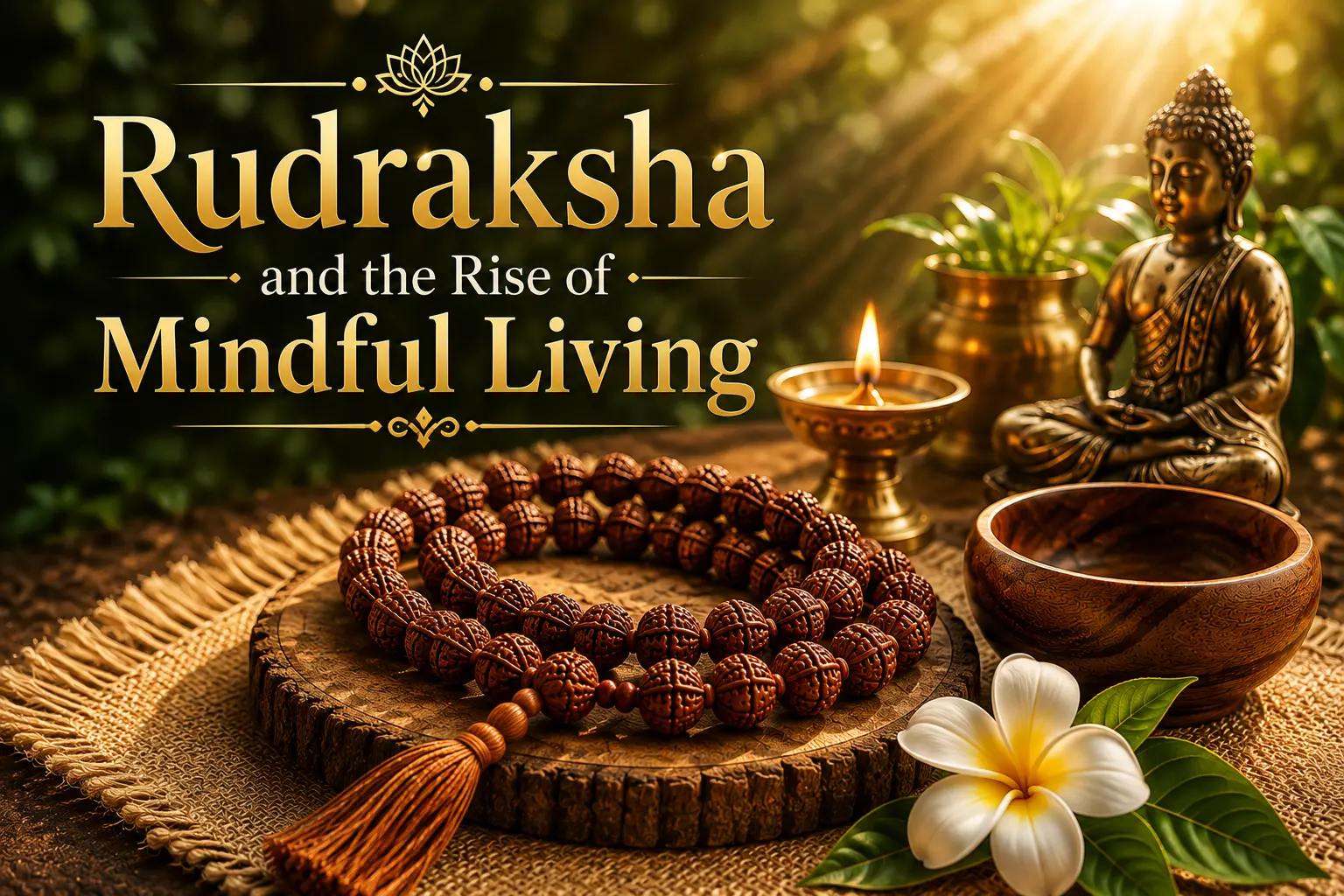
Modern life is becoming increasingly fast-paced. From constant notifications and busy work schedules to social media and information overload, people often find it difficult to slow down and remain present.
As interest in mindfulness, meditation, wellness, and spiritual living continues to grow, ancient practices are finding new relevance in everyday life.
One such tradition is Rudraksha.
Traditionally associated with Lord Shiva, Rudraksha has long been used in meditation, mantra Japa, prayer, and spiritual practices. Today, it is also being embraced by people who see it as a meaningful reminder to pause, focus, and live more consciously.
Note: The spiritual significance of Rudraksha discussed here comes from Hindu religious and cultural traditions. There is no scientific evidence that Rudraksha itself provides guaranteed supernatural, medical, or psychological benefits.
What Is Rudraksha?
Rudraksha is the seed of trees belonging to the Elaeocarpus genus. It has a long-standing place in Hindu spiritual traditions and is particularly associated with Lord Shiva.
Rudraksha is commonly used as:
- Japa Mala
- Meditation beads
- Prayer beads
- Bracelets
- Pendants
Different Rudraksha beads are traditionally identified by the number of natural lines or Mukhi on their surface.
What Is Mindful Living?
Mindful living is about bringing greater awareness to everyday experiences.
It means becoming more conscious of:
- What you are doing
- What you are thinking
- How you are feeling
- How you respond to situations
Instead of constantly moving from one task to another, mindfulness encourages you to pause and actually experience the present moment.
For example:
Instead of eating while scrolling through your phone:
Eat → Notice → Taste → Appreciate
Instead of immediately reacting to criticism:
Pause → Breathe → Understand → Respond
This simple shift can make everyday life feel more intentional.
Where Does Rudraksha Fit Into Mindful Living?
Rudraksha can act as a physical reminder of awareness. When you wear a Rudraksha bracelet, hold a Mala, or see the bead during your day, you can use it as a cue to pause.
A simple practice is:
Touch → Breathe → Observe → Continue
The bead doesn’t need to be viewed as something that magically changes your state. Instead, it can remind you to change your attention.
- Rudraksha Encourages the Practice of Pausing
- Modern life often rewards speed.
- Reply quickly.
- Work quickly.
- Scroll quickly.
- Move to the next task.
Mindful living asks us to occasionally do the opposite. Slow down. Rudraksha can become a small reminder to stop for a moment and take a conscious breath.
- Rudraksha and Mantra Meditation
One of the traditional uses of Rudraksha is mantra Japa.
A Rudraksha Mala can be used while repeating:
ॐ नमः शिवाय
Om Namah Shivaya
Each bead provides a physical point of attention.
This can create a simple rhythm:
Bead → Mantra → Breath → Awareness
Instead of allowing the mind to jump constantly between thoughts, the practice repeatedly brings attention back to the mantra.
- Rudraksha in the Age of Digital Distraction
Smartphones have made information available almost constantly.
Notifications can interrupt:
- Work
- Conversations
- Meals
- Rest
- Meditation
- Sleep
A Rudraksha bracelet can become part of a simple digital mindfulness habit.
For example:
- Before opening social media: Take one conscious breath.
- Before replying to a difficult message: Pause for five seconds.
- During a stressful workday: Touch your Rudraksha and relax your shoulders.
- Before sleeping: Put the phone away and spend five minutes in silence. The Rudraksha becomes a physical cue to disconnect from digital noise.
- Ending the Day With Reflection
Mindfulness is also about looking back.
Before going to sleep, hold your Rudraksha and ask:
- What went well today?
- Where was I distracted?
- Did I react too quickly?
- Did I treat others with patience?
- What am I grateful for?
- What can I improve tomorrow?
This takes only a few minutes but can encourage greater self-awareness.
- Rudraksha and Meditation
Rudraksha has a long association with meditation and spiritual practice.You can use a Mala or bracelet during a simple meditation session.
Try this:
- Sit comfortably.
- Close your eyes.
- Take a slow breath.
- Hold your Rudraksha.
Repeat:
Om Namah Shivaya
When your mind wanders, gently return to the mantra. There is no need to fight your thoughts.
Notice → Accept → Return.
That is the essence of mindful attention.
- The Connection With Shiva
For devotees, Rudraksha isn’t simply a wellness accessory. Its traditional connection with Lord Shiva gives it deeper religious significance.
Shiva is associated in Hindu traditions with themes such as:
- Meditation
- Detachment
- Consciousness
- Transformation
- Inner stillness
For Shiva devotees, wearing Rudraksha can therefore serve as a daily reminder of these spiritual ideals.
- Rudraksha During Sawan
The connection becomes particularly meaningful during Sawan (Shravan). Sawan is traditionally considered an important period for Shiva worship.
Devotees may increase their practices through:
- Jalabhishek
- Rudraksha Japa
- Shiva Mantra
- Meditation
- Sawan Somwar Vrat
- Shiva Puja
Rudraksha can help connect these formal rituals with everyday mindful living. The goal is to carry the spirit of Sawan beyond the Puja room.
- Rudraksha as an Everyday Mindfulness Cue
You don’t have to meditate for an hour every day.
You can create small moments of awareness throughout your day.
- When you touch your Rudraksha: Take one breath.
- When you’re frustrated: Pause before speaking.
- When you’re distracted: Return to your current task.
- When you’re anxious about the future: Come back to the present moment.
- When something good happens: Pause and feel gratitude.
These small practices can gradually become habits.
- Mindful Living Is More Than Wearing a Rudraksha
A Rudraksha bracelet alone doesn’t create mindfulness.
The real practice is what happens after the reminder.
Think of it as:
- Rudraksha → Reminder
- Pause → Awareness
- Awareness → Choice
- Choice → Action
- Repeated Action → Habit
This is where the deeper value lies.
Rudraksha and Modern Wellness Culture:
Today, spiritual products are often presented alongside wellness practices such as:
- Yoga
- Meditation
- Breathwork
- Journaling
- Mindfulness
- Digital detox
- Gratitude practices
Rudraksha can fit naturally into this environment, provided its traditional religious significance isn’t reduced to a marketing claim.
For many people, it can simultaneously be:
A sacred object + a meditation aid + a personal reminder.
Which Rudraksha Is Commonly Used for Mindful Practices?
5 Mukhi Rudraksha is widely used for general spiritual practice and Japa. Other Mukhi Rudraksha have their own traditional associations, but you don’t necessarily need a rare or expensive Rudraksha to begin a mindfulness routine. A simple Mala can be enough.
Avoid Unrealistic Rudraksha Claims:
As Rudraksha becomes more popular, you may encounter claims that it can:
- Guarantee wealth
- Cure diseases
- Remove every negative influence
- Automatically improve relationships
- Protect against every problem
Such claims should be treated cautiously. Rudraksha has genuine cultural, religious, and symbolic importance, but that is different from making scientifically unsupported promises.
Why Rudraksha Is Finding New Relevance
The growing interest in Rudraksha isn’t necessarily about replacing ancient traditions with modern wellness. Instead, it can be viewed as a meeting point between traditional spirituality and contemporary mindful living.
The ancient practice says:
Pause. Meditate. Remember the Divine.
Modern mindfulness says:
Pause. Become aware. Return to the present.
The language may be different, but the practical habit of intentional awareness can overlap.
Conclusion:
The rise of mindful living has encouraged many people to rediscover simple practices that help them slow down. Rudraksha can be part of that journey. Not because the bead is a magical solution, but because it can serve as a daily reminder to practice what matters.
- Wear it mindfully.
- Meditate with it.
- Use it for Japa.
- Let it remind you to pause.
- Carry your spiritual intention into everyday life.
Ultimately, mindful living isn’t about escaping modern life. It’s about being more present while living it. Rudraksha may be ancient—but the reminder to slow down, breathe, and live consciously is timeless.
ॐ नमः शिवाय