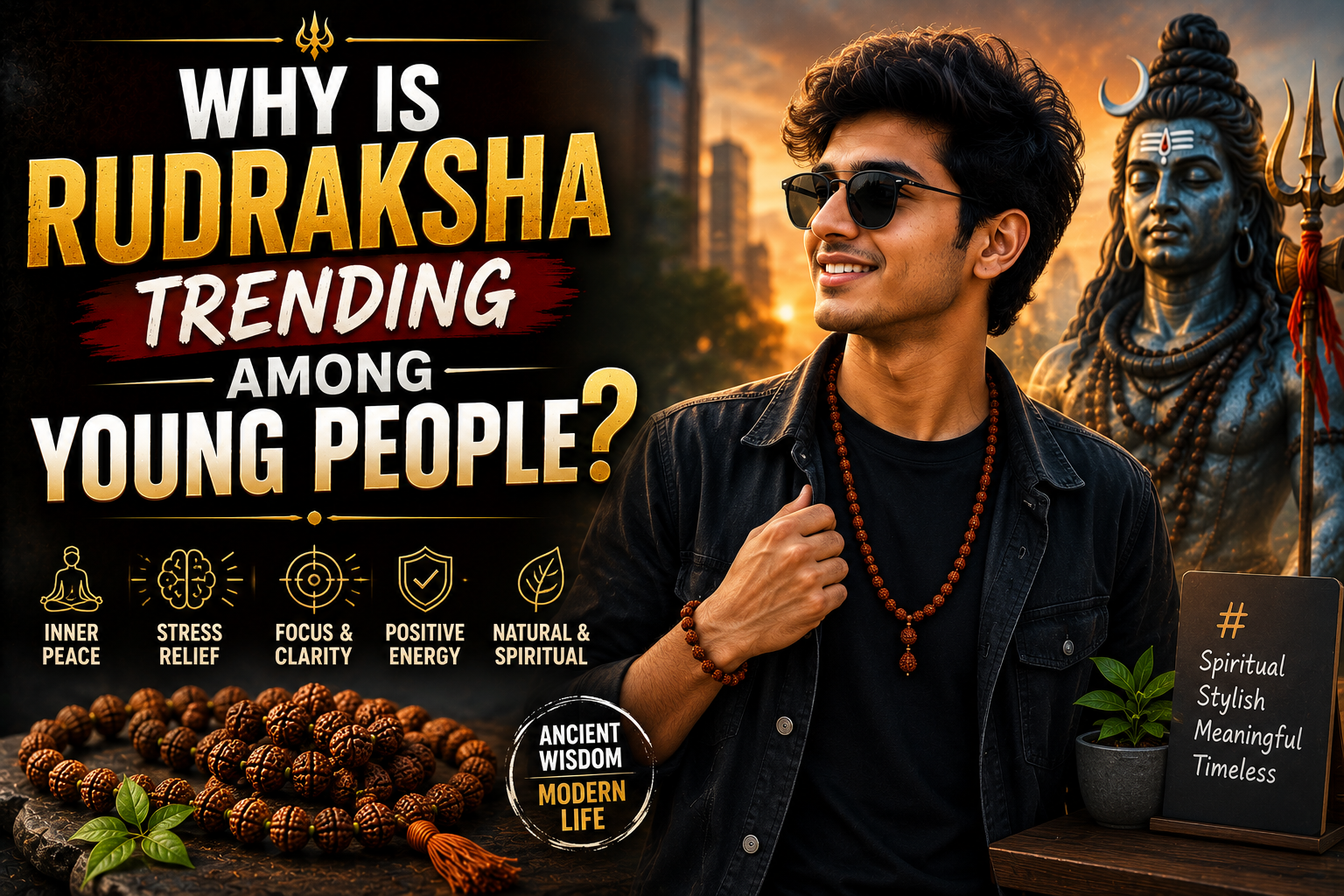
Rudraksha has traditionally been associated with Lord Shiva, meditation, prayer, and spiritual discipline. But in 2026, something interesting is happening: Rudraksha is increasingly visible among Gen Z and Millennials, not only in temples or during religious occasions, but also as part of everyday fashion and lifestyle.
Recent Indian lifestyle coverage has highlighted the growing popularity of Rudraksha malas, spiritual pendants, crystals, and other sacred jewellery among younger consumers.
So, why is an ancient spiritual symbol suddenly feeling so relevant to today’s youth?
- Spirituality Is Becoming More Personal
For many young people, spirituality is no longer limited to traditional rituals or visiting a temple.
Young adults are increasingly exploring:
- Meditation
- Mantra chanting
- Mindfulness
- Shiva Bhakti
- Yoga and spiritual practices
- Malas and sacred jewellery
Recent reporting on Gen Z in India points to a growing interest in spirituality as a way of finding self-awareness, balance, and inner peace, rather than necessarily following a rigid religious routine.
Rudraksha fits naturally into this shift.
- The Search for Calm in a Digital World
Young people live in an environment of:
Notifications → Reels → Messages → Deadlines → Constant Scrolling
The result is a growing desire for moments of quiet and disconnection.
For some, Rudraksha becomes a physical reminder to:
- Take a breath
- Put the phone down
- Meditate
- Chant a mantra
- Spend a few minutes in silence
The bead doesn’t automatically create calm, but it can become a personal reminder to practice mindfulness.
- “Mahadev Vibes” Are Becoming Part of Youth Culture
Shiva imagery and devotional content have increasingly moved beyond traditional religious spaces.
Young people may express their connection through:
- Rudraksha Bracelets
- Shiva pendants
- Mahadev-themed clothing
- Phone wallpapers
- Social media posts
- Temple visits
- Shiva music and devotional playlists
Even online community discussions in 2026 have noted the visibility of young people visiting major spiritual destinations and engaging with Shiva-related devotional culture. For some, wearing Rudraksha is therefore both spiritual expression and cultural identity.
- Spiritual Jewellery Has Become Fashionable
This may be one of the biggest reasons for Rudraksha‘s current visibility. Rudraksha was once something many people wore quietly. Today, younger consumers are more comfortable styling spiritual pieces openly. Indian lifestyle coverage in 2026 describes Rudraksha malas and other spiritual jewellery being incorporated into everyday and street-style looks, blurring the line between belief and fashion.
A Rudraksha Bracelet can be worn with:
- Casual outfits
- Streetwear
- Ethnic clothing
- Office wear
- Minimalist jewellery
This makes an ancient symbol feel contemporary.
- Social Media Is Changing How Spirituality Is Shared
Instagram, YouTube, Pinterest, and other platforms have made spiritual practices much more visible.
A young person can discover:
Rudraksha → Meditation → Shiva Mantra → Sawan → Japa
within a few minutes of scrolling. Spirituality is no longer something young people necessarily discover only through family members or religious institutions. Digital platforms allow them to explore, question, learn, and share spiritual traditions in their own way.
- Wellness Culture Is Influencing Spiritual Choices
Wellness has become a major part of modern lifestyle culture.
Young people are exploring:
- Meditation
- Breathwork
- Yoga
- Ayurveda
- Journaling
- Mindful living
- Holistic routines
Indian lifestyle reporting has specifically connected the renewed popularity of sacred jewellery with the mainstreaming of wellness and mindfulness culture. Rudraksha fits into this world because it can be used alongside meditation and mantra practice.
- Rudraksha Is Easy to Wear Every Day
A major advantage is simplicity. You don’t need a complicated ritual to carry the symbol with you.
A young person can choose:
- Rudraksha Bracelet: Simple and discreet for everyday wear.
- Rudraksha Pendant: A more subtle spiritual statement.
- Rudraksha Mala: Traditionally useful for Japa and meditation. This makes Rudraksha adaptable to modern lifestyles.
- It Connects Young People With Tradition
There is also a deeper cultural reason.
For some young Indians, Rudraksha represents a connection to:
Parents → Grandparents → Ancient traditions → Personal spirituality
Instead of rejecting traditional practices, some are reinterpreting them in contemporary ways. A Rudraksha Mala that once belonged to a grandparent can become meaningful to a younger family member while being incorporated into a completely different lifestyle.
- Young People Want Meaning, Not Just Accessories
Today’s jewellery choices can communicate something about personality.
A bracelet can say: “This is my style.”
But a Rudraksha Bracelet can also say: “This represents something I believe in.”That sense of personal meaning is part of the appeal of spiritual jewellery. Recent reporting has described this shift toward jewellery being valued not only for appearance but also for the intention and meaning attached to it.
- Rudraksha Fits the “Slow Living” Mindset
There is a growing contrast between:
Fast life: Scroll → Rush → Work → Consume → Repeat
and
Mindful life: Pause → Breathe → Reflect → Simplify → Repeat
Rudraksha can symbolically represent the second approach. Even something as simple as touching a Rudraksha bead before meditation can become a small ritual that tells the mind:
“It’s time to slow down.”
- It’s Not Just About “Benefits”
Another interesting change is that younger consumers are increasingly interested in why an object matters, rather than simply accepting traditional claims.
They may ask:
- Where does Rudraksha come from?
- What is a Mukhi?
- Why is it associated with Shiva?
- How is it used in meditation?
- How do I identify an authentic bead?
- What does tradition actually say?
This curiosity can lead to a deeper understanding of Rudraksha beyond simple “benefit” lists.
Which Rudraksha Is Popular for Beginners?
There is no universally prescribed Rudraksha for every young person. However, 5 Mukhi Rudraksha is widely used for general spiritual practice and meditation. Other Mukhi varieties have different traditional associations, so people interested in a specific spiritual or astrological purpose may explore them separately.
Why Is Rudraksha Trending Among Young People?
In simple terms:
- Tradition: It connects young people with Lord Shiva and Indian spiritual heritage.
- Mindfulness: It fits into meditation and modern wellness routines.
- Social Media: Spiritual practices are more visible and shareable than ever.
- Fashion: Rudraksha has moved from purely devotional spaces into everyday styling.
- Meaning: Young consumers increasingly value products that carry a personal story or intention.
- Identity: For some, it is a way to express spirituality openly and authentically.
Conclusion:
Rudraksha is trending among young people because an ancient symbol is finding a new language.
- For one person, it’s a fashion statement.
- For another, it’s a meditation reminder.
- For someone else, it’s a connection to Lord Shiva.
- And for many, it can be all three.
The interesting part isn’t that young people are suddenly discovering Rudraksha. It’s that they are making an ancient tradition their own.
Ancient roots. Modern lifestyle. Personal meaning.
And perhaps that’s why Rudraksha continues to remain relevant—not only across generations, but also across changing ideas of spirituality, wellness, and identity.