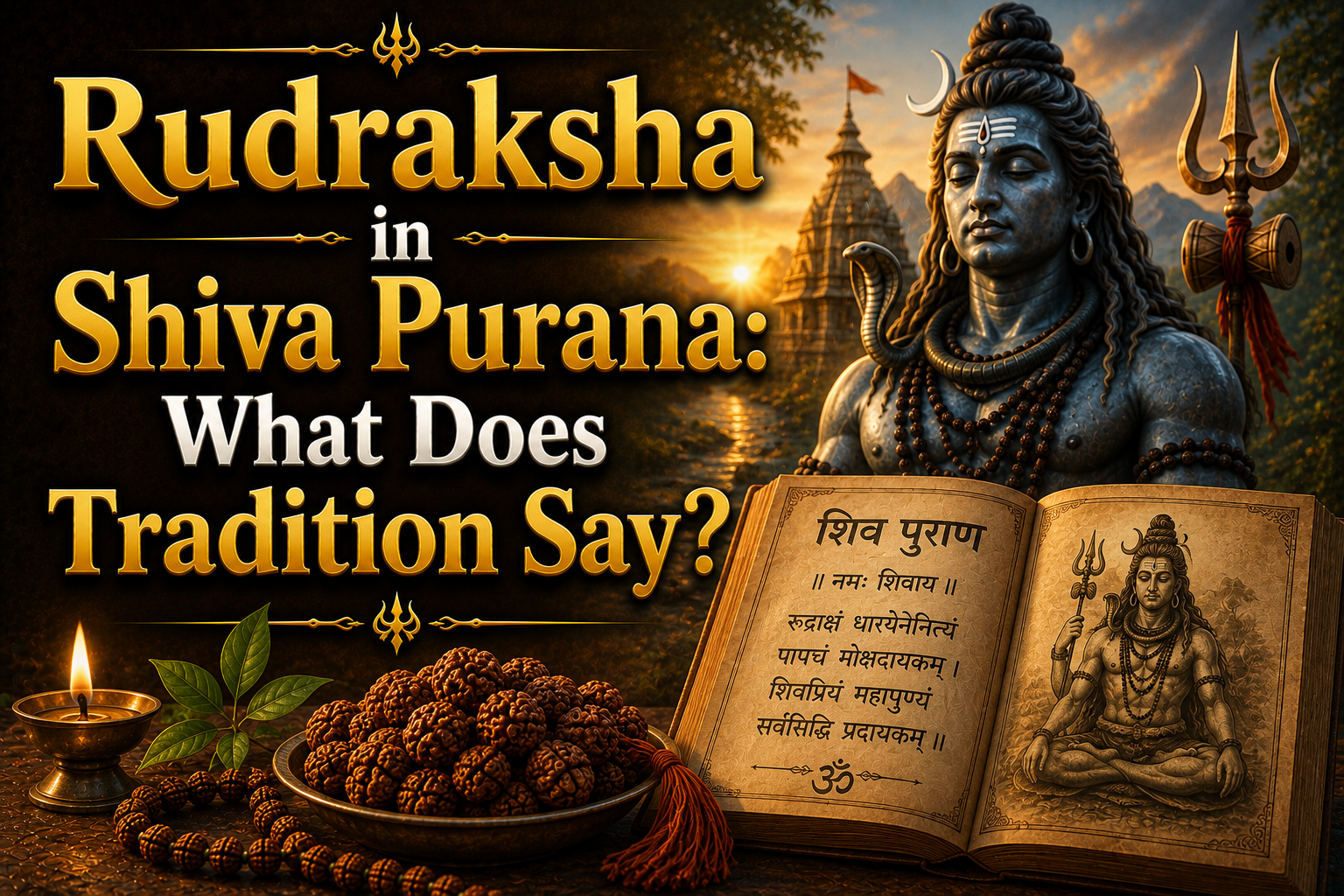
Rudraksha holds a deeply revered place in Shaiva traditions, and its connection with Lord Shiva is described in sacred Hindu literature. Among the texts associated with Rudraksha traditions, the Shiva Purana is especially important for devotees who want to understand its spiritual significance.
So, what does tradition say about Rudraksha in the Shiva Purana? Why is it considered sacred, and why have devotees continued to wear it for generations?
Let’s explore the traditional perspective.
Note: This article discusses religious traditions and scriptural beliefs. Interpretations and textual details can vary between editions, translations, and Shaiva traditions. Traditional spiritual claims should not be treated as scientifically proven medical or supernatural effects.
Rudraksha and Lord Shiva:
The very name Rudraksha is traditionally connected with Rudra, a name of Lord Shiva, and Aksha, meaning “eye.”
In Shaiva tradition, Rudraksha is therefore regarded as a sacred manifestation associated with Shiva.
This connection is one of the main reasons devotees wear Rudraksha during:
- Shiva Puja
- Meditation
- Mantra Japa
- Shravan month
- Sawan Somwar
- Mahashivratri
- Other devotional practices
For a devotee, wearing Rudraksha can represent a continuous remembrance of Shiva.
What Does the Shiva Purana Say About Rudraksha?
Traditional accounts associated with the Shiva Purana describe Rudraksha as highly sacred and emphasize its connection with Lord Shiva.
One of the well-known narratives describes Lord Shiva entering a deep state of meditation for the welfare of beings. When he opened his eyes, tears fell to the earth, and from those tears Rudraksha trees are traditionally said to have emerged.
This story gives Rudraksha a powerful symbolic meaning: Shiva’s compassion → Rudraksha → Spiritual remembrance
The story is understood within Hindu tradition as sacred mythology rather than a scientific account of the botanical origin of the Rudraksha tree.
Why Is Rudraksha Considered Sacred?
The traditional significance of Rudraksha goes beyond simply wearing a bead.
It is associated with:
- Shiva Bhakti: A reminder of devotion to Lord Shiva.
- Meditation: Rudraksha Malas are traditionally used for Japa and meditation.
- Mantra Chanting: Devotees often use Rudraksha beads while reciting Shiva mantras.
- Spiritual Discipline: Wearing Rudraksha can serve as a reminder to follow one’s spiritual practices.
- Inner Reflection: The bead can symbolize turning one’s attention inward.
What Are Mukhi Rudraksha?
One distinctive feature of Rudraksha is the number of natural divisions or faces visible on the bead. These are called Mukhi. Different Mukhi Rudraksha are traditionally associated with different deities, mantras, and spiritual qualities.
Rudraksha and Spiritual Practice
The Shiva Purana’s traditional association with Rudraksha helps explain why it became closely connected with devotional practices.
A devotee may use Rudraksha for: Japa → Meditation → Prayer → Shiva remembrance
For example, a Rudraksha Mala can be used to repeat:
ॐ नमः शिवाय
Om Namah Shivaya
The repetitive movement of the beads provides a structured way to count mantra repetitions.
Why Is Rudraksha Especially Important During Sawan?
Shravan, or Sawan, is traditionally considered an auspicious period for worshipping Lord Shiva.
Because Rudraksha is closely associated with Shiva, many devotees choose this month to:
- Begin wearing Rudraksha
- Perform Rudraksha Puja
- Chant Shiva mantras
- Use Rudraksha Mala for Japa
- Perform Shivling Abhishekam
- Observe Sawan Somwar
For many devotees, wearing Rudraksha during Sawan becomes a way of strengthening their connection with Shiva.
Rudraksha Is More Than an Ornament
In traditional Shaiva practice, Rudraksha is not primarily regarded as jewellery.
It can represent:
- Faith
- Devotion
- Meditation
- Self-discipline
- Remembrance of Shiva
This is why Sadhus, saints, and Shiva devotees have traditionally incorporated Rudraksha into their spiritual lives.
Why Do Devotees Wear Rudraksha?
Different people may have different reasons.
- A Shiva devotee: May wear it as a symbol of devotion.
- A meditator: May use it as a Japa Mala.
- A spiritual seeker: May see it as a reminder of inner discipline.
- A family: May pass the tradition from one generation to another.
The same bead can therefore carry different personal meanings while remaining rooted in the broader Shaiva tradition.
What Makes the Tradition Relevant Today?
Modern life is often filled with:
- Constant notifications
- Digital distractions
- Work pressure
- Busy schedules
- Information overload
Rudraksha can provide a simple physical reminder to pause and reconnect with one’s spiritual practice.
Whenever you notice your Rudraksha, you can take a moment to:
Breathe → Remember Shiva → Chant → Refocus
The mindfulness comes from the practice and intention, while Rudraksha serves as a meaningful spiritual symbol.
Tradition vs Modern Claims
Rudraksha is sometimes promoted with claims that it can automatically:
- Cure diseases
- Guarantee wealth
- Change destiny
- Eliminate every problem
- Produce supernatural powers
Such claims should be approached carefully.
The religious significance of Rudraksha is different from scientifically established medical effects. Its sacred status comes from Hindu traditions, scriptures, devotional practices, and the meaning devotees attach to it.
How to Respect the Rudraksha Tradition?
If you choose to wear Rudraksha, you can approach it with:
- Respect: Understand its religious significance.
- Devotion: Use it as part of sincere spiritual practice.
- Consistency: Maintain a regular meditation or Japa routine.
- Awareness: Learn about the particular Rudraksha you are wearing.
- Humility: Remember that spiritual growth depends on one’s actions and conduct, not simply on wearing a bead.
Conclusion:
Rudraksha in the Shiva Purana is part of a rich tradition connecting the sacred bead with Lord Shiva, meditation, devotion, and spiritual discipline. The traditional story of Rudraksha emerging from Shiva’s tears gives the bead a profound symbolic meaning: a representation of divine compassion and remembrance of the Supreme. For generations, devotees have worn Rudraksha not simply as jewellery, but as a symbol of their connection with Shiva. Whether you use a Rudraksha Mala for Japa, wear a Rudraksha Bracelet, or begin your spiritual practice during Sawan, the deeper message remains the same:
Remember Shiva. Cultivate awareness. Live with devotion.
ॐ नमः शिवाय