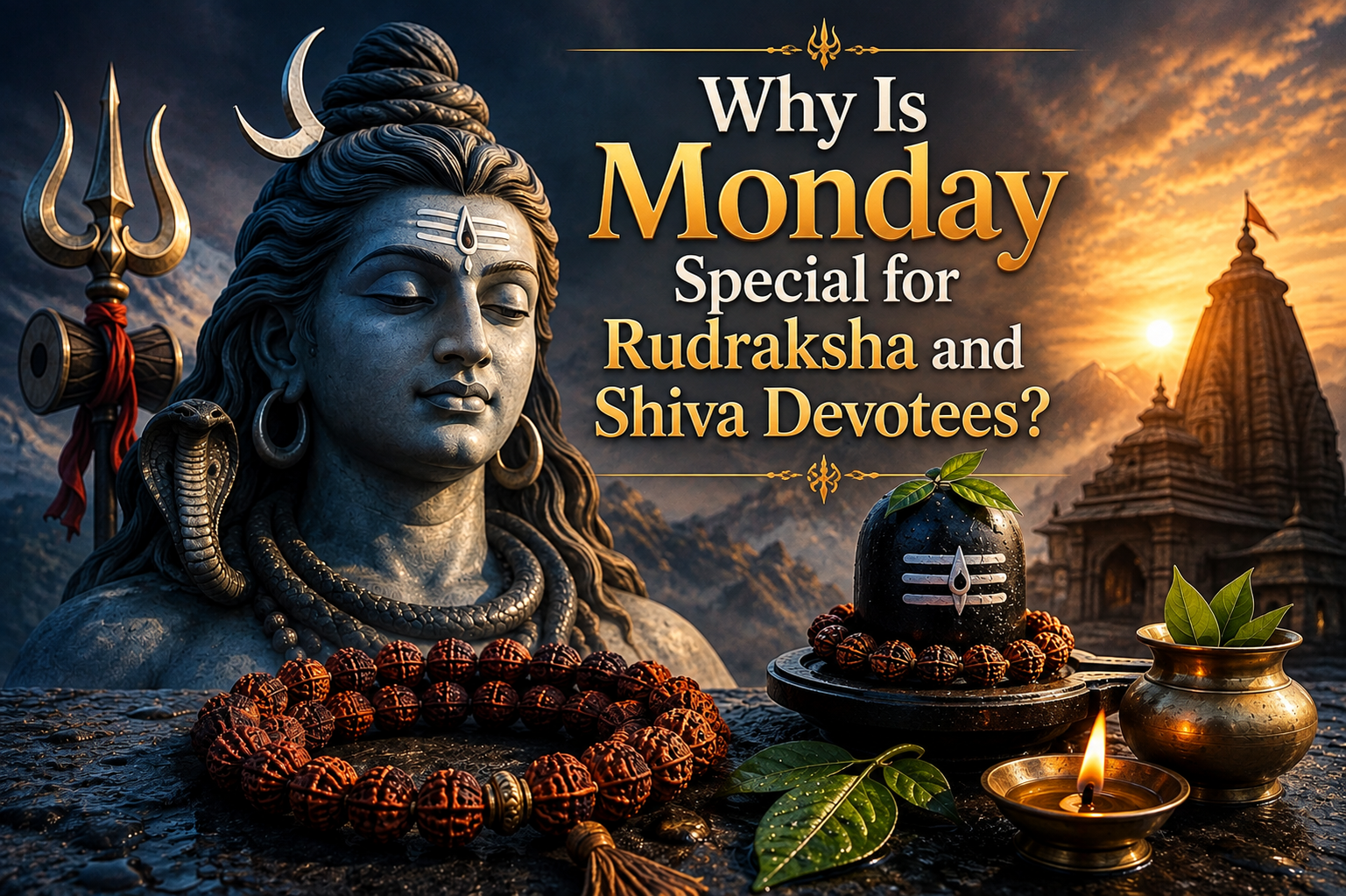
Monday, or Somwar, holds a special place in Hindu traditions dedicated to Lord Shiva. For Shiva devotees, it is a popular day for Shivling Puja, mantra chanting, meditation, fasting, and Rudraksha practices. Because Rudraksha is traditionally associated with Lord Shiva, many devotees choose Monday to wear a new Rudraksha, begin a Japa practice, or deepen their spiritual routine.
But why is Monday considered special? Let’s explore the traditional significance.
Note: The spiritual significance and benefits mentioned in this article are based on Hindu religious and cultural traditions. They are not scientifically proven guarantees.
Why Is Monday Associated With Lord Shiva?
Monday is known as Somwar in Hindu tradition. The word “Soma” is associated with the Moon, and Lord Shiva is traditionally depicted wearing the crescent Moon on His head. Because of this association, Monday is considered an important day for Shiva worship.
Devotees may observe Somwar by:
- Performing Shivling Puja
- Chanting “Om Namah Shivaya”
- Wearing Rudraksha
- Practicing meditation
- Offering Bel Patra
- Visiting Shiva temples
- Observing a fast
Why Is Monday Considered Auspicious for Rudraksha?
Rudraksha has a strong connection with Lord Shiva in Hindu spiritual traditions. Because Monday is dedicated to Shiva, many devotees consider it a meaningful day to:
- Start wearing Rudraksha
- Begin using a Rudraksha Mala
- Perform Rudraksha Puja
- Start a regular Japa practice
- Meditate with Rudraksha
- Renew their spiritual intentions
There is no universal requirement that Rudraksha must only be worn on Monday. However, for devotees who follow Shiva traditions, Somwar can be a spiritually significant day to begin or strengthen their practice.
Monday and Sawan Somwar
Monday becomes even more significant during Shravan (Sawan). The Mondays that fall during Shravan are known as Sawan Somwar and are especially important for many Shiva devotees.
During Sawan Somwar, devotees may:
- Observe a fast
- Perform Shivling Abhishekam
- Offer water or Gangajal
- Offer Bel Patra
- Chant Shiva mantras
- Wear or worship Rudraksha
- Visit Shiva temples
- Practice meditation
For many devotees, Sawan Somwar is an ideal opportunity to deepen their Shiva Bhakti.
Why Wear Rudraksha on Monday?
- To Begin a Spiritual Routine
Starting your Rudraksha practice on Monday can give you a meaningful day to establish a regular routine.
For example, you could begin:
- Monday → Rudraksha Puja
- Daily → Meditation
- Morning → “Om Namah Shivaya” Japa
The specific day is less important than maintaining consistency.
- To Connect With Shiva Bhakti
For devotees, wearing Rudraksha on Somwar can symbolize their devotion to Lord Shiva.
The Mala or Bracelet can serve as a daily reminder to:
- Stay mindful
- Practice patience
- Meditate regularly
- Maintain spiritual discipline
- Cultivate positive intentions
- To Start Mantra Japa
Monday can be a meaningful day to begin a regular Rudraksha Mala Japa practice.
A popular Shiva mantra is:
ॐ नमः शिवाय
Om Namah Shivaya
You can use a 108-bead Rudraksha Mala to traditionally count repetitions of the mantra.
How to Start Wearing Rudraksha on Monday?
If you want to begin wearing Rudraksha on Somwar, you can follow a simple devotional routine.
- Step 1: Take a Bath
Begin your day by bathing and wearing clean clothes. - Step 2: Clean Your Rudraksha
Gently clean your Rudraksha according to the seller’s care instructions. - Step 3: Perform Shiva Puja
If you follow this tradition, offer water to the Shivling and perform your regular Puja. - Step 4: Chant a Shiva Mantra
Chant:
“Om Namah Shivaya.”
You may repeat the mantra according to your personal practice. - Step 5: Wear Your Rudraksha
After your prayer or Puja, wear your Rudraksha Mala, Bracelet, or Pendant. - Step 6: Set Your Intention
Take a moment to mentally commit to your spiritual practice.
Can You Wear Rudraksha on Any Other Day?
Yes. Rudraksha can traditionally be worn on other days as well. Monday is considered special because of its association with Lord Shiva, but you don’t have to wait for Somwar.
You can begin wearing Rudraksha:
- On Monday
- During Shravan
- On Sawan Somwar
- On Mahashivratri
- On Pradosh
- On another personally meaningful day
The most important factor is your faith, intention, and consistency.
Can You Wear Rudraksha Every Day?
Many devotees traditionally wear Rudraksha every day.
However, you should take proper care of the beads and protect them from:
- Harsh chemicals
- Perfume
- Soap
- Prolonged water exposure
- Physical damage
If your Rudraksha becomes wet, allow it to dry naturally in a shaded, well-ventilated place.
Is Monday Better Than Other Days for Rudraksha?
From a traditional Shiva devotional perspective, Monday is considered especially meaningful.
However, there is no universal rule that wearing Rudraksha on Monday makes it inherently more powerful than wearing it on another day.
The significance comes from the spiritual intention and devotional context associated with Somwar.
In other words:
- Monday can be an auspicious day to begin.
- But sincere spiritual practice can continue every day.
Conclusion:
Monday is special for Rudraksha and Shiva devotees because Somwar is traditionally associated with Lord Shiva, while Rudraksha is deeply connected with Shiva worship and spiritual practices.
For devotees, Monday can be an ideal time to:
- Start wearing Rudraksha
- Begin mantra Japa
- Perform Shivling Puja
- Start meditation
- Renew spiritual intentions
And during Shravan, the significance of Monday becomes even more meaningful through Sawan Somwar traditions.
Whether you begin your Rudraksha journey on Monday or another day, remember that the deeper purpose is to cultivate devotion, mindfulness, discipline, and inner awareness. Let every Somwar be a reminder to pause, pray, and reconnect with your spiritual path.
Har Har Mahadev!