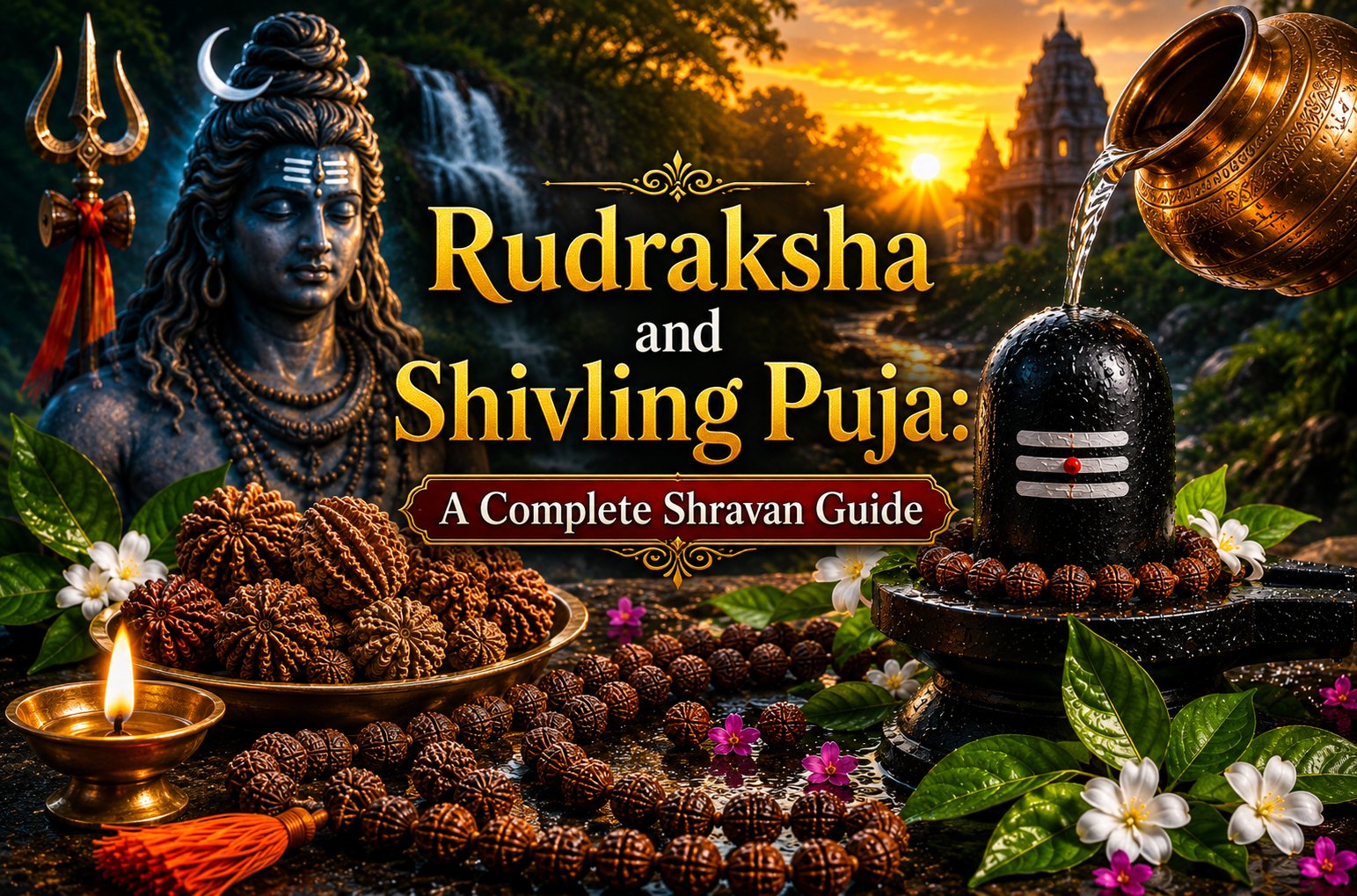
Shravan (Sawan) is one of the most sacred months for devotees of Lord Shiva. It is a time when people observe fasting, visit temples, chant mantras, perform Abhishekam, and deepen their spiritual practices. Among the many traditions followed during this holy month, Rudraksha worship and Shivling Puja hold a special significance. Rudraksha is traditionally associated with Lord Shiva, while the Shivling represents the divine presence of Shiva. Together, they can become meaningful parts of a devotional Shravan routine.
If you are planning to worship Lord Shiva at home this Shravan, this complete guide will help you understand the significance of Rudraksha, Shivling Puja, Abhishekam, mantras, and simple worship rituals.
Why Is Shravan Important for Lord Shiva?
Shravan is considered a highly auspicious month dedicated to Lord Shiva. Devotees use this period to strengthen their spiritual discipline through:
- Shiva Puja
- Rudraksha meditation
- Mantra chanting
- Shivling Abhishekam
- Fasting and devotion
- Meditation and self-reflection
Many devotees believe that worshipping Lord Shiva during Shravan helps them cultivate peace, devotion, discipline, and positive intentions. The exact rituals and beliefs may vary according to regional and family traditions.
The Significance of Rudraksha in Shravan:
Rudraksha beads have a special place in Shaiva traditions and are traditionally associated with Lord Shiva. They are commonly used for meditation, prayer, and mantra chanting.
During Shravan, devotees may:
- Wear a Rudraksha Mala
- Wear a Rudraksha Bracelet
- Use Rudraksha Mala for Japa
- Keep Rudraksha in their Puja space
- Meditate while holding Rudraksha
- Chant “Om Namah Shivaya” using a Rudraksha Mala
Different Mukhi Rudraksha are traditionally associated with different deities and spiritual qualities. For example, 5 Mukhi Rudraksha is widely used for daily spiritual practices, while other Mukhi Rudraksha may be selected based on individual beliefs or astrological guidance.
Note: The spiritual benefits traditionally attributed to Rudraksha are based on cultural and religious beliefs and are not scientifically proven to guarantee specific outcomes.
The Significance of Shivling Puja:
The Shivling is one of the most revered symbols of Lord Shiva. Worshipping the Shivling is traditionally considered an expression of devotion, surrender, and gratitude. One of the most common forms of Shiva worship is Abhishekam, where devotees offer sacred substances over the Shivling while chanting mantras.
Common offerings include:
- Water
- Gangajal
- Milk
- Honey
- Curd
- Ghee
- Sugar
- Bel Patra
- Flowers
- Sandalwood
The offerings used and the order of the ritual may differ according to family, regional, or temple traditions.
How to Perform Rudraksha and Shivling Puja at Home?
You do not need an elaborate setup to begin a simple Shravan Puja. Sincere devotion and a peaceful mindset are at the heart of spiritual practice.
- Step 1: Clean Your Puja Space Start by cleaning the area where you plan to perform your Puja. Keep the space peaceful and organized.
- Step 2: Take a Bath Take a bath and wear clean clothes before beginning your worship.
- Step 3: Prepare the Shivling Place the Shivling respectfully on a clean Puja platform or suitable Abhishekam vessel.
- Step 4: Clean Your Rudraksha If you are including a Rudraksha in your Puja, gently clean it with clean water and allow it to dry naturally. Avoid prolonged soaking or harsh chemicals, which may damage the natural bead.
- Step 5: Perform Abhishekam Begin by offering clean water or Gangajal over the Shivling according to your tradition.
While offering water, chant:
“Om Namah Shivaya” You may then offer other traditional items if they are part of your family’s Puja practice. - Step 6: Offer Bel Patra Offer fresh Bel Patra (Bilva leaves) to Lord Shiva with devotion.
- Step 7: Worship the Rudraksha Keep your Rudraksha respectfully near the Shivling or in your Puja space. You may hold your Rudraksha Mala while chanting Shiva mantras.
- Step 8: Light a Diya Light a diya and incense if these are part of your traditional Puja practice.
- Step 9: Chant Shiva Mantras Chant “Om Namah Shivaya” with a calm and focused mind.
- Step 10: Complete Your Puja Conclude your Puja with Shiva Aarti or a simple prayer of gratitude. Spend a few moments in silence and meditation before completing your worship.
How to Include Rudraksha in Shivling Puja?
Rudraksha can be included in your Puja in several traditional ways.
You can:
- Place the Rudraksha respectfully near the Shivling.
- Hold a Rudraksha Mala while chanting Shiva mantras.
- Meditate with Rudraksha after completing Abhishekam.
- Wear your Rudraksha Bracelet after your Puja.
- Keep your Rudraksha in a clean Puja space when not wearing it.
Practices may vary between traditions. If your family follows a specific method of Rudraksha worship, it is best to follow that tradition.
Simple Rudraksha and Shivling Puja Routine for Shravan
If you have limited time, you can follow this simple daily routine:
Morning Puja
- Take a bath and wear clean clothes.
- Clean your Puja area.
- Offer water or Gangajal to the Shivling.
- Offer Bel Patra according to your tradition.
- Place your Rudraksha near the Shivling.
- Chant “Om Namah Shivaya”.
- Meditate quietly for a few minutes.
- Wear your Rudraksha with a positive intention.
Even a simple practice performed with sincerity can become a meaningful part of your Shravan journey.
Dos and Don’ts of Rudraksha and Shivling Puja:
Dos
- Keep your Puja space clean.
- Handle Rudraksha respectfully.
- Use clean water for Abhishekam.
- Chant mantras with concentration.
- Follow your family and regional traditions.
- Keep your Rudraksha clean and dry.
- Approach Puja with devotion and mindfulness.
Don’ts
- Do not use harsh chemicals to clean Rudraksha.
- Avoid prolonged exposure of Rudraksha to water.
- Do not make exaggerated claims about guaranteed health, wealth, or supernatural benefits.
- Do not treat spiritual practices as substitutes for professional medical, financial, or other expert advice.
- Avoid comparing your personal worship with others’ traditions.
Rudraksha and Shivling Puja: What Is the Connection?
Rudraksha and Shivling are both deeply connected with Shiva traditions. The Shivling represents the divine presence of Lord Shiva, while Rudraksha is traditionally associated with Shiva and is widely used for meditation and prayer.
When included together in a Shravan routine, they can represent:
- Devotion
- Meditation
- Surrender
- Mindfulness
- Spiritual discipline
- Gratitude
The deeper purpose of Puja is not only the ritual itself but also the devotion and intention behind it.
Which Rudraksha Is Best for Shravan?
There is no single Rudraksha that is universally considered the “best” for everyone. For general spiritual practice, 5 Mukhi Rudraksha is widely chosen and traditionally associated with meditation, peace, and spiritual discipline.
Depending on individual beliefs, devotees may also consider other varieties:
- 1 Mukhi – Spiritual focus
- 2 Mukhi – Harmony
- 3 Mukhi – Transformation
- 4 Mukhi – Knowledge
- 5 Mukhi – Meditation and peace
- 7 Mukhi – Prosperity and stability
- 8 Mukhi – Overcoming obstacles
- 9 Mukhi – Courage
- 11 Mukhi – Confidence and determination
- 14 Mukhi – Intuition and wisdom
If you are selecting Rudraksha specifically for Vedic astrology, it is advisable to consult a qualified astrologer for personalized guidance.
Can Women Wear Rudraksha During Shravan?
Yes, women can traditionally wear Rudraksha during Shravan.
Women may wear:
- Rudraksha Mala
- Rudraksha Bracelet
- Rudraksha Pendant
Practices regarding Rudraksha during menstruation vary among families and traditions. Some traditions allow continued use, while others recommend temporarily removing it. Individuals can follow their personal beliefs and family customs.
Conclusion:
Shravan is a beautiful opportunity to slow down, reconnect with spirituality, and deepen your devotion to Lord Shiva. Whether you perform a detailed Shivling Abhishekam, wear a Rudraksha Bracelet, meditate with a Rudraksha Mala, or simply chant “Om Namah Shivaya”, the heart of the practice is sincere devotion. This Shravan, make time for prayer, mindfulness, and self-reflection. Let your spiritual practice remind you to live with greater peace, patience, gratitude, and purpose. Rudraksha and Shivling Puja together can become a meaningful part of your Shravan spiritual journey.
Har Har Mahadev!