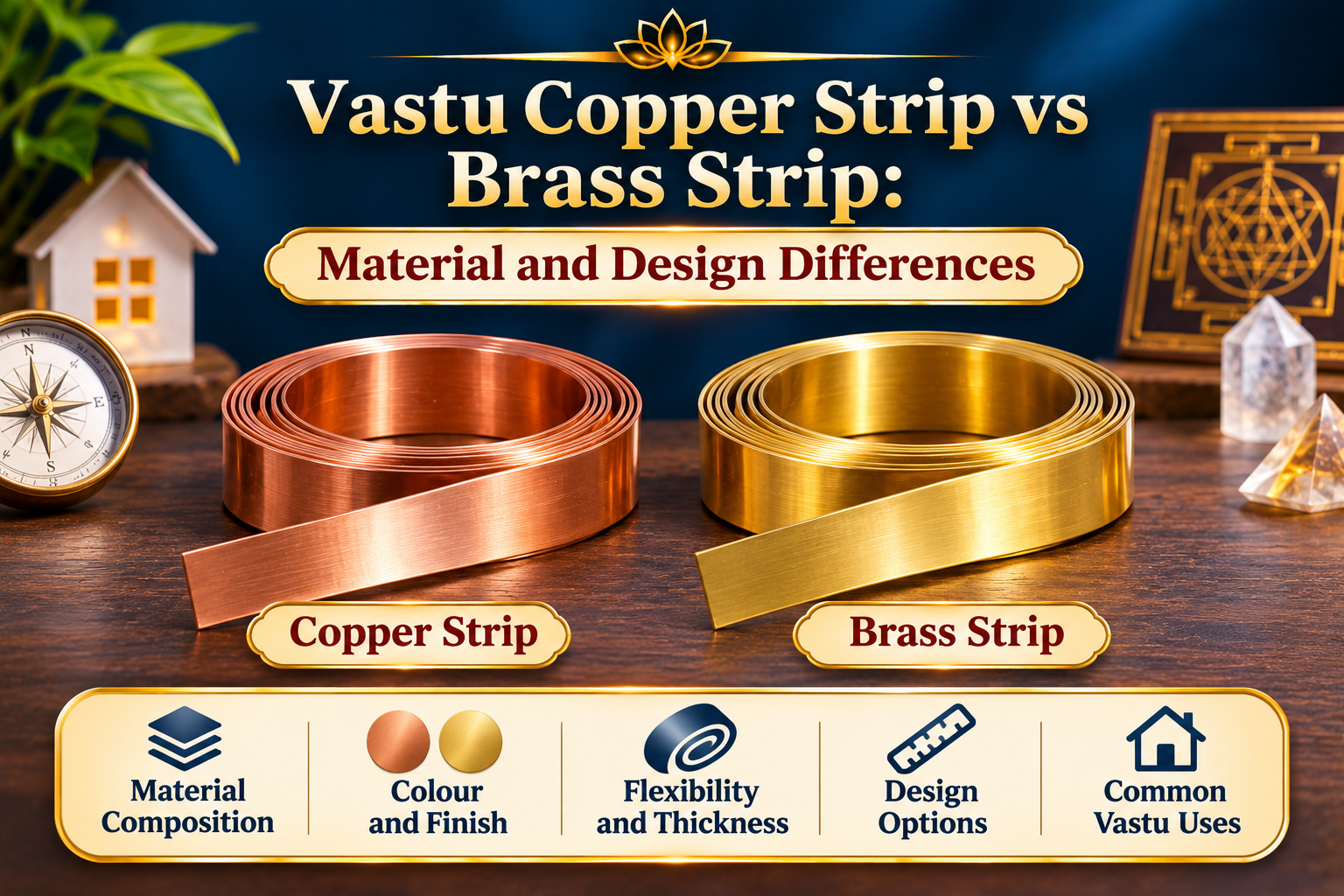
Metal strips are commonly used in traditional Vastu-related arrangements, architectural applications and interior décor. Among the popular options, Copper Strips and Brass Strips are often selected for their distinctive metallic appearance, material properties and traditional associations.
Although both metals have a long history of use in Indian culture and craftsmanship, they differ in colour, composition, durability, maintenance and design applications.
If you are planning to purchase a Vastu Copper Strip or Brass Strip, understanding these differences can help you choose the right product for your requirements.
In this guide, we will explore their material properties, design differences, traditional significance, applications and important buying considerations.
What Is a Vastu Copper Strip?
A Vastu Copper Strip is a narrow strip made from copper metal and marketed for use in certain traditional Vastu arrangements.
Copper has been used for centuries in Indian utensils, religious objects, architectural details and decorative products. Its reddish-orange metallic appearance makes it easily recognisable.
In some Vastu practices, copper strips are used as symbolic or traditional remedies in specific locations of a property.
Key Characteristics of Copper
- Metal: Copper
- Chemical Symbol: Cu
- Colour: Reddish-orange
- Composition: Pure copper or a copper-based material, depending on the product
- Appearance: Distinctive metallic shine
- Properties: Good electrical and thermal conductivity
- Common Uses: Electrical applications, utensils, decorative items and traditional Vastu products
Traditional Significance of Copper in Vastu
Copper holds an important place in Indian religious and traditional practices. In some Vastu-related beliefs, it is associated with positive symbolism, balance and traditional energy-related remedies.
Copper strips may be recommended by certain Vastu practitioners for specific placement purposes.
These applications are based on traditional beliefs and should not be interpreted as scientifically proven methods of changing energy, health or prosperity.
What Is a Vastu Brass Strip?
A Vastu Brass Strip is a narrow metallic strip made from brass, an alloy primarily consisting of copper and zinc.
Brass is widely used in Indian craftsmanship, decorative products, religious accessories and architectural fittings. Its golden-yellow appearance makes it a popular material for traditional and contemporary designs.
In certain Vastu practices, brass strips are also used as part of traditional placement arrangements.
Key Characteristics of Brass
- Metal: Brass
- Composition: Primarily copper and zinc
- Colour: Golden-yellow
- Appearance: Warm metallic finish
- Properties: Good workability and corrosion resistance
- Common Uses: Decorative fittings, utensils, musical instruments and religious objects
Traditional Significance of Brass in Vastu
Brass is traditionally associated with auspiciousness and is widely used in Hindu religious objects and household décor.
Some Vastu practitioners incorporate brass products into specific traditional arrangements. The recommended use and placement can vary according to the practitioner’s method.
Its traditional significance is cultural and symbolic rather than scientifically established.
Vastu Copper Strip vs Brass Strip: Key Differences
- Difference in Material Composition
The biggest difference between Copper and Brass Strips is their composition.
Copper Strip
Copper is a naturally occurring chemical element with the symbol Cu. A copper strip may be made from high-purity copper or a specified copper alloy, depending on its manufacturing details.
Pure copper is widely recognised for its excellent electrical and thermal conductivity.
Brass Strip
Brass is an alloy made primarily from copper and zinc. The proportion of these metals can vary according to the intended application.
Different brass compositions may have different colours, hardness, strength and corrosion characteristics.
Therefore, always check the material specification instead of assuming that every brass strip has an identical composition.
- Difference in Colour and Appearance
Colour is one of the easiest ways to distinguish these two strips.
Copper Strip:
- Reddish-orange metallic appearance.
- Warm and traditional finish.
- May gradually darken or develop a greenish patina through exposure to moisture and air.
Brass Strip:
- Golden-yellow metallic appearance.
- Bright and decorative finish.
- May gradually tarnish or lose some of its original shine without maintenance.
Both materials can be polished to achieve different surface finishes.
- Difference in Durability and Maintenance
Copper and brass are both useful materials, but their maintenance requirements can differ.
Copper Strip Maintenance
- Clean with a suitable soft cloth.
- Avoid harsh chemicals that may damage the surface.
- Protect from prolonged moisture exposure if maintaining a bright finish.
- Natural patina may develop over time.
Brass Strip Maintenance
- Wipe regularly to remove dust and fingerprints.
- Use a suitable brass cleaner when necessary.
- Avoid abrasive cleaning materials.
- Keep the surface dry to reduce tarnishing.
The actual durability of a strip also depends on its thickness, alloy composition, manufacturing quality and installation conditions.
- Difference in Design and Finish
The material choice influences the overall appearance of the Vastu product.
Copper Strip Design
Copper strips are often preferred for their reddish metallic colour and traditional appearance.
Common design considerations include:
- Plain copper finish
- Polished metallic surface
- Different widths and thicknesses
- Straight or customised strip designs
Brass Strip Design
Brass strips are often selected for their golden appearance and decorative appeal.
Common design considerations include:
- Bright golden finish
- Satin or polished surface
- Different widths and thicknesses
- Decorative or customised strip designs
The best design depends on the intended installation and the appearance you want to achieve.
- Traditional Vastu Applications
In certain Vastu practices, copper and brass strips are used for specific traditional remedies.
Their selection may depend on the direction, location and purpose suggested by a Vastu practitioner.
Some practitioners recommend particular metals for certain arrangements, while others follow different methods.
Before installing a metal strip as a Vastu remedy, it is advisable to understand its intended use and follow consistent guidance rather than choosing a metal based only on its appearance.
There is no universally established scientific evidence that copper or brass strips can independently correct architectural defects or guarantee prosperity.
Where Are Vastu Copper and Brass Strips Used?
Depending on the product design and traditional instructions, these strips may be used in different settings.
- Residential Properties: For traditional Vastu-related arrangements.
- Commercial Spaces: In offices, shops and business premises.
- Interior Décor: As decorative metallic elements.
- Traditional Installations: As part of specific Vastu-inspired practices.
For permanent installation, consider the substrate, surface finish, dimensions and suitability of the adhesive or fixing method.
Which Is Better: Vastu Copper Strip or Brass Strip?
There is no universal answer because the right choice depends on the material preference, design and intended application.
Choose a Copper Strip if:
- You prefer a reddish-orange metallic finish.
- You specifically require copper as the material.
- You value copper’s high electrical conductivity.
- Your chosen traditional Vastu practice specifies copper.
Choose a Brass Strip if:
- You prefer a golden-yellow metallic finish.
- You want a decorative traditional appearance.
- You prefer a copper-zinc alloy.
- Your chosen traditional Vastu practice specifies brass.
If the strip is being purchased for a particular Vastu remedy, confirm the required material and placement with a knowledgeable practitioner.
How to Choose a Good-Quality Vastu Metal Strip?
Before purchasing a Copper or Brass Strip, consider these important factors:
- Verify the Material
Confirm whether the product is made from copper, brass or another metal. Ask for material specifications where available. - Check Thickness
The thickness should suit the intended application. A very thin strip may bend easily, while a thicker strip may be more difficult to install. - Examine Surface Finish
Look for a smooth, even surface without excessive scratches, dents or rough edges. - Check Dimensions
Confirm the length, width and thickness before purchasing to ensure the strip is suitable for the intended location. - Inspect Manufacturing Quality
The edges should be properly finished, and the strip should not have unnecessary bends or manufacturing defects. - Understand Installation Requirements
Ask whether the strip requires adhesive, screws or another fixing method. Ensure that the installation method is compatible with the surface. - Request Product Details
For a reliable purchase, check the product description, material details and available quality documentation.
Conclusion
Vastu Copper Strips and Brass Strips are two different metallic products with distinct material compositions, colours and design characteristics.
Copper is known for its reddish-orange appearance and high electrical conductivity, while brass is recognised for its golden colour and copper-zinc composition.
Both materials have traditional significance in Indian culture and are used in certain Vastu-related practices. However, their selection should depend on the specific material requirement, product quality, intended application and guidance followed.
Whether you prefer the traditional appearance of copper or the golden finish of brass, understanding their differences will help you make a more informed purchase.