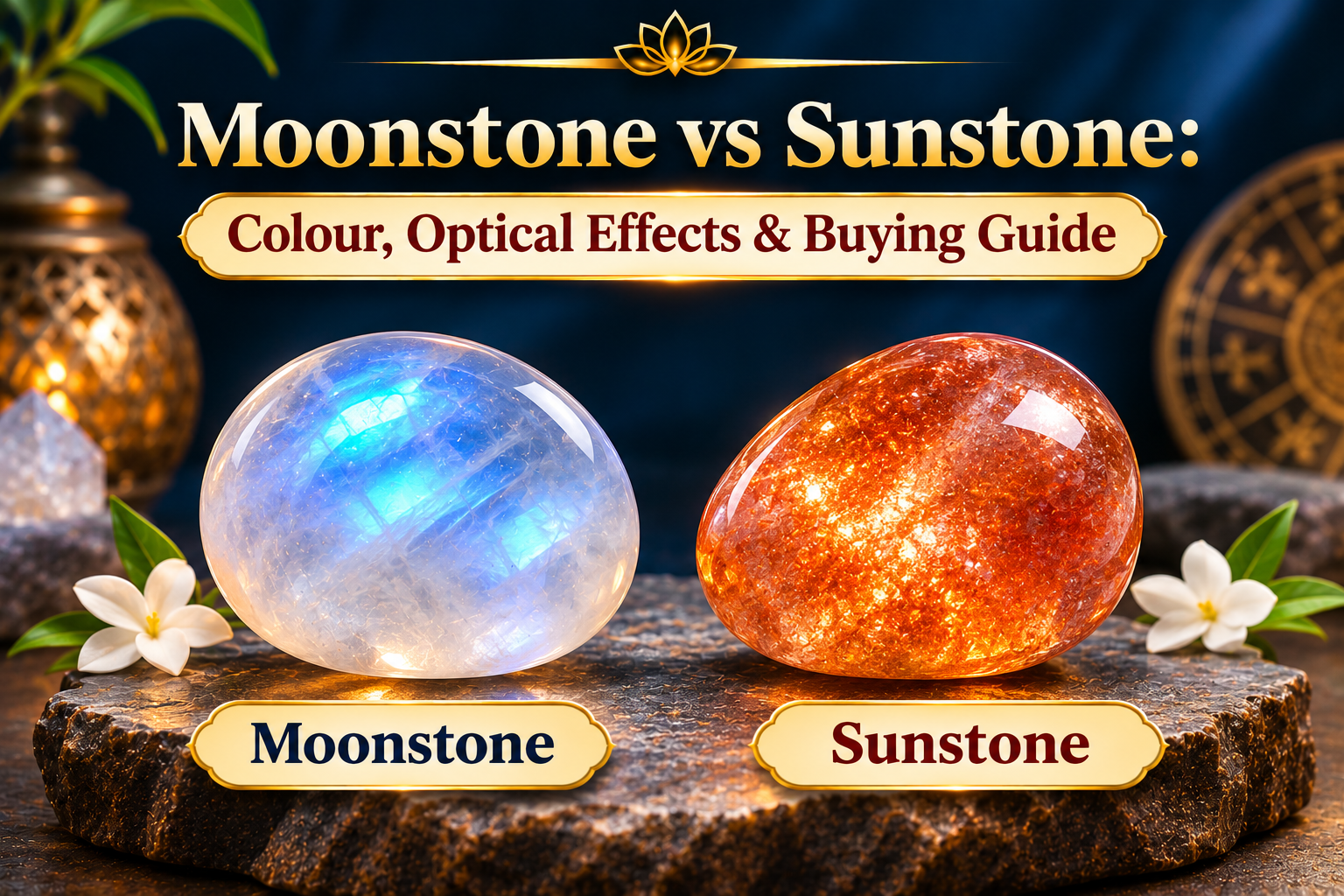
Moonstone and Sunstone are two beautiful gemstones from the feldspar mineral group. Both are admired for their attractive colours and fascinating optical effects, but their appearance is quite different.
Moonstone is known for its soft, moonlight-like glow that appears to move beneath its surface, while Sunstone is appreciated for its warm colours and sparkling, glitter-like reflections.
Whether you are a gemstone enthusiast, jewellery lover or someone exploring natural stones, understanding the differences between Moonstone and Sunstone can help you make a better buying decision.
In this guide, we will explore their colours, mineral properties, optical effects, quality factors and important buying tips.
What Is Moonstone?
Moonstone is a variety of feldspar known for its distinctive optical phenomenon called adularescence. This effect creates a soft, glowing sheen that appears to float beneath the surface of the gemstone.
The glow is produced by light scattering between microscopic layers within the feldspar structure.
Moonstone is commonly used in rings, pendants, earrings, bracelets and other jewellery designs. Its gentle appearance makes it particularly popular among people who appreciate elegant and understated gemstones.
Key Characteristics of Moonstone
- Mineral Group: Feldspar
- Common Mineral Type: Orthoclase-rich feldspar
- Chemical Composition: KAlSi₃O₈ for orthoclase
- Mohs Hardness: 6–6.5
- Transparency: Transparent to translucent
- Common Colours: White, colourless, grey, peach, green and brown
- Optical Effect: Adularescence
- Popular Cut: Cabochon
What Makes Moonstone Special?
The most attractive feature of Moonstone is its floating glow. When the gemstone is moved under light, the sheen appears to shift across its surface.
High-quality Moonstone is often valued for a strong, attractive blue sheen combined with good transparency and minimal distracting inclusions.
What Is Sunstone?
Sunstone is another member of the feldspar mineral group. It is recognised for its warm colours and, in phenomenal varieties, a sparkling optical effect called aventurescence.
This glittering appearance is caused by reflective mineral or metallic inclusions within the gemstone. In some Oregon Sunstones, for example, copper inclusions create attractive reflective effects.
Sunstone is used in rings, pendants, earrings, bracelets and artistic gemstone jewellery.
Key Characteristics of Sunstone
- Mineral Group: Feldspar
- Mineral Types: May include orthoclase or plagioclase feldspar
- Chemical Composition: Varies with the feldspar species
- Mohs Hardness: Approximately 6–7.2
- Transparency: Transparent to opaque
- Common Colours: Orange, yellow, red, green, brown and colourless
- Optical Effect: Aventurescence in phenomenal varieties
- Popular Cuts: Faceted cuts, cabochons and artistic carvings
What Makes Sunstone Special?
Sunstone is appreciated for its warm appearance and glittering inclusions. Depending on the specimen, the reflections may look golden, coppery or reddish.
Some varieties display subtle colour and shine, while others show more noticeable glitter when viewed under suitable lighting.
Moonstone vs Sunstone: Key Differences
- Difference in Colour
Colour is one of the easiest ways to distinguish Moonstone from Sunstone.
Moonstone Colours
Moonstone is commonly found in:
- White
- Colourless
- Grey
- Peach
- Green
- Brown
Some of the most desirable specimens display a beautiful blue sheen against a relatively colourless or translucent body.
Sunstone Colours
Sunstone is commonly found in:
- Orange
- Golden yellow
- Red
- Reddish-brown
- Green
- Colourless
Its warm shades give it a bright and lively appearance. Some specimens also display two or more colours within the same gemstone.
- Difference in Optical Effects
The most important difference between these gemstones is their optical phenomenon.
Adularescence in Moonstone
Adularescence is the soft, floating glow that appears to move beneath the surface of Moonstone.
It is produced by light scattering between microscopic feldspar layers. Depending on the specimen, the sheen may appear white, blue or other colours.
This effect gives Moonstone its characteristic moonlight-like appearance.
Aventurescence in Sunstone
Aventurescence is a glittering effect created by tiny reflective inclusions inside the gemstone.
These inclusions reflect light and produce sparkling flashes that may appear golden, coppery or reddish.
Unlike Moonstone’s soft glow, Sunstone’s optical effect generally looks more glittery and lively.
Easy way to remember:
- Moonstone = Soft, floating glow.
- Sunstone = Sparkling, glitter-like reflections.
- Difference in Hardness and Durability
Both gemstones have moderate hardness and require reasonable care.
- Moonstone has a Mohs hardness of approximately 6–6.5.
- Sunstone generally falls within approximately 6–7.2 on the Mohs scale.
This means both can be used in jewellery, but neither should be treated as completely scratch-resistant.
For regular jewellery use, consider protective settings, especially for rings that may experience frequent knocks or contact with hard surfaces.
- Difference in Clarity and Inclusions
Inclusions play different roles in the appearance of these gemstones.
Moonstone:
- Fine internal structures create its characteristic glow.
- Some specimens contain small internal features or tension cracks.
- High-quality stones often have an attractive sheen and good transparency.
Sunstone:
- Reflective inclusions can create glittering effects.
- Some inclusions are desirable because they contribute to aventurescence.
- The size, quantity and arrangement of reflective particles influence the overall appearance.
A gemstone with inclusions is not automatically poor quality. Their visual effect and impact on durability should be considered.
- Difference in Jewellery Designs
Both gemstones are used in different jewellery styles.
Moonstone Jewellery
Moonstone is often selected for:
- Elegant pendants
- Cabochon rings
- Delicate earrings
- Gemstone bracelets
- Minimalist jewellery designs
Its soft glow complements both traditional and contemporary styles.
Sunstone Jewellery
Sunstone is often selected for:
- Statement rings
- Colourful pendants
- Decorative gemstone bracelets
- Artistic earrings
- Unique faceted jewellery
Its warm colours and sparkling appearance make it suitable for people who prefer more vibrant gemstone designs.
Moonstone vs Sunstone: Which Is Better?
There is no single winner because both gemstones have different visual qualities.
Choose Moonstone if:
- You prefer a soft, elegant glow.
- You like white, grey or peach-coloured gemstones.
- You appreciate the floating blue sheen.
- You prefer subtle and sophisticated jewellery.
Choose Sunstone if:
- You enjoy warm, vibrant colours.
- You like sparkling and glittering effects.
- You prefer orange, golden or reddish gemstones.
- You want a gemstone with a lively appearance.
Your choice should depend on personal preference, jewellery design and the quality of the individual stone.
Buying Guide: How to Choose a Good-Quality Moonstone
Before purchasing Moonstone, consider these important factors.
- Check the Adularescence
Look for a visible, attractive glow that moves across the gemstone when viewed from different angles. - Examine the Colour
Choose a body colour and sheen that appeal to you. Blue sheen is particularly sought after in fine Moonstone. - Check Transparency
Good transparency can enhance the appearance of the floating glow. However, some natural inclusions are common. - Examine the Cut
Cabochon cutting is widely used because it helps display Moonstone’s optical effect. - Ask About Treatments
Ask the seller whether the gemstone has undergone any treatment or enhancement. Request a gem identification report for valuable purchases.
Buying Guide: How to Choose a Good-Quality Sunstone
When buying Sunstone, pay attention to the following factors.
- Evaluate the Colour
Look for attractive and well-distributed colour. Deep red, deep green and intense bicolour specimens are particularly valued in some markets. - Observe the Aventurescence
If you are buying phenomenal Sunstone, examine the glittering reflections under suitable lighting. - Check the Inclusions
Reflective inclusions may enhance the stone’s beauty, but excessive fractures or inclusions that affect durability should be considered carefully. - Examine the Cut
A good cut should highlight the gemstone’s colour and reflective features. - Verify Authenticity and Treatments
Ask for accurate information about the mineral identity, origin where known and any treatments. Professional gem testing can help identify the material and detectable enhancements.
How to Identify Natural Moonstone and Sunstone
Visual appearance can provide useful clues, but it cannot independently confirm whether a gemstone is natural.
Here are some practical buying precautions:
- Ask for the exact gemstone name and mineral identity.
- Observe the optical effect under different lighting conditions.
- Check the surface for scratches, chips and visible damage.
- Ask whether the gemstone has been treated or enhanced.
- Request an independent gemological report for valuable stones.
Be careful with imitations. For example, goldstone is a manufactured glass material containing glittering metallic particles and is sometimes confused with Sunstone.
How to Clean and Care for Moonstone and Sunstone?
Both gemstones need gentle care because of their moderate hardness and potential vulnerability to impacts.
Follow these simple tips:
- Clean with a soft cloth and mild soapy water when suitable.
- Avoid harsh chemicals and abrasive cleaning products.
- Do not use ultrasonic or steam cleaners unless a qualified jeweller confirms they are safe for the specific stone.
- Remove gemstone jewellery before heavy physical activities.
- Store Moonstone and Sunstone separately from harder gemstones.
- Protect them from sudden impacts and extreme temperature changes.
Proper care helps maintain their natural beauty and polished appearance.
Traditional Significance of Moonstone and Sunstone
Apart from their physical beauty, both gemstones have symbolic associations in different cultural and spiritual traditions.
Moonstone: Traditional Associations
Moonstone is traditionally associated with the Moon and is often symbolically connected with:
- Calmness and emotional balance
- Intuition and reflection
- Femininity and nurturing symbolism
- New beginnings
- Inner harmony
In Vedic astrological traditions, Moonstone is sometimes considered a substitute or alternative associated with the Moon, although gemstone recommendations depend on individual astrological guidance.
Sunstone: Traditional Associations
Sunstone is often symbolically associated with sunlight and is traditionally connected with:
- Positivity and enthusiasm
- Confidence and motivation
- Personal expression
- Vitality and warmth
- Optimism
These associations come from cultural and metaphysical traditions and are not scientifically proven effects.
Conclusion
Moonstone and Sunstone are two fascinating feldspar gemstones with different colours, appearances and optical effects.
Moonstone is admired for its soft, floating adularescence, while Sunstone attracts attention with its warm colours and sparkling aventurescence. Both offer unique beauty and can be excellent choices for gemstone jewellery.
When buying either gemstone, pay attention to its colour, optical effect, clarity, cut, treatments and verified identity.
Whether you prefer the gentle glow of Moonstone or the vibrant sparkle of Sunstone, choosing a well-identified gemstone will help you appreciate its natural beauty.