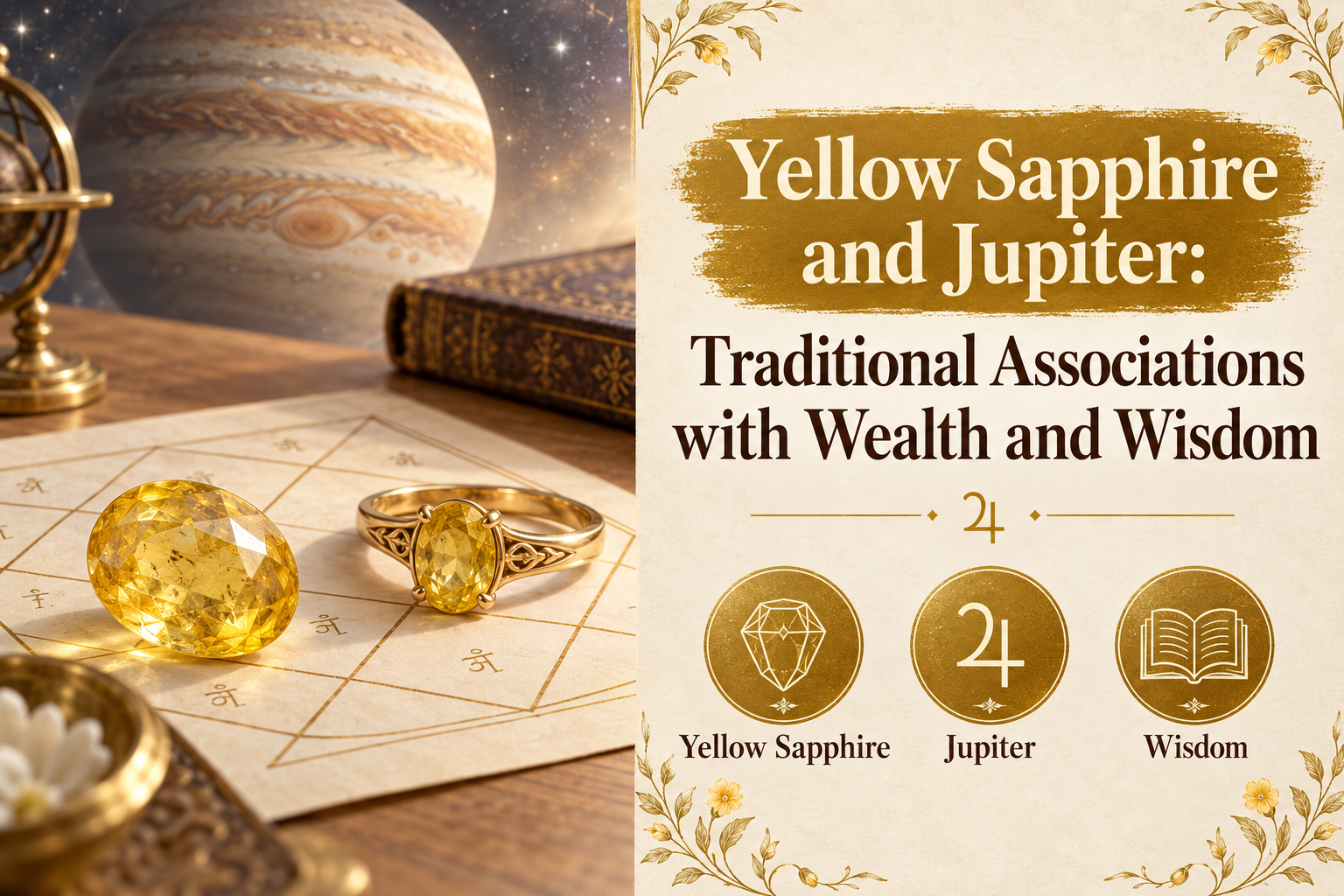
Yellow Sapphire, traditionally known as Pukhraj, is one of the most valued gemstones in Vedic astrology. Its beautiful golden-yellow colour and association with Jupiter (Guru or Brihaspati) make it especially significant in traditional astrological practices.
In Vedic astrology, Jupiter is regarded as the planet of wisdom, knowledge, prosperity, spirituality, good fortune and guidance. Yellow Sapphire is traditionally associated with these qualities and is often considered when examining Jupiter’s influence in an individual’s birth chart.
But why is Yellow Sapphire connected with wealth and wisdom? What does Jupiter represent in Vedic astrology, and who should consider wearing Pukhraj? Let’s explore.
- What Is Yellow Sapphire (Pukhraj)?
Yellow Sapphire is a precious variety of Corundum, known for its yellow colour and durability. Its colour can range from pale yellow to rich golden yellow, depending on its natural characteristics.
In Vedic astrology, Yellow Sapphire is associated with Jupiter, also known as Guru or Brihaspati. It is traditionally recommended in certain horoscopes where astrologers consider Jupiter suitable for strengthening.
Yellow Sapphire is popular for:
- Traditional astrological jewellery
- Engagement and statement rings
- Precious gemstone collections
- Vedic astrology-related gemstone recommendations
- Why Is Yellow Sapphire Associated with Jupiter?
Jupiter is known as Guru Graha or Brihaspati in Vedic astrology. It symbolises knowledge, higher learning, morality, spiritual development, generosity and expansion.
Because Yellow Sapphire is traditionally associated with Jupiter, it is believed in astrological traditions to represent some of the planet’s positive qualities.
The traditional associations include:
- Wisdom: Knowledge, understanding and sound judgement.
- Education: Higher studies, learning and teaching.
- Wealth: Prosperity, financial growth and abundance.
- Good Fortune: Opportunities and favourable circumstances.
- Spirituality: Faith, religious knowledge and personal development.
- Guidance: Mentorship, ethics and responsible decision-making.
These are traditional astrological interpretations, not scientifically proven effects of wearing a gemstone.
- Yellow Sapphire and Wealth: Traditional Vedic Astrology Beliefs
Jupiter is traditionally considered a significant planet for prosperity and abundance. In Vedic astrology, its placement and strength are examined when interpreting financial opportunities, resources and material stability.
Yellow Sapphire is therefore traditionally associated with:
Prosperity and Abundance
Pukhraj is symbolically connected with Jupiter’s expansive qualities and is traditionally linked with prosperity and abundance.
Business and Professional Growth
Jupiter represents knowledge, judgement and guidance. Its traditional symbolism is connected with thoughtful decisions, professional development and ethical business practices.
Financial Wisdom
Jupiter is associated with learning and good judgement. In traditional interpretations, these qualities are linked with responsible financial decisions and long-term planning.
Important: Yellow Sapphire does not guarantee wealth, business success or financial gains. Practical planning, informed decisions and individual circumstances remain essential.
- Yellow Sapphire and Wisdom: The Significance of Guru Graha
Jupiter is traditionally regarded as the planet of wisdom and higher knowledge. It represents the ability to learn, understand principles and develop a broader perspective.
Yellow Sapphire‘s association with Jupiter makes it a symbolic gemstone for:
- Knowledge and education
- Teaching and mentorship
- Spiritual understanding
- Ethical values and discipline
- Confidence in decision-making
- Personal growth and learning
In traditional astrology, Jupiter is also associated with teachers, guides, mentors and spiritual advisors.
- Who Should Wear Yellow Sapphire According to Vedic Astrology?
Yellow Sapphire is not automatically suitable for everyone. Its recommendation depends on the complete birth chart.
Before suggesting Pukhraj, an astrologer may examine:
- Ascendant (Lagna): To understand Jupiter’s functional role in the horoscope.
- Jupiter’s placement: Its house, sign and planetary relationships.
- Jupiter’s strength: Its condition and influence in the birth chart.
- Planetary periods: Current and upcoming Mahadasha and Antardasha.
- Overall horoscope: The relationship between Jupiter and other planetary combinations.
Some ascendants may traditionally be considered more suitable for Jupiter-related gemstones than others. However, a general zodiac-sign list cannot replace personalised horoscope analysis.
- How to Choose a Quality Yellow Sapphire
If an astrologer recommends Pukhraj, gemstone quality and authenticity should also be considered before purchasing.
Keep these points in mind:
- Natural identity: Confirm that the stone is genuine Yellow Sapphire (Corundum).
- Colour: Examine its yellow shade, brightness and overall appearance.
- Clarity: Check visible inclusions and transparency.
- Treatment: Ask whether the gemstone has undergone heat treatment or other enhancement.
- Laboratory report: Request a suitable gemological report confirming its identity and relevant treatment observations.
- Trusted seller: Purchase from a seller who provides transparent product details.
Natural gemstones can contain inclusions, and a higher price alone does not establish authenticity or astrological suitability.
- Traditional Method of Wearing Yellow Sapphire
Wearing practices may vary across Vedic astrology traditions. If Pukhraj is recommended after consultation, follow the specific instructions provided by your astrologer.
Some commonly followed traditions include:
- Day: Thursday (Guruvar)
- Planet: Jupiter (Guru)
- Mantra: ॐ बृं बृहस्पतये नमः
- Metal: Gold is traditionally preferred in many practices.
- Finger: The index finger is commonly suggested.
The gemstone weight, metal and wearing ritual should be decided according to the relevant astrological tradition and individual recommendation. These rituals are customary beliefs rather than scientifically established requirements.
- Yellow Sapphire vs. Other Yellow Gemstones
Not every yellow-coloured gemstone is Yellow Sapphire. Different stones have different mineral compositions and traditional associations.
Conclusion
Yellow Sapphire (Pukhraj) holds an important place in Vedic astrology because of its traditional association with Jupiter, the planet of wisdom, knowledge, prosperity and spiritual growth.
Whether you are interested in Pukhraj for its astrological significance or its natural beauty, understanding its identity and quality is important. If you are considering wearing it for astrological reasons, consult an experienced astrologer and examine your birth chart before making a decision.