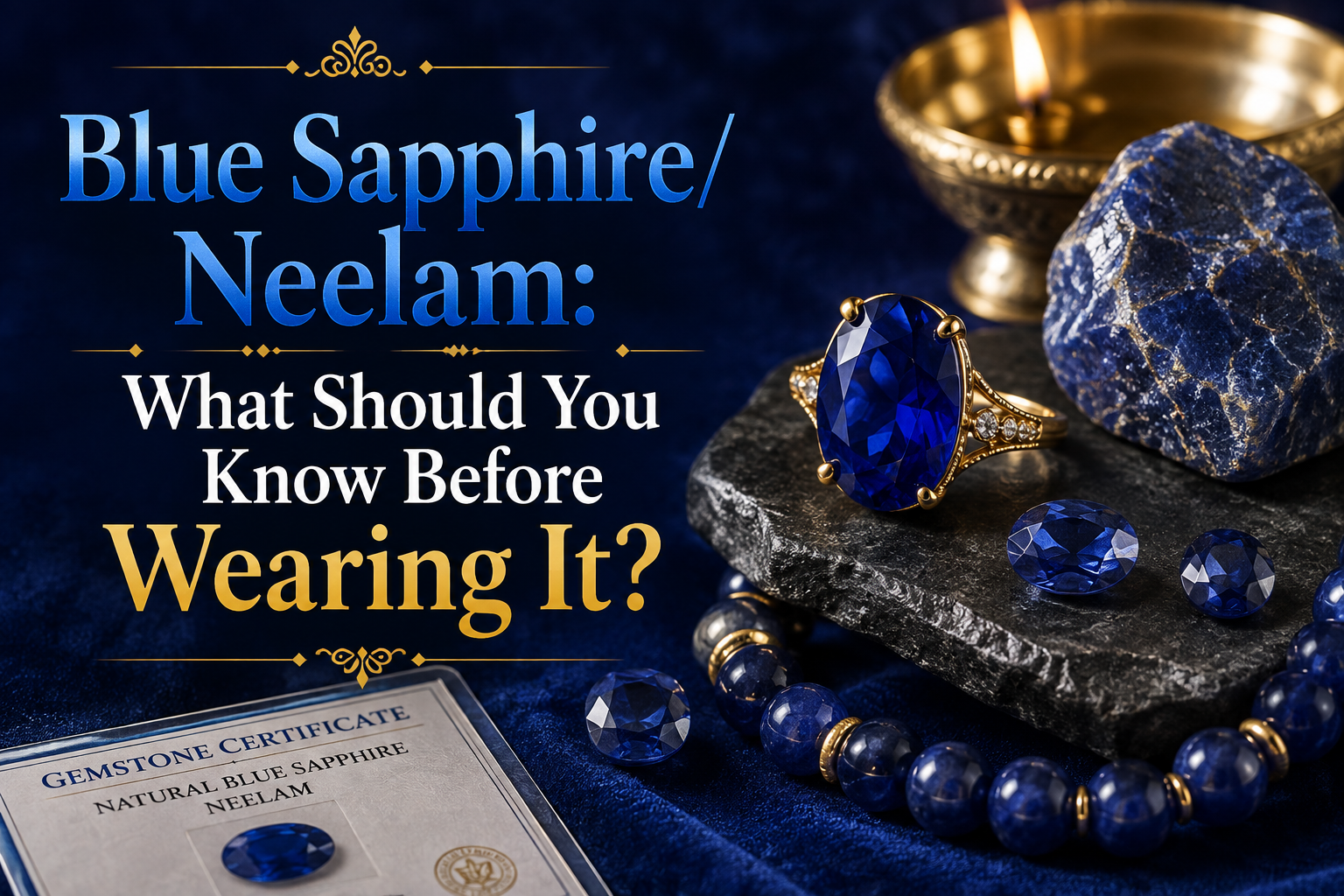
Blue Sapphire, known as Neelam in Vedic astrology, is one of the most famous and highly regarded gemstones in the world. Its deep blue colour, rarity, durability, and strong association with Shani (Saturn) have made it especially significant in Indian gemstone traditions.
At the same time, Neelam is often described as a powerful astrological gemstone, which is why people are frequently advised to be careful before wearing it.
So, should you wear Blue Sapphire? How do you choose one? What should you check before buying? And is the belief that Neelam can bring sudden changes actually true?
Let’s explore.
Note: Astrological effects and traditional gemstone beliefs discussed here are based on Vedic astrology traditions and are not scientifically proven.
What Is Blue Sapphire?
Blue Sapphire is the blue variety of corundum, the same mineral family that includes Ruby.
Its blue colour is primarily associated with trace elements such as iron and titanium.
Blue Sapphire is famous for:
- Deep blue colour
- Excellent durability
- High brilliance when well cut
- Rarity in fine quality
- Strong historical significance
With a Mohs hardness of 9, Sapphire is one of the hardest natural gemstones after Diamond.
Why Is Neelam Associated With Saturn?
In Vedic astrology, Blue Sapphire is traditionally associated with:
Shani (Saturn)
Saturn is traditionally connected with:
- Discipline
- Responsibility
- Hard work
- Patience
- Structure
- Karma
- Delayed rewards
- Persistence
Because Saturn is considered an influential planet in Vedic astrology, Neelam is traditionally regarded as a significant gemstone.
Why Is Neelam Considered a Powerful Gemstone?
You may have heard people say:
“Don’t wear Neelam without checking your Kundli.”
This advice comes from traditional Vedic astrology. The belief is that strengthening Saturn can have a strong influence when Saturn is favourable in someone’s birth chart—but may not be appropriate when Saturn is considered unsuitable to strengthen.
Therefore, traditional astrology recommends personalised evaluation rather than blindly wearing Blue Sapphire.
What Does Neelam Symbolise?
In traditional astrology, Blue Sapphire is associated with qualities such as:
- Discipline: Encouraging patience and responsibility.
- Focus: Associated with concentration and persistence.
- Career: Traditionally linked with professional responsibility and long-term achievement.
- Justice: Saturn is traditionally associated with fairness, accountability, and karma.
- Patience: Saturn represents slow and steady progress.
These are traditional associations, not scientifically established effects.
How to Choose a Good Blue Sapphire?
If you’re buying Neelam, don’t focus only on the colour.
Consider these factors.
- Colour
A desirable Blue Sapphire generally has an attractive blue colour with good saturation.
It can range from:
- Light blue
- Medium blue
- Deep blue
The ideal choice depends on the stone’s overall appearance.
An extremely dark stone isn’t automatically better.
- Clarity
Blue Sapphires commonly contain inclusions.
Natural Sapphire can show:
- Needles
- Clouds
- Mineral inclusions
- Colour zoning
- Growth features
A completely inclusion-free natural Sapphire can be unusual, particularly in larger sizes.
However, excessive inclusions can reduce transparency and beauty.
- Treatment
This is one of the most important things to ask about. Many Blue Sapphires available in the market are heat-treated.
Heat treatment can improve:
- Colour
- Clarity
- Overall appearance
A heat-treated natural Sapphire is still natural, but the treatment should be disclosed because it affects value.
Ask: “Is this Sapphire heated or unheated?”
For expensive stones, a laboratory report is strongly recommended.
- Origin
Blue Sapphire can come from several regions, including:
- Sri Lanka
- Kashmir
- Madagascar
- Myanmar
- Thailand
- Australia
Kashmir Sapphire has a legendary reputation, particularly for its velvety blue appearance, but exceptional stones from other origins can also be highly valuable.
Don’t buy solely because a seller says:
“This is from Kashmir.”
Independent laboratory evidence is important for origin claims.
- Kashmir Blue Sapphire
Kashmir Blue Sapphire is among the most famous varieties in the gemstone world.
Its historic reputation comes from its distinctive:
Velvety blue appearance
Fine Kashmir Sapphires are exceptionally rare and highly collectible. However, genuine Kashmir-origin material should be supported by appropriate gemological evidence.
Sri Lankan Blue Sapphire
Sri Lanka, historically known as Ceylon, is an important source of Sapphire.
Ceylon Blue Sapphires can display:
- Bright blue colours
- Good transparency
- Attractive brilliance
They are widely represented in the gemstone market.
- Don’t Confuse Blue Sapphire With Other Blue Stones
Several stones can resemble Blue Sapphire.
For example:
- Blue Spinel
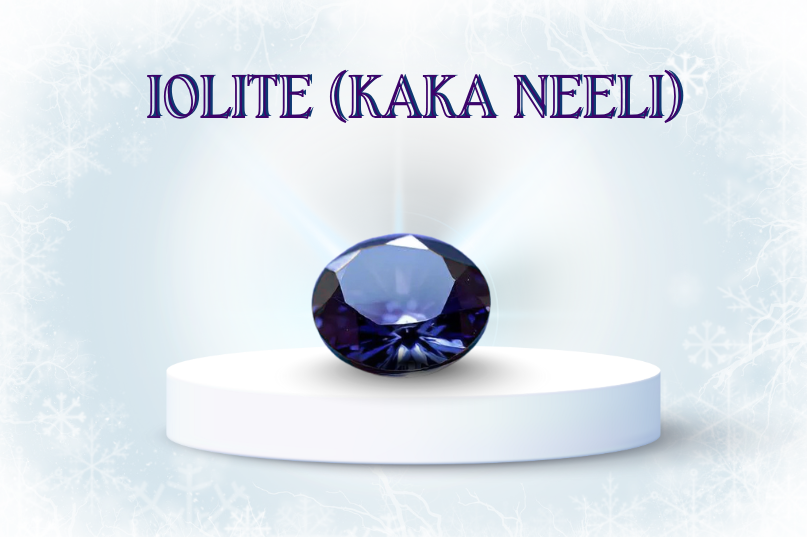
- Iolite
- Tanzanite
- Blue Topaz
- Synthetic materials
- Glass
Their properties and values can be very different. If you’re purchasing Neelam for a significant amount, proper identification matters.
- Always Ask for Certification
For a valuable Blue Sapphire, consider getting an independent laboratory report confirming information such as:
- Natural or synthetic origin
- Gemstone identity
- Detectable treatments
- Geographic origin, where reliably determinable
A certificate doesn’t automatically make a stone high quality, but it can provide important information about what you’re buying.
How Is Neelam Traditionally Worn?
Traditional Vedic astrology practices often recommend specific instructions regarding:
- Metal
- Finger
- Day
- Time
- Mantra
- Weight
- Wearing procedure
These recommendations vary between astrological traditions. If Neelam is being worn as an astrological gemstone, follow a personalised recommendation rather than a generic social-media rule.
Which Finger Is Traditionally Used for Neelam?
In many Vedic astrology traditions, Blue Sapphire is commonly worn on the:
Middle finger
because the middle finger is traditionally associated with Saturn. However, practices vary, and the correct wearing method should be based on the astrologer’s recommendation.
Which Metal Is Used for Blue Sapphire?
Traditional recommendations commonly include:
- Silver
- White gold
- Platinum
Some astrologers may recommend different metals depending on the chart and tradition. Therefore, don’t assume that one metal is universally correct.
Mantra Traditionally Associated With Saturn
A commonly recited Saturn mantra is:
“Om Sham Shanicharaya Namah”
People may chant it as part of traditional Shani practices. If you’re following a specific astrological remedy, follow the procedure recommended by your astrologer.
How Much Does Blue Sapphire Cost?
There is no single price for Neelam.
Prices vary depending on:
- Carat weight
- Colour
- Clarity
- Cut
- Treatment
- Origin
- Certification
- Overall quality
Fine natural Blue Sapphire can range from relatively affordable to extremely expensive. Don’t judge quality by price alone.
Can You Wear Neelam With Other Gemstones?
This depends on why you’re wearing the stones. If they’re simply jewellery or fashion pieces, there is generally no issue with combining different stones. However, if you’re wearing multiple gemstones as planetary remedies, traditional astrology considers planetary relationships and compatibility.
For example, don’t combine multiple powerful planetary gemstones simply because someone online recommends the combination. Check your Kundli first.
How to Care for Blue Sapphire?
Blue Sapphire is highly durable, but good care is still important.
Recommended:
- Clean gently
- Store separately
- Avoid harsh chemicals
- Protect against strong impacts
- Have jewellery settings checked periodically
Because Sapphire is hard, it can scratch softer gemstones if stored together.
Who Traditionally Benefits From Neelam?
According to Vedic astrology traditions, Neelam may be recommended when Saturn is considered a favourable planet to strengthen in the individual’s chart.
This is particularly relevant in certain traditional astrological contexts involving:
- Saturn’s rulership
- Saturn’s placement
- Saturn Mahadasha
- Saturn-related planetary periods
- Career and discipline themes
But this cannot be reduced to one universal rule. Your Kundli matters more than a generic list.
Conclusion:
Blue Sapphire/Neelam is a remarkable gemstone with both gemological and cultural significance. Its deep blue colour, excellent hardness, rarity, and connection with Shani (Saturn) have made it one of the most respected gemstones in Indian astrology. But its reputation as a “powerful” gemstone shouldn’t create unnecessary fear.
The sensible approach is simple:
- Buy an authentic stone.
- Verify its quality and treatment.
- Ask for certification.
- Check your Kundli if wearing it astrologically.
- Choose quality over exaggerated claims.
Neelam should be chosen with knowledge—not fear.