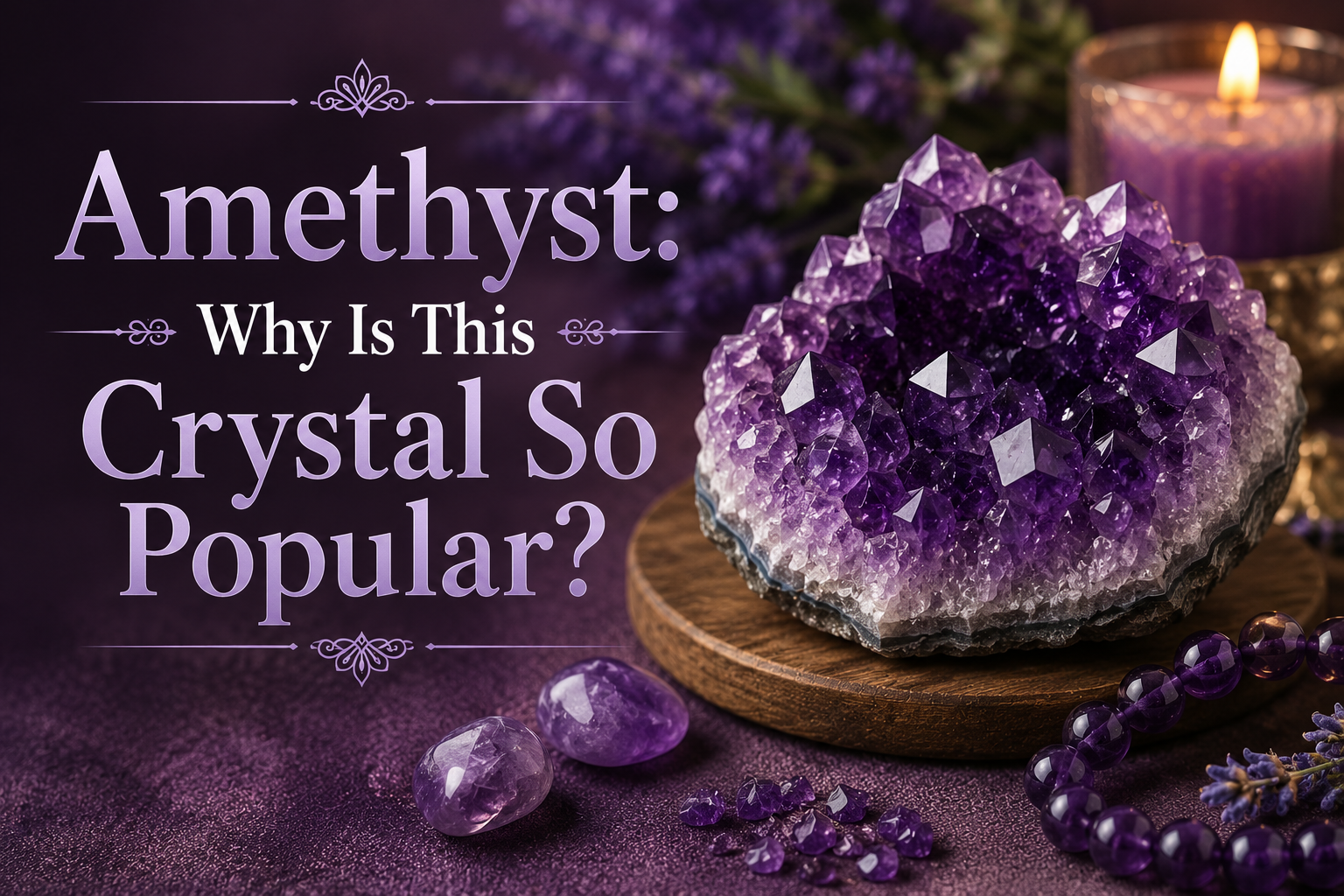
Amethyst has become one of the most popular crystals among people interested in crystals, meditation, spirituality, home décor, and mindful living. With its beautiful purple colour and long history of cultural significance, Amethyst is valued not only for its appearance but also for the traditional meanings associated with it.
From Amethyst bracelets and pendants to clusters, geodes, towers, and home décor, this crystal has found a place in both traditional and modern spiritual practices.
But what makes Amethyst so popular? Let’s explore its beauty, symbolism, uses, and how to choose one.
Note: Crystal properties mentioned in this article are based on traditional and popular crystal-belief systems. There is no established scientific evidence that Amethyst provides healing or metaphysical effects.
What Is Amethyst?
Amethyst is a purple variety of quartz. Its colour can range from very pale lavender to deep purple, depending largely on trace elements and natural irradiation.
It belongs to the quartz family, alongside varieties such as:
- Clear Quartz
- Rose Quartz
- Smoky Quartz
- Citrine
Amethyst is found in several locations around the world and is commonly available as:
- Tumbled stones
- Crystal points
- Clusters
- Geodes
- Bracelets
- Pendants
- Decorative pieces
Its distinctive purple appearance is one of the biggest reasons for its popularity.
Why Is Amethyst So Popular?
- Its Beautiful Purple Colour
The first thing people notice about Amethyst is its colour.
Its shades can range from:
Soft lavender → Violet → Deep royal purple
The colour makes Amethyst particularly attractive for jewellery and decorative crystals. A natural Amethyst cluster can also become an eye-catching addition to a home, office, meditation room, or spiritual space.
- Traditionally Associated With Calmness
Amethyst is widely associated with calmness, relaxation, and peaceful energy in modern crystal traditions.
People often keep Amethyst near:
- Meditation spaces
- Bedrooms
- Yoga areas
- Work desks
- Personal spiritual spaces
For many users, simply having a beautiful crystal nearby can serve as a reminder to slow down and take a mindful break.
- Popular in Meditation and Spiritual Practices
Amethyst has become particularly popular among people interested in:
- Meditation
- Yoga
- Mindfulness
- Chakra practices
- Spiritual reflection
- Energy work
In many modern spiritual traditions, Amethyst is associated with the Crown Chakra and sometimes the Third Eye Chakra.
These associations are spiritual traditions rather than scientifically established effects.
- Its Connection With Intuition
Amethyst is often described in crystal traditions as a stone of intuition and spiritual awareness.
People may use it during meditation while focusing on:
- Inner reflection
- Awareness
- Intuition
- Spiritual growth
- Personal clarity
Rather than treating the crystal as something that provides guaranteed answers, it can be used as a symbolic tool for quiet reflection.
- A Popular Bedroom Crystal
Amethyst is frequently placed in bedrooms because of its traditional association with peace and relaxation.
Common placements include:
- Bedside table
- Shelf
- Meditation corner
- Study table
- Decorative bowl
If you’re sensitive to dust or allergies, remember that crystal clusters can collect dust, so regular gentle cleaning is useful.
- Popular Among Beginners
Amethyst is often recommended as a beginner-friendly crystal because it is:
- Easy to recognise
- Visually attractive
- Widely available
- Available in many forms
- Suitable for jewellery and décor
- Associated with several popular spiritual practices
Someone starting a crystal collection may naturally choose Amethyst as one of their first crystals.
- Amethyst Looks Beautiful as Home Décor
Amethyst isn’t only used for jewellery.
Large Amethyst clusters and geodes are popular decorative pieces.
A large Amethyst specimen can become a striking focal point in:
- Living rooms
- Offices
- Meditation spaces
- Reception areas
- Study rooms
- Bedrooms
Its natural patterns make every piece visually different.
- Amethyst and the Crown Chakra
In modern chakra-based practices, Amethyst is commonly associated with the Crown Chakra, located at the top of the head.
It is traditionally linked with themes such as:
- Spiritual awareness
- Meditation
- Higher consciousness
- Inner reflection
- Connection
Some practitioners also associate Amethyst with the Third Eye Chakra because of its traditional connection with intuition.
These are spiritual frameworks rather than medical or scientific claims.
- Amethyst Has a Long Cultural History
Amethyst isn’t a new-age invention. Purple gemstones have been admired for centuries, and Amethyst has appeared in jewellery and cultural traditions across different periods and regions.
Historically, its purple colour was particularly valued because purple pigments and materials were often associated with royalty, status, and prestige.
Amethyst Bracelet: Why Is It So Popular?
An Amethyst bracelet is one of the easiest ways to incorporate the crystal into daily life.
It combines:
Jewellery + Crystal Symbolism + Personal Intention
People may wear it as a reminder to:
- Stay calm
- Practise mindfulness
- Take breaks
- Focus on personal growth
- Maintain a positive mindset
Its purple colour also makes it easy to pair with everyday outfits.
Should You Keep Amethyst Near Your Bed?
Many crystal enthusiasts like keeping Amethyst beside their bed because of its traditional association with calmness and relaxation.
You can place it on:
- Bedside table
- Shelf
- Small decorative plate
However, claims that Amethyst can cure insomnia or guarantee better sleep are not scientifically established. If you experience persistent sleep problems, consider evidence-based sleep practices and professional medical guidance.
How to Choose a Good Amethyst?
When purchasing Amethyst, look beyond colour alone.
- Colour: Deep, attractive purple is often desirable, although lighter lavender Amethyst can also be beautiful.
- Transparency: Some specimens are relatively transparent, while clusters and geodes can contain areas of varying transparency.
- Crystal Formation: For clusters, look at the shape, size, and formation of individual crystal points.
- Natural Appearance: Ask whether the piece is natural and whether it has undergone any treatments.
Purpose: Choose based on how you plan to use it:
- Jewellery → polished beads or cabochons
- Meditation → palm stones or points
- Home décor → clusters or geodes
- Desk → small tower or cluster
How to Care for Amethyst?
Amethyst is relatively durable, but it still deserves proper care.
- Keep it away from harsh chemicals.
- Avoid prolonged exposure to strong sunlight.
- Clean gently with a soft cloth.
- Store jewellery separately to prevent scratches.
- Avoid sudden temperature changes.
Why Avoid Strong Sunlight?
Long-term exposure to intense sunlight can potentially cause some Amethyst specimens to fade or change colour. So if you want to preserve its rich purple appearance, avoid leaving it in direct sunlight for extended periods.
How to Clean Amethyst?
There are many spiritual methods for “cleansing” crystals, including:
- Moonlight
- Sound
- Smoke cleansing
- Meditation
- Intention setting
These are spiritual practices rather than scientifically established methods for removing negative energy.
For physical cleaning, use a soft cloth and, when appropriate, gentle water cleaning followed by thorough drying. Always consider the specific form of the crystal—especially if it is part of jewellery or mounted décor.
Amethyst and Other Crystals
Amethyst is also frequently combined with other popular crystals.
- Amethyst + Clear Quartz: Often used symbolically for clarity and spiritual awareness.
- Amethyst + Rose Quartz: Popular for themes of peace, love, and emotional harmony.
- Amethyst + Citrine: Often chosen for a combination of positivity, abundance, and spiritual balance.
- Amethyst + Black Tourmaline: Popular in crystal collections focused on grounding and protection symbolism.
These combinations are based on modern crystal traditions and should be viewed as symbolic rather than scientifically proven effects.
Amethyst in Vedic Astrology
Amethyst is sometimes discussed in astrology and gemstone traditions, but it is important not to confuse crystal traditions with classical planetary gemstones. In Vedic astrology, the primary gemstone traditionally associated with Saturn (Shani) is Blue Sapphire (Neelam).
Amethyst is sometimes considered an alternative or substitute in certain modern practices, but this should not be treated as a universal rule. If you want an astrological gemstone, it is better to analyse your Kundli before choosing one.
Who May Enjoy Amethyst?
Amethyst can be an appealing choice for people who enjoy:
- Meditation
- Yoga
- Mindfulness
- Spiritual décor
- Crystal collecting
- Purple gemstones
- Meaningful jewellery
- Personal intention-setting
You don’t have to believe in crystal healing to appreciate Amethyst. Its natural beauty, geological character, and cultural history are reasons enough to enjoy it.
Amethyst Is Not a Medical Treatment
You may see claims online that Amethyst can treat:
- Anxiety
- Insomnia
- Headaches
- Hormonal problems
- Blood pressure
- Other diseases
These claims are not scientifically established. Amethyst can be enjoyed as jewellery, décor, or a spiritual symbol, but it should not replace appropriate medical care or prescribed treatment.
Why Amethyst Remains So Popular?
So, what makes Amethyst such a favourite?
- Beautiful colour
- Popular in meditation
- Strong spiritual symbolism
- Attractive home décor
- Easy to wear
- Associated with calmness
- Popular among beginners
- Long cultural history
Perhaps its greatest appeal is its versatility.
- You can wear it.
- You can meditate with it.
- You can decorate your space with it.
- You can collect it.
- Or simply admire its natural beauty.
Conclusion:
Amethyst is popular because it brings together beauty, symbolism, history, and modern spiritual interest. Its distinctive purple colour makes it an attractive gemstone, while its traditional associations with calmness, intuition, meditation, and spiritual awareness have made it a favourite among crystal enthusiasts.
Whether you choose an Amethyst Bracelet, Amethyst Cluster, Amethyst Tower, or Amethyst Geode, let it be a meaningful addition to your personal space or daily routine.
- Admire its beauty.
- Use it as a mindfulness reminder.
- Explore its traditional symbolism.
- And enjoy it for what it is—a beautiful natural crystal.