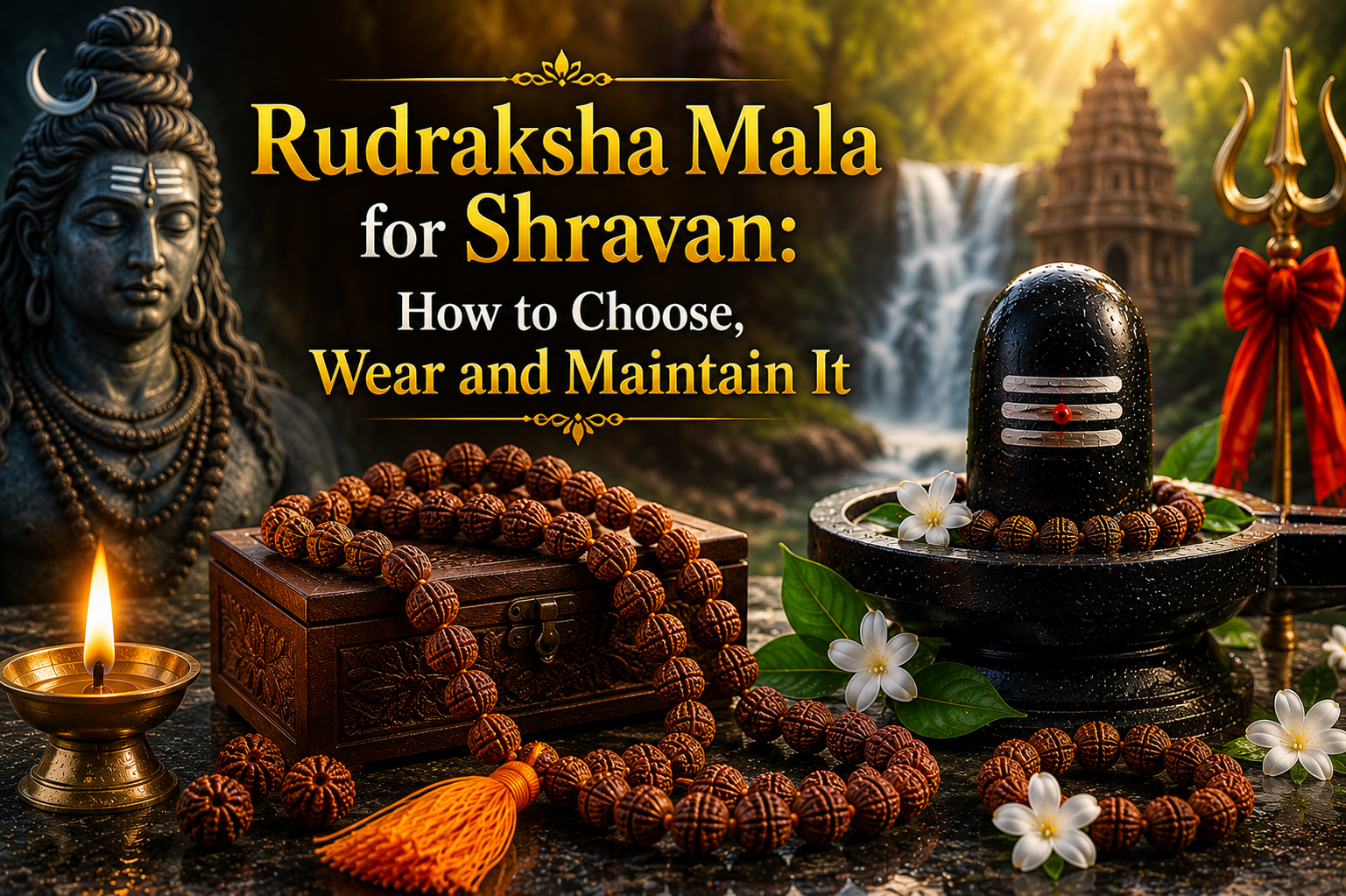
Shravan, also known as Sawan, is one of the most spiritually significant months for devotees of Lord Shiva. Across India, devotees observe Sawan Somwar, perform Shiva Puja and Jalabhishek, chant mantras, visit temples, and dedicate more time to prayer and meditation.
For Rudraksha devotees, Shravan can feel especially meaningful because Rudraksha has a strong traditional association with Lord Shiva. Wearing Rudraksha or using it for Japa during this month can become a way to deepen one’s connection with Shiva and maintain a more disciplined spiritual routine.
But what exactly makes Shravan special for Rudraksha devotees?
Why Is Shravan Associated With Lord Shiva?
Shravan is traditionally regarded as an auspicious month for Shiva worship. Devotees often dedicate the month to:
- Lord Shiva worship
- Jalabhishek
- Rudraksha Japa
- Shiva Mantra chanting
- Meditation
- Sawan Somwar Vrat
- Spiritual discipline
The month encourages devotees to spend more time in prayer and reflection. For someone who already follows a Rudraksha practice, this creates a natural opportunity to strengthen an existing spiritual routine.
What Is the Connection Between Rudraksha and Shiva?
Rudraksha has a long-standing place in Shaiva traditions.
The name is traditionally understood as:
- Rudra → Lord Shiva
- Aksha → Eye
Rudraksha is therefore popularly associated with the tears or eyes of Rudra, although traditional explanations and narratives vary between sources and lineages.
Because of this connection, Rudraksha is commonly used by Shiva devotees for:
- Meditation
- Japa
- Prayer
- Puja
- Spiritual practice
Why Do Rudraksha Devotees Pay Special Attention to Shravan?
- A Month Dedicated to Shiva Worship
For devotees, Shravan provides an extended period to focus on Shiva rather than limiting worship to individual festivals.
This makes it a natural time to:
Start → Strengthen → Continue
a Rudraksha-based spiritual routine.
- An Opportunity for More Mantra Japa
Rudraksha Malas are traditionally used for mantra repetition.
During Shravan, devotees may use a Rudraksha Mala to chant:
ॐ नमः शिवाय
Om Namah Shivaya
Moving through the beads slowly can help establish a rhythm for Japa.
The practice can be as simple as: Bead → Mantra → Breath → Awareness
- Rudraksha and Sawan Jalabhishek
Jalabhishek is one of the most familiar forms of Shiva worship during Sawan. Devotees offer water to the Shivling while chanting Shiva mantras.
Rudraksha can be included in the Puja by:
- Keeping it near the Shivling
- Placing it on a clean Puja cloth
- Using it for Japa
- Wearing it after completing Puja
Because Rudraksha is a natural seed, repeated or prolonged soaking should generally be avoided if you want to preserve the bead.
- Sawan Somwar and Rudraksha Practice
Mondays are traditionally associated with Lord Shiva, making Sawan Somwar particularly important for devotees.
A simple Sawan Somwar routine can include:
- Morning: Bath and clean clothes
- Puja: Jalabhishek and traditional offerings
- Japa: Om Namah Shivaya with Rudraksha Mala
- Meditation: 5–10 minutes of quiet reflection
- Prayer: Personal Sankalp and gratitude
This creates a simple connection between Rudraksha and Shiva worship.
- Shravan Encourages Spiritual Discipline
One of the most meaningful aspects of Shravan is its emphasis on discipline.
Devotees may choose to:
- Observe fasting
- Avoid certain foods
- Reduce distractions
- Wake up earlier
- Visit temples
- Increase mantra Japa
- Spend more time in prayer
Rudraksha can serve as a physical reminder of these intentions.
Whenever you see or touch your Rudraksha, you can remind yourself:
“Stay focused on your spiritual practice.”
- Rudraksha Can Become a Mindfulness Reminder
Modern life is full of distractions. Shravan offers an opportunity to slow down.
A Rudraksha bracelet or Mala can serve as a simple mindfulness cue:
Touch the bead → Take a breath → Remember Shiva → Return to the present.
This doesn’t require a long meditation session. Even a few conscious moments throughout the day can help make spiritual practice more consistent.
- Shravan Can Be a Time to Begin Wearing Rudraksha
Some people choose Shravan as a meaningful time to begin their Rudraksha journey.
If you are new to Rudraksha, you can start with a simple practice:
- Learn about the bead you are choosing.
- Clean and care for it appropriately.
- Include it in your Puja.
- Chant a Shiva mantra.
- Wear it according to your tradition.
- Maintain a consistent spiritual routine.
There is no universal requirement that someone must begin wearing Rudraksha specifically during Shravan. The month is simply considered meaningful because of its strong association with Shiva worship.
- Rudraksha and the Power of Repetition
Spiritual discipline often develops through repetition. You don’t meditate once and suddenly become deeply disciplined.
Instead:
- One day → One practice
- One week → A routine
- One month → A habit
A Rudraksha Mala naturally supports this idea because each bead represents another repetition of the mantra. This makes the Mala both a traditional spiritual object and a practical structure for regular Japa.
Which Rudraksha Is Commonly Used During Shravan?
There is no single Rudraksha that everyone must wear during Shravan. However, 5 Mukhi Rudraksha is widely used for general spiritual practices and Japa. Other Rudraksha varieties have different traditional associations.
- Special Rudraksha Forms During Shravan
Shravan is also a popular time for devotees to learn about specific Rudraksha forms.
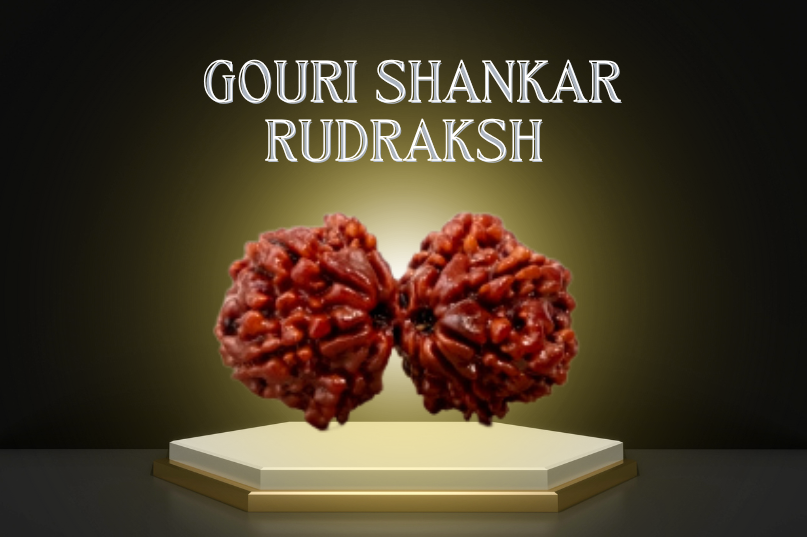
Gauri Shankar Rudraksha:
Traditionally associated with the divine union of Shiva and Parvati.
Ganesh Rudraksha:
Traditionally identified by a trunk-like protrusion and associated with Lord Ganesha.
Trijuti Rudraksha:
A naturally formed combination of three joined Rudraksha beads and traditionally regarded as especially significant. These varieties can carry special symbolic meaning, but they are not automatically necessary for every devotee.
- Shravan Is About More Than Wearing a Rudraksha
It is easy to focus on the bead itself. But for many devotees, the deeper purpose is the practice surrounding it.
Rudraksha can remind you to:
- Pray
- Chant
- Meditate
- Practice self-discipline
- Be compassionate
- Remember Shiva
The bead is a tool and symbol. The spiritual practice is the real focus.
Why Shravan Can Be a Special Time for Rudraksha Devotees?
The significance comes from the combination of tradition and practice.
Shravan
A sacred period for Shiva worship.
- Rudraksha: A traditional symbol closely associated with Shiva.
- Mantra: A way to focus the mind and express devotion.
- Meditation: A way to cultivate awareness.
- Discipline: A way to carry spiritual intentions into everyday life.
Together, these practices can make Shravan a meaningful period of devotion and self-reflection.
Conclusion:
Shravan is special for Rudraksha devotees because it provides a natural opportunity to deepen Shiva-focused spiritual practice. Whether you wear a Rudraksha bracelet, use a Mala for Japa, or simply keep a sacred bead in your Puja space, the month can be a reminder to slow down and reconnect with your spiritual intentions. You don’t need an elaborate ritual.
- Wear mindfully.
- Chant sincerely.
- Meditate regularly.
- Live your values.
Let Rudraksha remind you not only of Lord Shiva, but also of the discipline required to bring peace, awareness, and devotion into everyday life.
ॐ नमः शिवाय