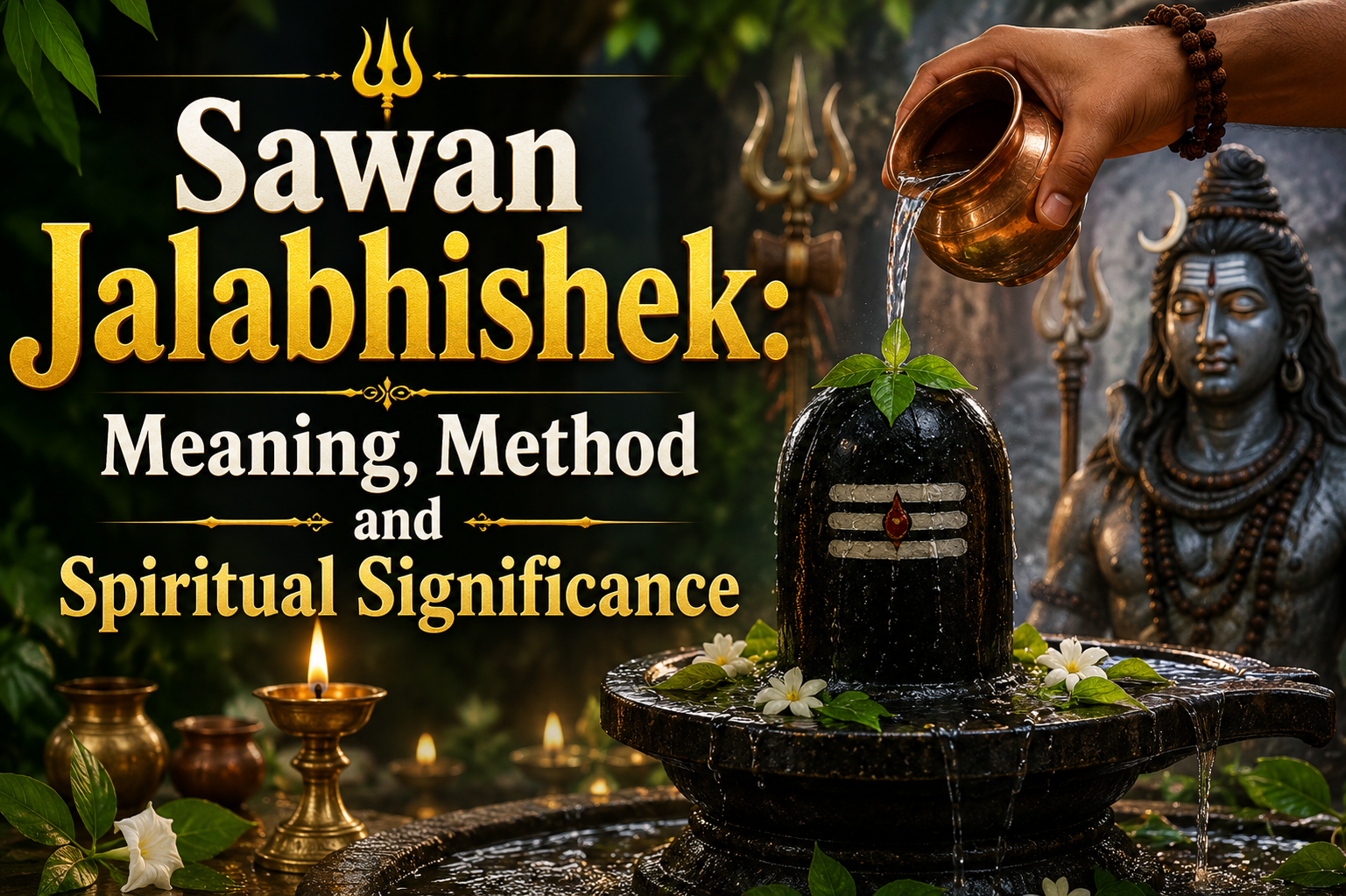
Sawan Jalabhishek is one of the most cherished forms of Lord Shiva worship during the sacred month of Shravan (Sawan). Devotees offer water to the Shivling while chanting Shiva mantras and praying for peace, devotion, strength, and well-being.
The ritual is simple, yet deeply symbolic. Water represents purity, surrender, and cooling of the mind, while the Shivling represents the divine presence of Lord Shiva.
Let’s understand the meaning, traditional method, and spiritual significance of Sawan Jalabhishek.
Note: Puja practices vary across regions, families, and Shaiva traditions. The spiritual meanings below reflect Hindu religious traditions and should not be interpreted as scientifically proven supernatural effects.
What Is Jalabhishek?
The word Jalabhishek comes from:
Jal = Water
Abhishek = Ritual bathing or offering
In Shiva worship, Jalabhishek means offering water to the Shivling with devotion and prayer. During Sawan, devotees may perform Jalabhishek at home or visit a Shiva temple to offer water. The ritual can be especially important on Sawan Somwar, the Mondays observed during Shravan.
Why Is Water Offered to Lord Shiva?
- Water has a special place in Hindu worship.
- It traditionally represents:
- Purity
- Life
- Renewal
- Surrender
- Cooling and calmness
Offering water to Shiva can therefore be understood as a symbolic act of purifying one’s thoughts and surrendering one’s ego before the divine.
Why Is Jalabhishek Special During Sawan?
Shravan is traditionally considered one of the most auspicious months for Shiva worship.
During Sawan, devotees often increase their spiritual practices through:
- Shiva Puja
- Jalabhishek
- Rudraksha Japa
- Sawan Somwar Vrat
- Meditation
- Shiva Mantra chanting
- Temple visits
Jalabhishek becomes a simple way to maintain a daily or weekly connection with Shiva during the month.
What Do You Need for Sawan Jalabhishek?
A simple home Jalabhishek can be performed with:
- Shivling
- Clean water
- Bel Patra
- Flowers
- Diya
- Incense, if desired
- Rudraksha Mala
- Akshat, according to tradition
- Chandan or other appropriate Puja items
You do not need an elaborate arrangement. Devotion and sincerity are more important than the number of ritual items.
What Is the Spiritual Significance of Jalabhishek?
Jalabhishek carries several symbolic meanings.
- Purification
Water represents purity. Offering water to Shiva can symbolically represent the desire to cleanse oneself of:
- Negative thoughts
- Anger
- Ego
- Jealousy
- Unhelpful habits
- Surrender
Pouring water over the Shivling can be understood as an act of surrender.
It reminds the devotee: “I offer my worries, desires, and ego to Shiva.”
- Calming the Mind
Water has a natural association with coolness and calm. Spiritually, Jalabhishek can represent the desire to cultivate a peaceful and steady mind.
- Devotion to Shiva
The ritual provides a simple physical expression of Shiva Bhakti. Rather than only thinking about devotion, the devotee performs an intentional act of worship.
- Renewal
Every Jalabhishek can be viewed as a fresh beginning.
It can remind you to:
Let go → Reflect → Pray → Begin again
This is particularly meaningful during Sawan, when many devotees dedicate additional time to spiritual practices.
Which Mantra Should You Chant During Jalabhishek?
The simplest and most widely known Shiva mantra is:
ॐ नमः शिवाय
Om Namah Shivaya
You can chant it slowly while offering water. Other Shiva mantras may also be used according to your spiritual tradition or Guru’s guidance.
Can You Perform Jalabhishek on Every Sawan Somwar?
Yes, many devotees perform Shiva Puja and Jalabhishek on each Sawan Somwar. Some also perform it daily during Shravan. There is no need to feel discouraged if you cannot perform the ritual every day. A sincere practice that fits your circumstances can be more sustainable than a routine performed under pressure.
Jalabhishek With Rudraksha: What to Remember?
Rudraksha can be part of your Puja, but avoid unnecessarily soaking a Rudraksha Mala or bead in water repeatedly. Rudraksha is a natural seed and prolonged moisture can contribute to deterioration.
A practical approach is:
Jalabhishek → Keep Rudraksha nearby → Japa → Meditation → Wear Rudraksha
This allows you to include Rudraksha without exposing it unnecessarily to water.
Should Milk Be Used for Abhishekam?
Milk is traditionally used in some forms of Shiva Abhishekam. However, practices vary, and water alone is completely suitable for a simple Jalabhishek. If you choose to use milk or other offerings, follow your family or temple tradition and avoid wasting food unnecessarily.
Conclusion:
Sawan Jalabhishek is much more than pouring water over a Shivling.
For devotees, it represents:
- Purification
- Surrender
- Mindfulness
- Renewal
- Shiva Bhakti
During Sawan, this simple ritual can become a beautiful opportunity to slow down and reconnect with your spiritual intentions. You don’t need an elaborate Puja.
- Take clean water.
- Offer it with devotion.
- Chant Om Namah Shivaya.
- Spend a few moments in silence.
- And carry that sense of devotion into your day.
ॐ नमः शिवाय